
What Does Black Mold Look Like? Photos From Real Homes
Black mold typically appears as dark green, gray, or black spots and patches on walls, ceilings, drywall, wood, or grout. Depending on the species and how long it has been growing, it can look slimy and wet, fuzzy and raised, powdery, or like soot or dirt smudged across a surface. It is almost always found where moisture has been present for a while: around leaks, in bathrooms, basements, crawl spaces, and behind walls after water damage.
One important caveat up front: "black mold" is not a single species. Many different molds look black, and not every black-colored mold is the infamous Stachybotrys. Color alone cannot tell you which species you are dealing with, but it does tell you there is a moisture problem worth investigating.
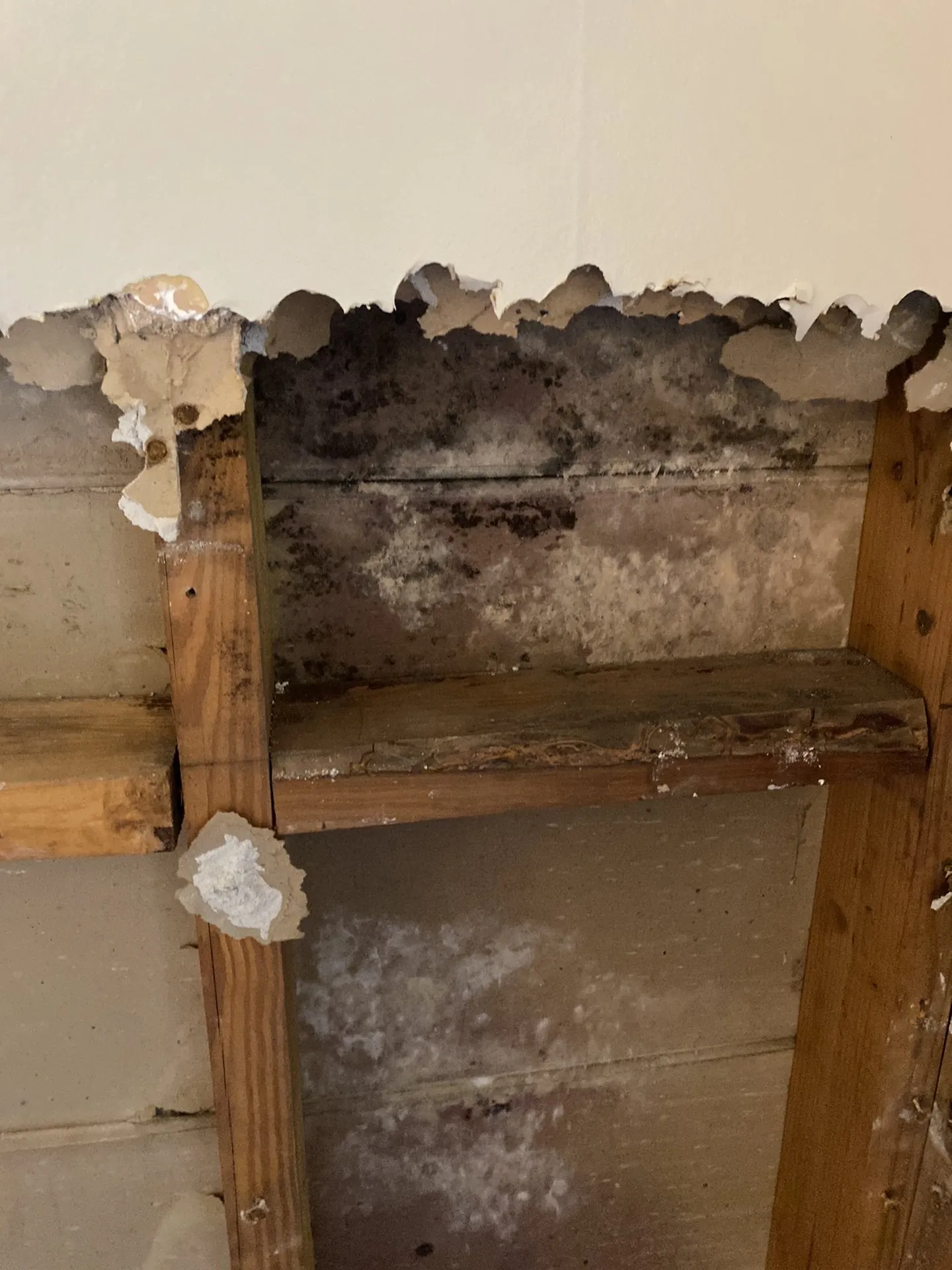
Mold found behind drywall after a slow wall leak. Notice it isn't all black.
What Black Mold Looks Like in Real Homes
Every photo below is from an actual Claro job. These are the places dark mold growth shows up most often, and what it tends to look like in each one.
Behind Drywall
Drywall is one of the most common hiding spots. The paper facing is food for mold, and a slow leak inside a wall can feed growth for months before anything shows on the surface. Often the first sign is a musty smell or a faint stain, while the inside of the wall looks like this.
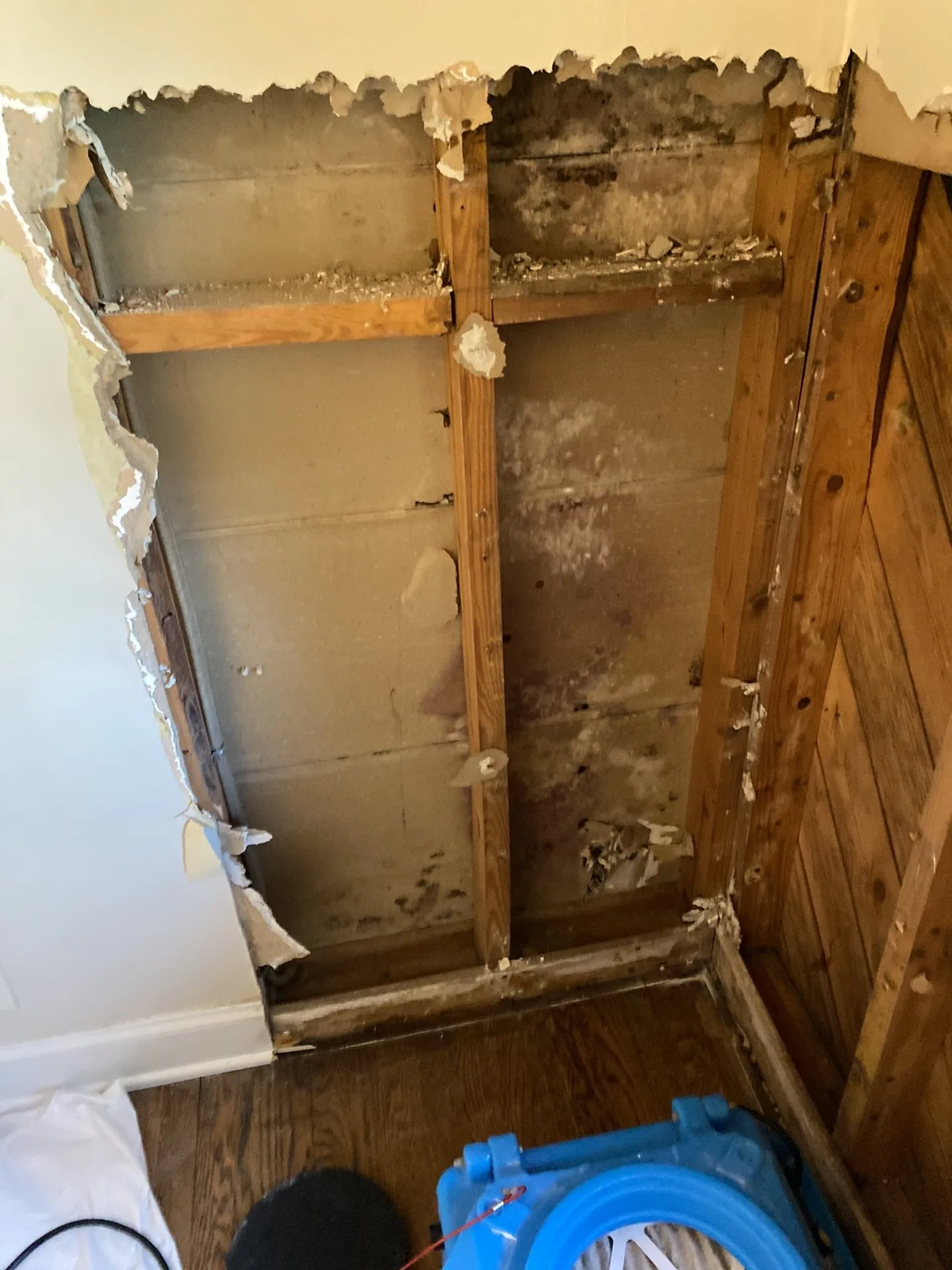
Dense growth on drywall after a slow leak inside the wall.
On Insulation and Paper Facing
Insulation in damp walls, attics, and crawl spaces collects moisture and dust, both of which mold feeds on. Growth here usually looks like scattered dark spotting across the paper facing, spreading into the insulation itself over time.
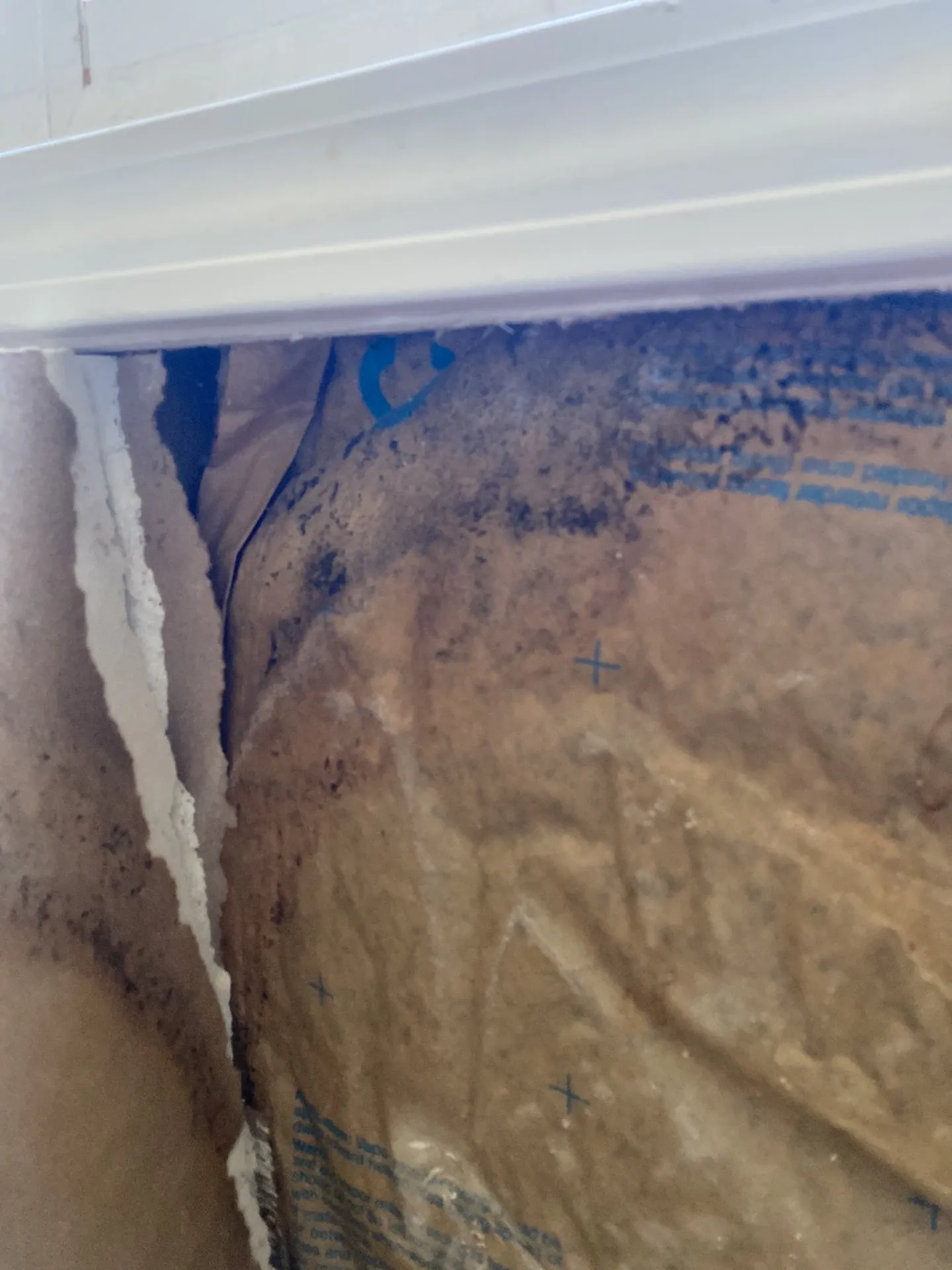
Dark spotting spreading across insulation and paper facing.
Under Bathroom Flooring
Bathrooms leak in slow, sneaky ways: around toilets, tubs, and shower pans. By the time a floor feels soft or a stain appears, the subfloor underneath can be heavily colonized. This is what was waiting under one bathroom floor when it came up.
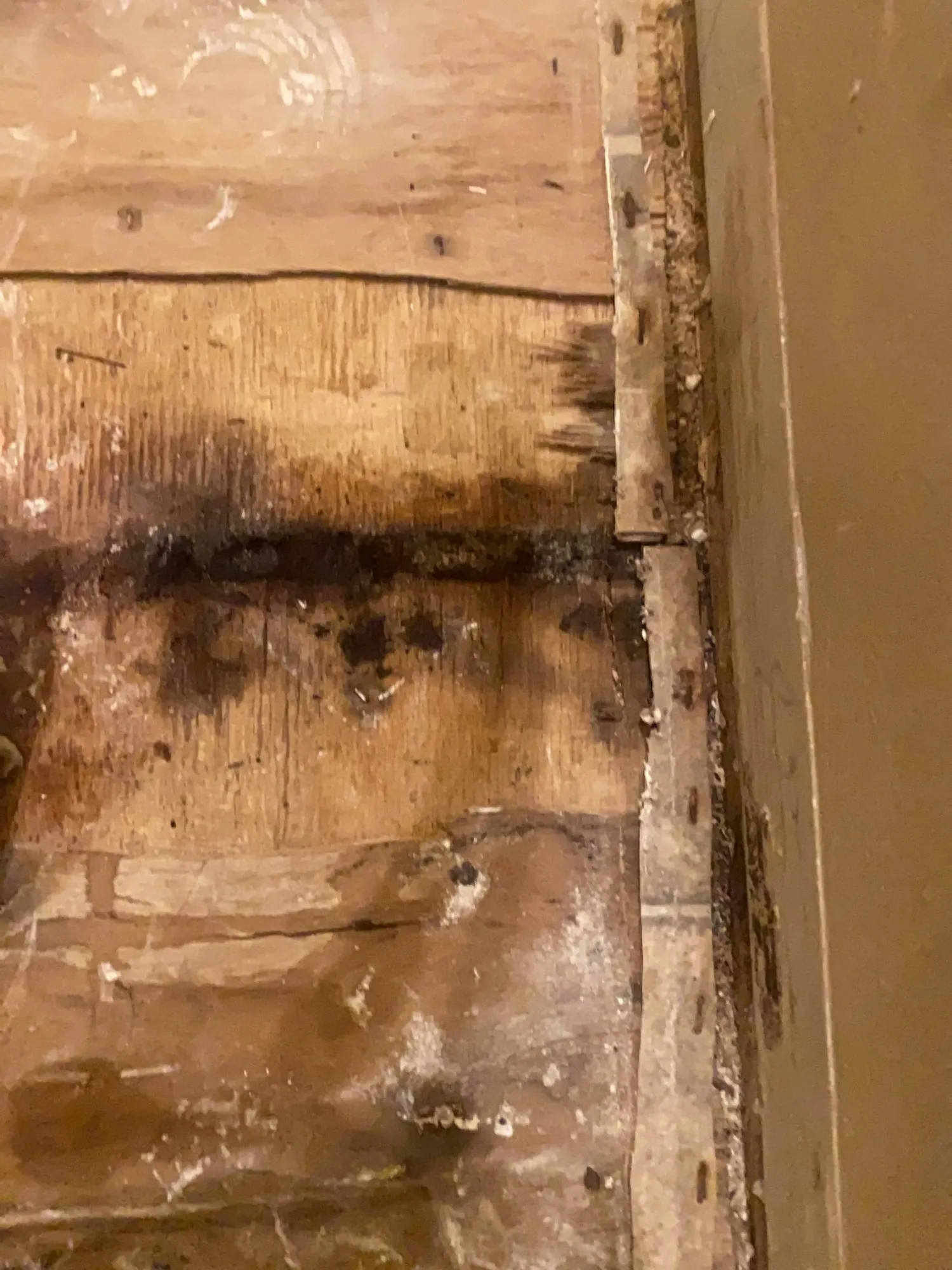
Growth discovered on the subfloor after the bathroom flooring came up.
Inside a Toilet Tank
Toilet tanks are dark, humid, and rarely opened, which makes them a perfect low-effort spot for mold. It usually shows up as black or dark green slime and spotting along the waterline and tank walls. Surface growth like this is common, but it is also a sign the bathroom has more humidity than it should.
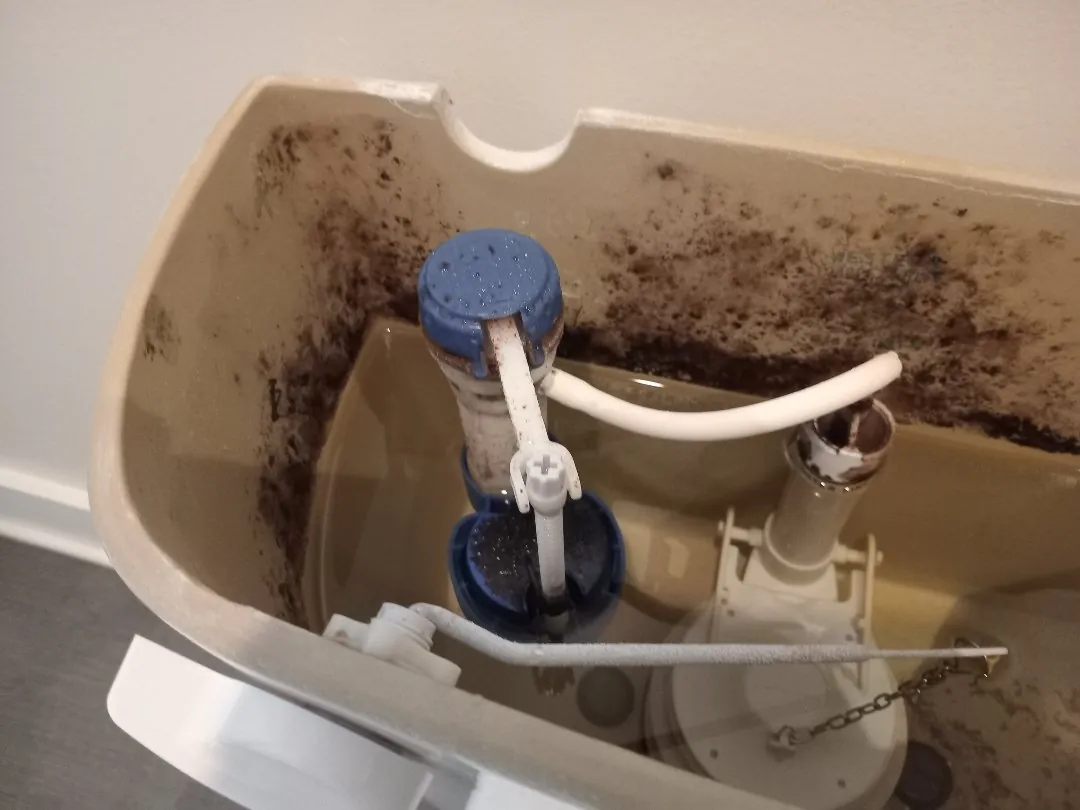
Dark growth along the waterline inside a toilet tank.
Under the Kitchen Sink
The cabinet under the kitchen sink takes slow drips from supply lines, drains, and garbage disposals. Growth here typically starts in the corners and along the cabinet base, and it often goes unnoticed until items stored in the cabinet start smelling musty.
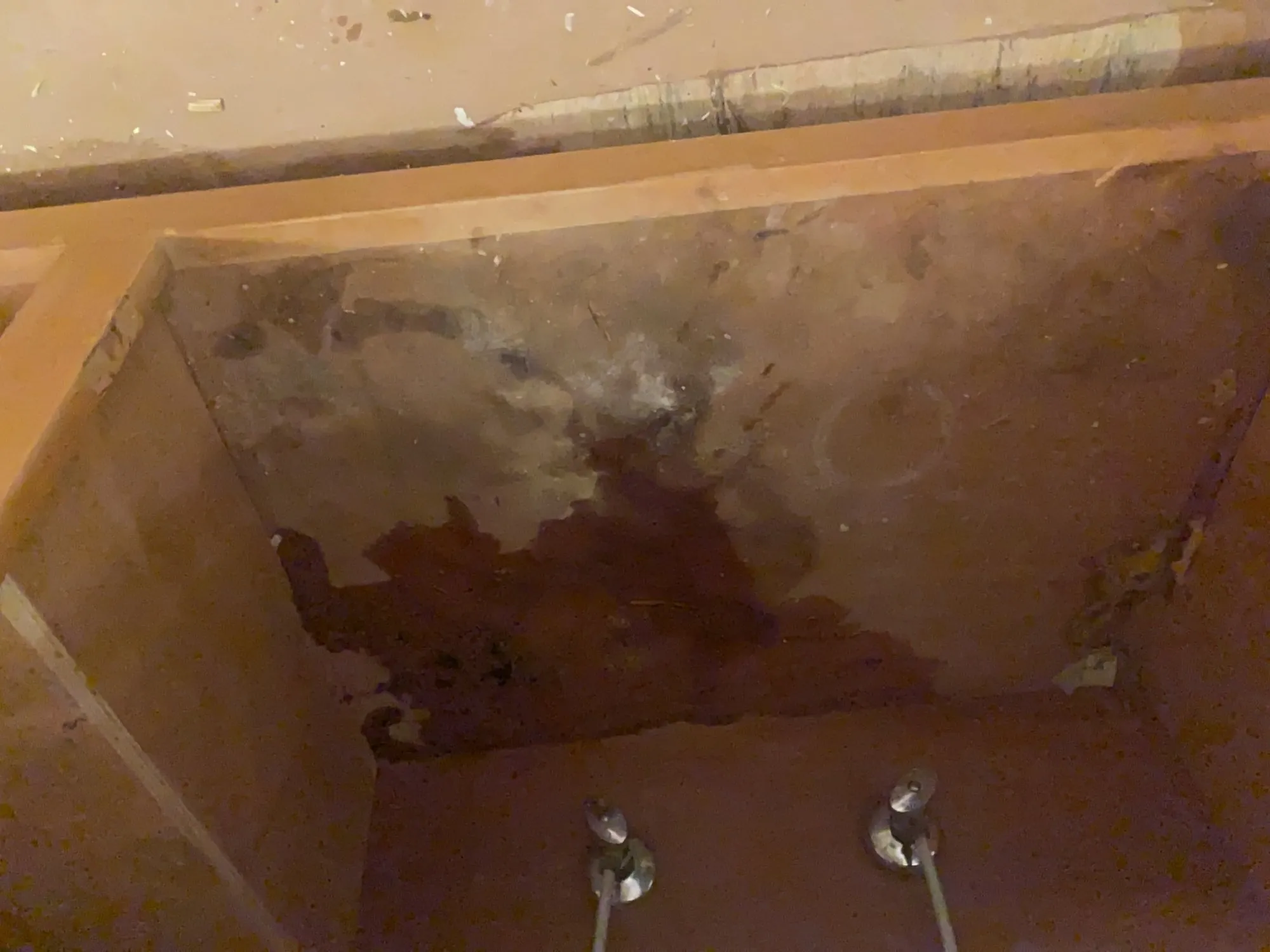
Water staining and growth along the base of a kitchen sink cabinet.
Around Windows
Windows let water in two ways: leaks around the frame and condensation on the glass. Either one can keep the sill and the wall below damp for months. Dark spotting around a window is one of the most common things homeowners notice first, and one of the most commonly ignored. When that wall gets opened up, the framing underneath can look like this.
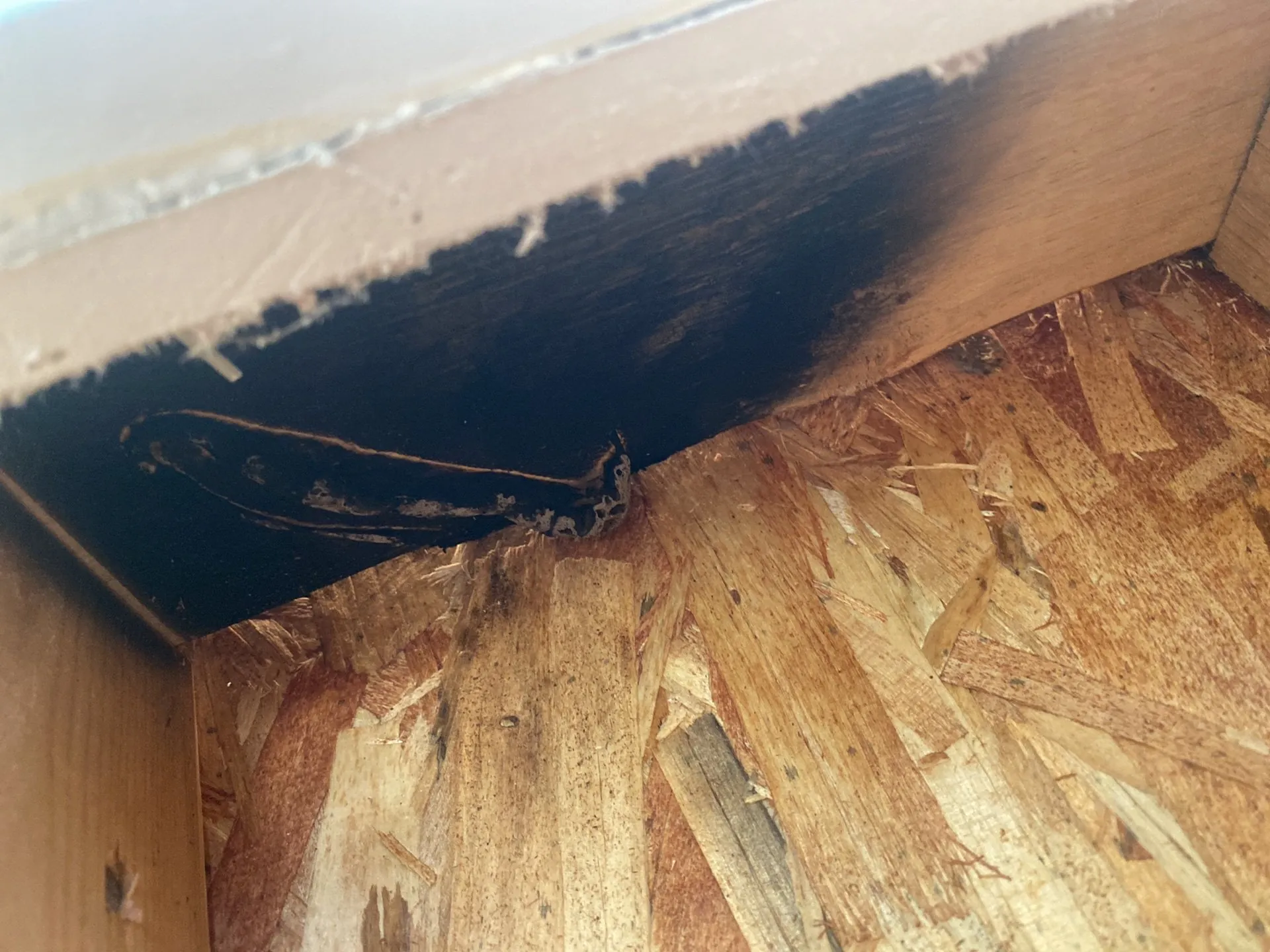
Dark growth and staining on framing below a window.
On Crawl Space Wood
Crawl spaces combine bare wood, high humidity, and zero foot traffic, so growth can spread for years undisturbed. On joists and subfloor it usually looks like a dusting of black or dark gray specks that slowly merge into solid patches.
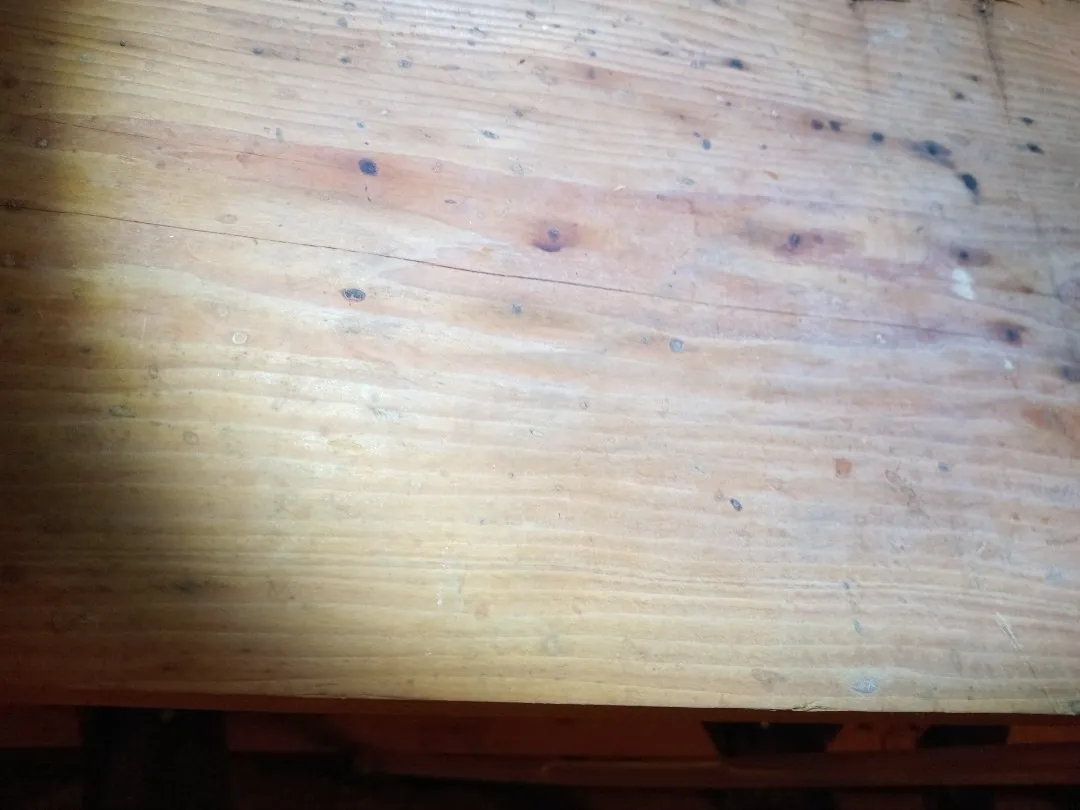
Dark growth spread across crawl space joists.
Early Growth vs. Established Growth
Catching mold early makes a real difference in what remediation involves. Early growth is easy to dismiss. Faint specks on a ceiling get mistaken for dirt, fly spots, or shadows, and they get wiped away or painted over until they come back.
The photo below shows the kind of faint ceiling specks homeowners live with for months without a second thought. Compare it with the photo at the top of this article, which shows what the same kind of problem looks like after it has had time and moisture to work with.
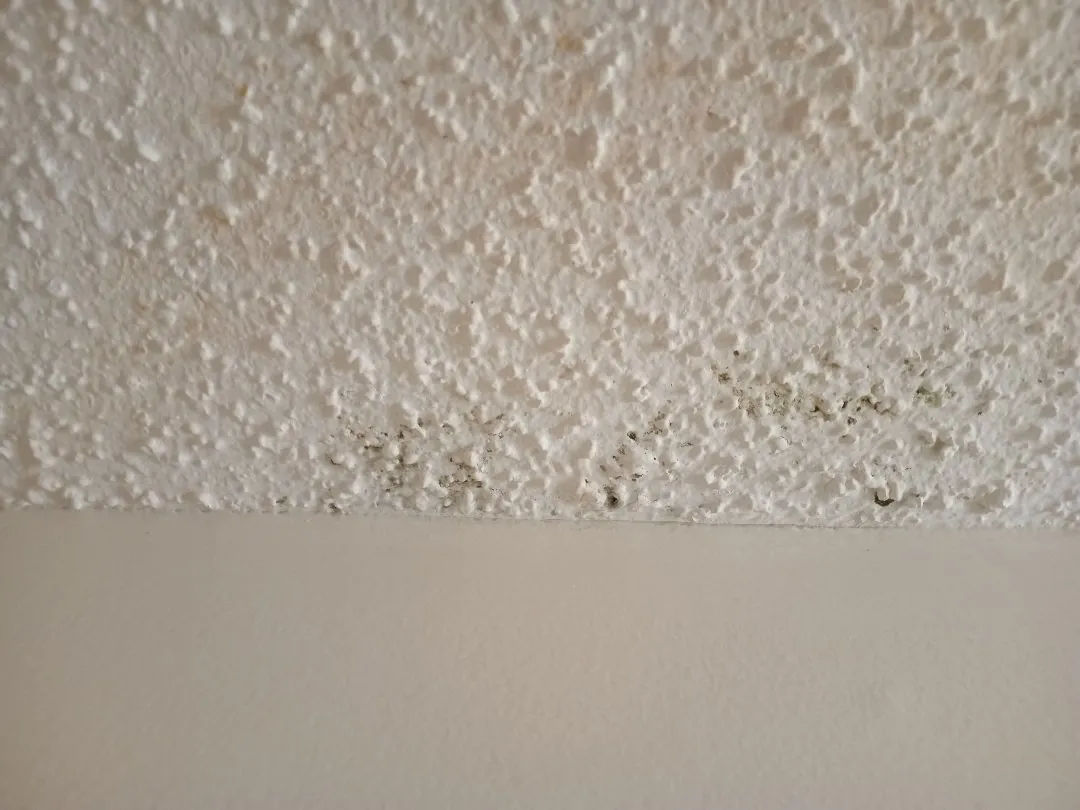
Early growth most people would wipe off and forget.
It's Not Always Black
Even within a single colony, color varies. The same growth can look black in one area, dark green in another, and white or gray at the edges where it is younger or drier. Lighting and the surface underneath change how it reads in a photo, too.
The photo below shows gray, fuzzy patches on crawl space timber. Nothing about it reads as "black mold," but it is mold all the same, and it needs the same response.
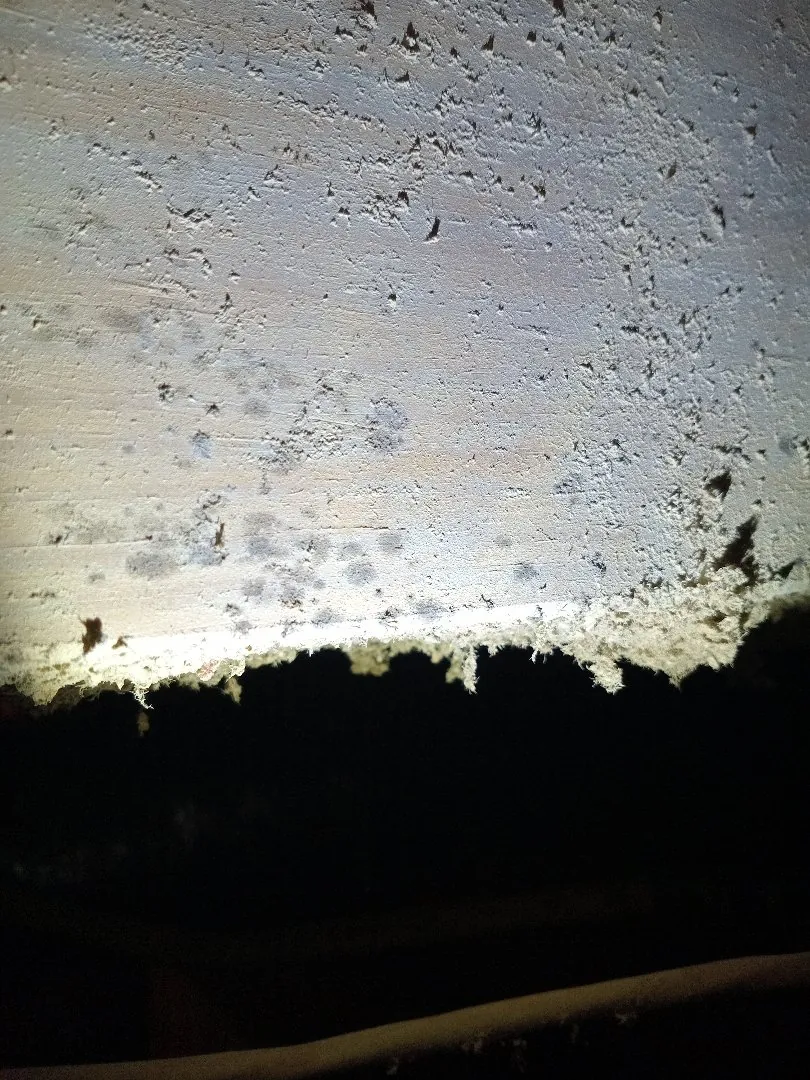
Gray, fuzzy patches on crawl space timber. Not black, but still mold.
This is why color alone is a poor way to judge what you are looking at, which brings us to the species question.
"Black Mold" Isn't One Species
When most people say "black mold," they mean Stachybotrys chartarum, the species that makes headlines. In reality, dozens of species produce dark or black colonies, and many harmless molds look nearly identical to problematic ones. On our jobs, dark growth has turned out to be everything from mildew in a shower corner to heavy growth behind leaking walls, and lab testing on our jobs has confirmed Stachybotrys in homes.
Here is how the most common dark-colored species are typically described and where they tend to grow. Treat it as context, not a way to identify what is in your home. Appearance overlaps too much between species for that.
Stachybotrys chartarum: Slimy, dark greenish-black patches that turn sooty when dry. Typically found on chronically wet drywall, paper, ceiling tiles, and wood framing.
Cladosporium: Velvety, olive-green to dark brown or black spots. Typically found on painted surfaces, wood, textiles, HVAC vents, and window sills.
Aspergillus (black varieties): Powdery black spore heads over lighter growth. Typically found on damp walls, around windows, in air conditioning systems, and in warm, humid areas.
Alternaria: Downy or velvety dark green, brown, or black patches. Typically found in showers and tubs, under sinks, and on window frames.
Ulocladium: Woolly black or dark brown colonies. Typically found where there is severe or long-term water damage, often alongside other molds.
Chaetomium: Starts white and cottony, then darkens to olive or near-black. Typically found on water-damaged drywall, baseboards, wallpaper, and under carpet.
You will often see Stachybotrys chartarum called "toxic black mold." It is worth knowing that the CDC does not treat it as a special category: molds that can produce mycotoxins, like Stachybotrys, should be treated the same as other molds that grow indoors, and the color of a mold does not indicate how dangerous it is. Any mold growing indoors signals a moisture problem that needs fixing, regardless of species.
Mold vs. Mildew vs. Water Stains
A lot of the dark spots people worry about turn out to be something else entirely. Two lookalikes cause most of the confusion.
Mildew
Mildew sits flat on the surface, looks powdery or fuzzy, and wipes away with a cleaner. It loves damp, smooth surfaces: shower grout, tile, and window tracks. Tub caulk is where things get blurry. Mildew often starts on the surface of the caulk, but once growth works its way into the caulk itself, it is mold, and it will keep coming back no matter how often you clean it.

Dark growth along tub caulk. Surface mildew often starts here, but if it's inside the caulk, it's mold.
For a deeper breakdown, see our guide: Black Mold vs. Mildew.
Water Stains
A brown or yellowish ring on a ceiling or wall is usually a dried water stain, not mold. Stains are flat, dry, and have no texture. They still matter, because a stain means water got in at some point, and if that leak is still active, mold is the next chapter. But the ring itself is not growth.
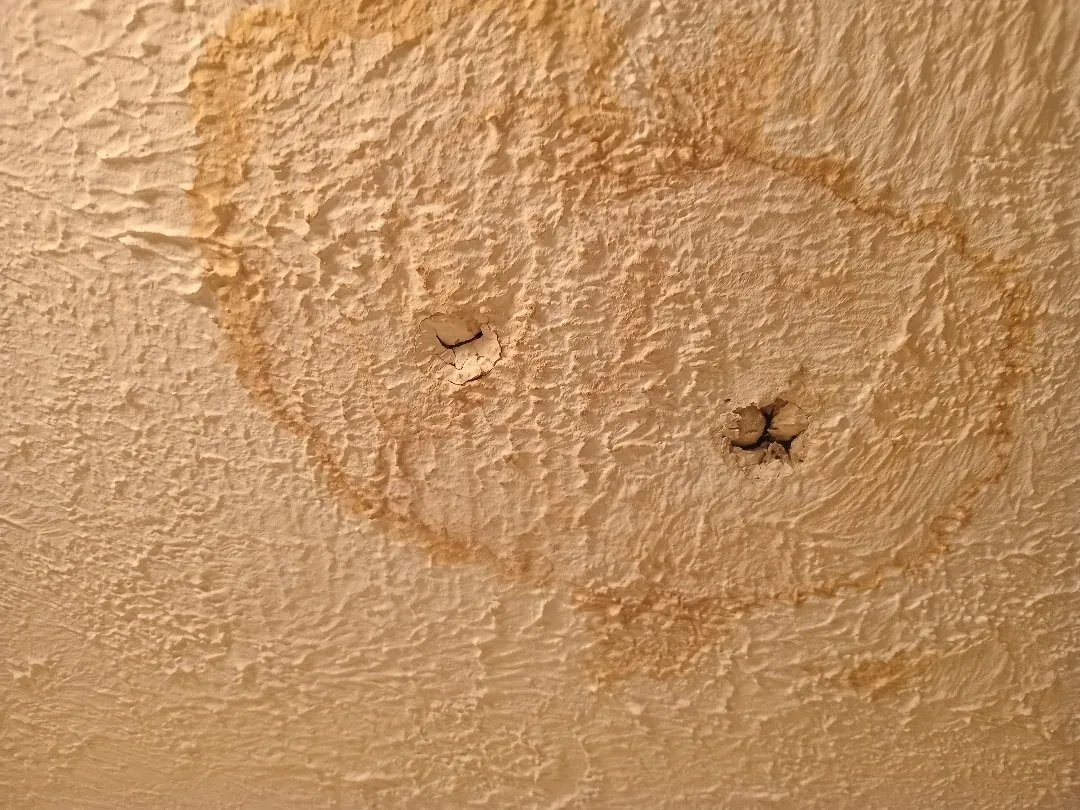
A brown ring on a ceiling. A dried water stain, not mold.
A quick rule of thumb: if a spot is flat and dry with sharp edges, suspect a stain. If it wipes off tile or glass easily and stays gone, suspect mildew. If it is on drywall, wood, or caulk, looks textured, and keeps coming back after cleaning, suspect mold, and start looking for the moisture feeding it.
Can You Identify Black Mold Just by Looking?
Honestly, no, and we would say the same thing standing in your home. Many species look nearly identical to the naked eye, and the same species can look different depending on its age, moisture level, and the surface it is growing on. Proper identification requires sampling and lab analysis.
Visual inspection still tells you the most important things:
There is growth. Whatever species it is, mold does not belong on your walls.
There is a moisture source. Mold only grows where water is available, so something is leaking, condensing, or staying damp.
Roughly how far it has spread. That determines whether you are looking at a small cleanup or a contained remediation.
When a job does call for confirmation, samples from the affected area go to a lab, which identifies the species present. You can read more about how that works on our mold inspection and testing page.
What to Do If You Think You've Found Black Mold
Don't disturb it. Scrubbing, sanding, or dry-brushing a colony releases spores into the air. Bleach on porous surfaces like drywall often does more harm than good.
Fix the moisture source first. Treating mold without fixing the leak or humidity problem guarantees it comes back. The EPA's guidance is blunt about it: the best way to control mold is to control moisture.
Get a professional assessment if the affected area is larger than about 10 square feet, if it is inside walls or HVAC systems, or if anyone in the home has respiratory issues or a compromised immune system.
Not Sure What You're Looking At?
If you have spotted something dark growing in your home and want a straight answer, we are happy to take a look. Every Claro job starts with identifying what is actually there and what is feeding it, because we don't treat what isn't there. Our treatment is non-toxic and safe for your family and pets, and it is backed by a 1-year mold-free guarantee.
Ready for a straight answer? Book an inspection with Claro today.