
What's the Difference Between Black Mold and Mildew?
You spot something dark on the grout in your shower. Or maybe it's a fuzzy patch on the bathroom ceiling, or a discolored streak along the basement wall. Your first thought is probably: is that mold? And if it is, how bad is it?
Not every dark spot in your home is black mold, and not every mold situation is an emergency. But getting the two confused can lead to either unnecessary panic or, worse, ignoring something that actually needs professional attention. So let's clear it up.
What Is Black Mold?
"Black mold" most often refers to Stachybotrys chartarum, though other mold species can also appear black or very dark. Unlike mildew, mold grows into porous materials — drywall, wood, insulation, carpet padding — not just on top of them.
This is what makes black mold a different kind of problem. By the time you see it on the surface, it may have already spread behind the wall or underneath the flooring. Wiping the visible patch won't fix the underlying issue.
What it looks like:
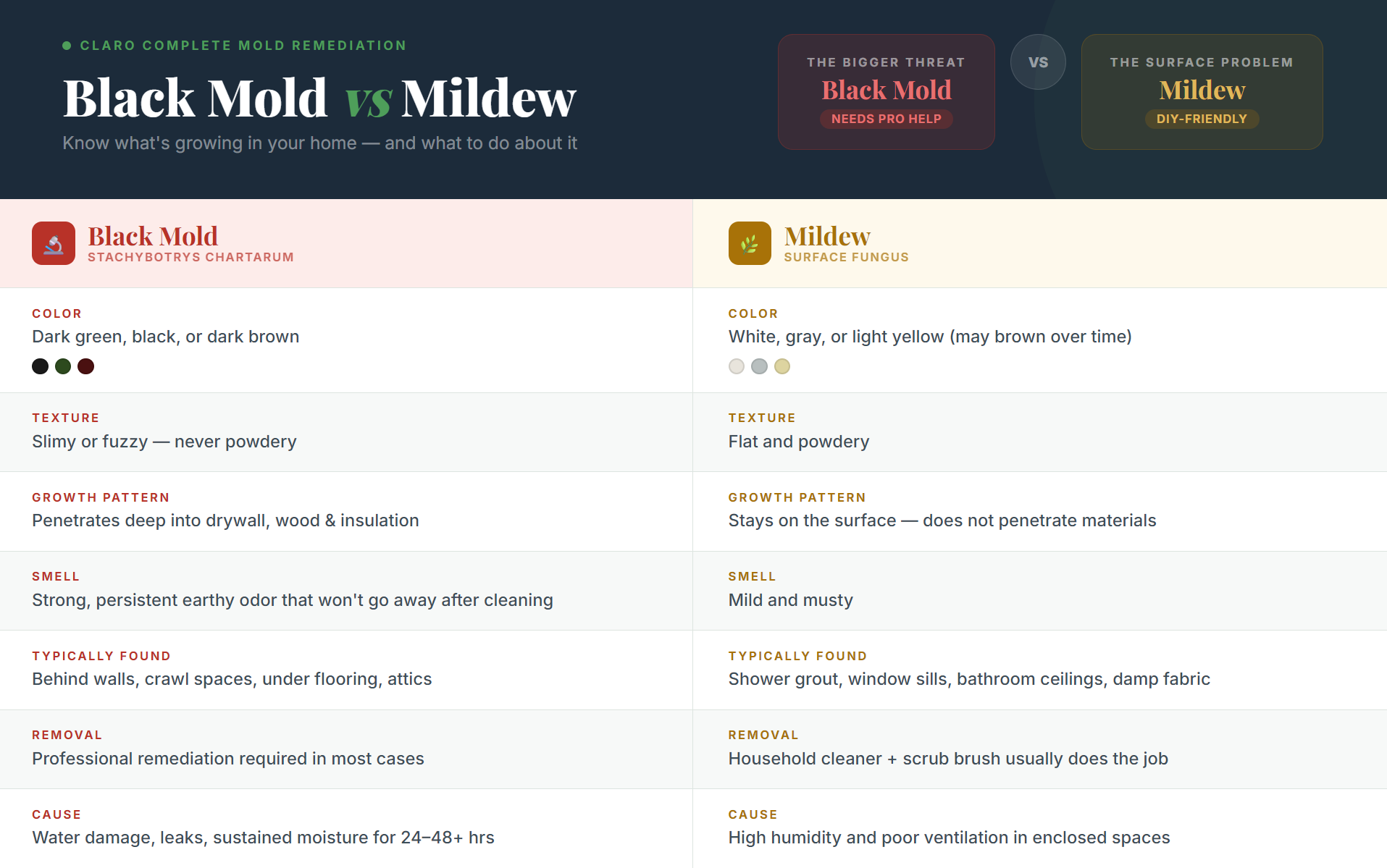
Dark green, dark brown, or black
Slimy or fuzzy texture (not powdery)
Often appears in irregular, spreading patches
May have a circular or clustered pattern as colonies expand
What it smells like:
Noticeably stronger and more pungent than mildew
A heavy, damp, earthy smell that doesn't go away even after cleaning.
What Is Mildew?
Mildew is a surface fungus. It grows on top of damp materials rather than into them, which is what makes it easier to deal with.
You'll typically find it in places with high humidity and limited airflow — shower tiles, window sills, bathroom ceilings, fabric left in a damp pile. It spreads flat across surfaces rather than growing in depth.
What it looks like:
Flat and powdery in texture
Usually white, gray, or light yellow when fresh
Stays on the surface of whatever it's growing on.
What it smells like:
Musty, but relatively mild.
Mildew is annoying and looks unpleasant, but it's generally manageable. A good scrub with a household cleaner and a bit of ventilation can usually take care of it.
Mold vs Mildew Side-by-Side Comparison
Health Effects: Is One Worse Than the Other?
Mildew can irritate your airways, trigger allergy symptoms, and bother people with asthma. It's not harmless, but it's also not typically a serious health threat for most people.
Black mold is a different story. Prolonged exposure to Stachybotrys and other toxic mold species has been linked to more significant respiratory problems, chronic headaches, fatigue, and in severe cases, neurological symptoms. People with compromised immune systems, the elderly, and young children are at higher risk.
If anyone in your household has been experiencing persistent respiratory issues, sinus problems, or unexplained fatigue, and you've been unable to identify the cause — mold contamination is worth investigating.
Where Each One Shows Up
Mildew tends to stick to high-humidity surfaces where air circulation is poor:
Shower and tub grout
Bathroom ceilings
Window frames and sills
Fabrics stored in damp conditions
Black mold tends to appear after water damage or in areas with chronic moisture problems:
Behind drywall following a leak or flood
In crawl spaces with moisture intrusion
Under flooring after water damage
Around HVAC systems with condensation issues
Attics with inadequate ventilation
One important note: black mold doesn't show up overnight. It usually develops after a period of sustained moisture — 24 to 48 hours is enough for mold spores to start colonizing a wet surface. If you've had water damage that wasn't fully dried out, the risk of mold growth is real even if you can't see anything yet.
Can You Remove It Yourself?
For mildew: yes, in most cases. A cleaning solution (diluted bleach, white vinegar, or a commercial mold and mildew spray), a scrub brush, and good ventilation will usually do the job. Make sure to address the underlying humidity issue too, or it'll come back.
For black mold, the answer depends on the extent of the growth. The EPA's general guideline is that mold patches smaller than 10 square feet may be manageable as a DIY project — but that assumes the mold is confined to a hard, non-porous surface. If it's in drywall, wood framing, or insulation, or if the area is larger, professional remediation is the right call.
There's also the matter of what you can't see. If black mold is visible on a wall surface, there's a decent chance it's more extensive behind it. Cleaning what's visible without addressing the source and the hidden growth won't solve the problem.
When to Call a Professional
Some situations shouldn't be handled alone:
The mold covers a large area (more than 10 square feet)
You can smell mold but can't locate the source
Mold keeps coming back after cleaning
You had a water leak or flood that wasn't fully remediated
Anyone in the home is experiencing unexplained health symptoms
You're dealing with mold in a crawl space, HVAC system, or inside wall cavities
We've seen plenty of cases where homeowners spent money on surface cleaning only to discover the real problem was in the walls or under the subfloor. Getting a professional assessment up front is almost always cheaper than dealing with the fallout from incomplete removal.
How to Prevent Both
Neither mold nor mildew can grow without moisture. Controlling humidity in your home is the single most effective thing you can do.
Keep indoor humidity below 50% (a dehumidifier or hygrometer can help you monitor this)
Run exhaust fans in bathrooms and kitchens during and after use
Fix leaks as soon as you find them — even slow drips behind cabinets
Make sure your crawl space is properly encapsulated and ventilated
After any water damage, dry affected areas within 24 to 48 hours
Good ventilation, prompt leak repairs, and moisture control will prevent the majority of mold and mildew problems before they start.
The Bottom Line
Mildew is a surface issue. It's common, manageable, and usually not a reason to panic. Black mold is a deeper problem — it penetrates materials, spreads in ways you can't always see, and poses real health risks if left unaddressed.
If you're not sure which one you're dealing with, pay attention to the texture, color, location, and smell. Powdery and white or gray? Probably mildew. Dark, slimy, in an area with a moisture history, and coming with a strong odor? Get it properly assessed.
At Claro, we specialize in mold inspections and full remediation for homes and businesses across Middle Tennessee & Missouri. If you've spotted something suspicious or had recent water damage, we can tell you exactly what you're dealing with — and put together a plan to fix it properly. Book an inspection and we'll take it from there.