
Small Particle Cleaning (SPC) Remediation
Call or text our team and we can help asap
What Is Small Particle Cleaning?
After mold remediation, the source is gone and spore counts are reduced by up to 99%. For most people, that's the end of it. But even a thorough remediation can leave behind traces too small to see: spores as small as 2 to 10 microns, fragments of hyphae (the thread-like structures mold grows from), and mycotoxins that attach to dust.
These particles can stay suspended in the air or settle into carpets, vents, and soft surfaces, and for someone with CIRS or a heightened sensitivity to mold, even that small amount can be enough to keep symptoms going.
Small Particle Cleaning removes that residual material using HEPA filtration built to capture particles at this scale, well beyond what a standard vacuum or air filter can trap. It happens after remediation is complete, as a final pass to clear what's left from the air and surfaces. For most homeowners it's a layer of added assurance that might not be required, but for people with CIRS (Chronic Inflammatory Response Syndrome) or heightened mold sensitivity, it's often necessary, since trace levels that wouldn't affect most people can still trigger symptoms.
We don't usually recommend it to most of our clients, since it's a thorough, time-intensive process that adds to the cost, but for the people who genuinely need it, it can make all the difference.
Why Small Particle Cleaning Goes Further Than a Deep Clean
Regular cleaning is built to make a room look and feel clean. The catch is that a lot of what it does moves fine particles around instead of getting rid of them. Dusting lifts settled material back into the air. A standard vacuum pushes some of it straight through the filter and out the exhaust. In a home that's just been treated, that motion can work against you, stirring up the exact spores and fragments you wanted gone and giving them somewhere new to land.
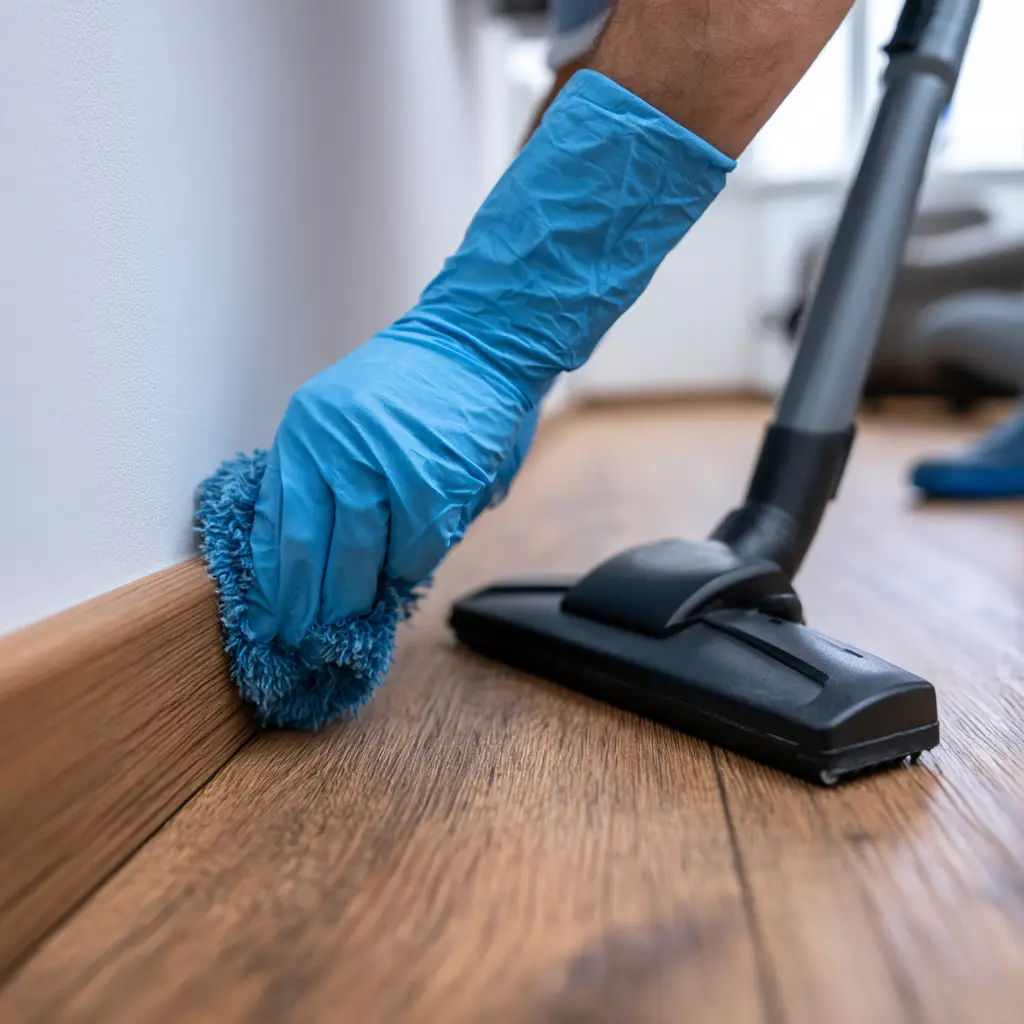
Small Particle Cleaning works toward the opposite goal: pulling particles out of the space and keeping them out. That changes how the job is done. Airflow gets managed so nothing recirculates, rooms are worked in a set order so a finished area doesn't get recontaminated, and the spots a routine clean tends to pass over get direct attention, like return vents, register covers, upholstery, closet shelving, and the tops of trim and door frames where fine dust gathers without anyone noticing.
The biggest difference is how each one defines "finished." A deep clean is done when the surfaces look right. Small Particle Cleaning is done when the space meets a set standard for what's left behind, which is the part that matters most to someone whose symptoms follow particle levels they can't see.

Reasons To Chose Claro - Complete Mold Remediation

Moisture source identified and fixed first
Whole-home dry fog treatment completed in hours
No demolition or move-out required
Also removes odors and VOCs
Benefits
Pre- and post-treatment air quality testing
One-year mold-free guarantee
Speak directly with the owner
Re-entry within hours of treatment


