
What Is an Instascope Air Test — And What Do Your Results Mean?
What is the Instascope?
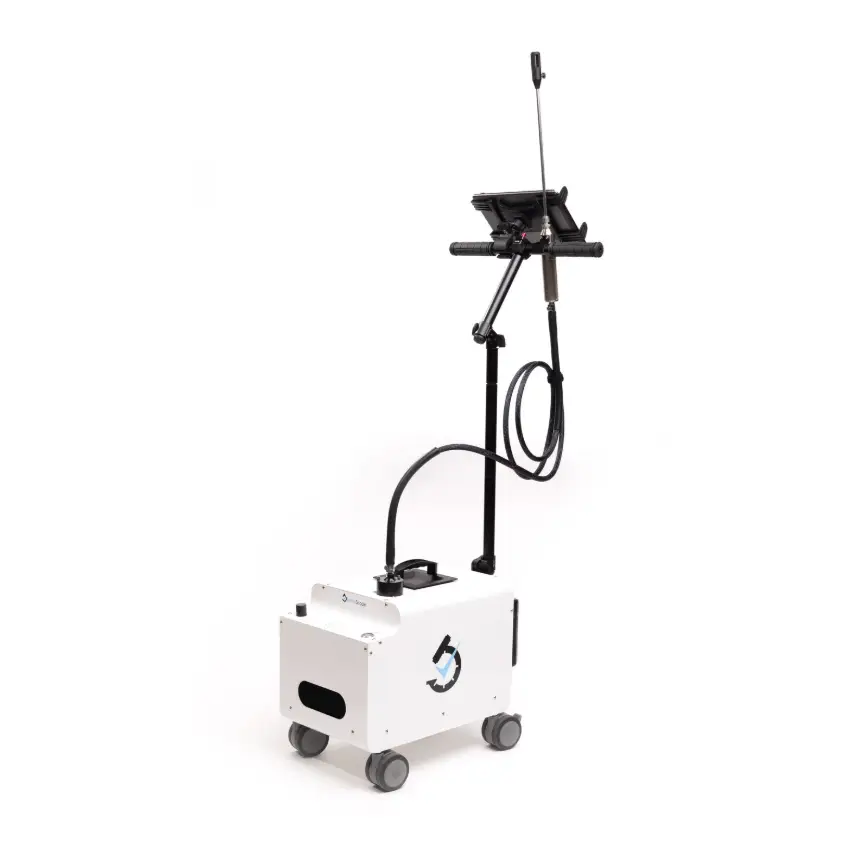
The Instascope is a real-time bio-aerosol monitoring device originally developed by the British military to detect airborne anthrax. It uses laser particle counting to identify and measure biological matter in the air — including mold, bacteria, viruses, and pollen.
Claro - Complete Mold Remediation is one of the few mold companies in the country using one. These machines are expensive with a waitlist to purchase, which is why most mold companies can't offer this level of testing. When we show up for your inspection, we bring ours and test your air on the spot.
How it works?
1
Outdoor baseline
The machine first takes a reading outside your home. This establishes how much mold is naturally in the air that day — which varies by season, weather, and local ecology.
2
Interior readings
We then test each room or area of concern. The machine records mold particle counts in real time and compares each interior reading against the outdoor baseline.
3
Color-coded results
Each room is automatically assigned a color — green, yellow, or red — based on how its levels compare to the outdoor air. You get the results before we leave.
Color System Explained
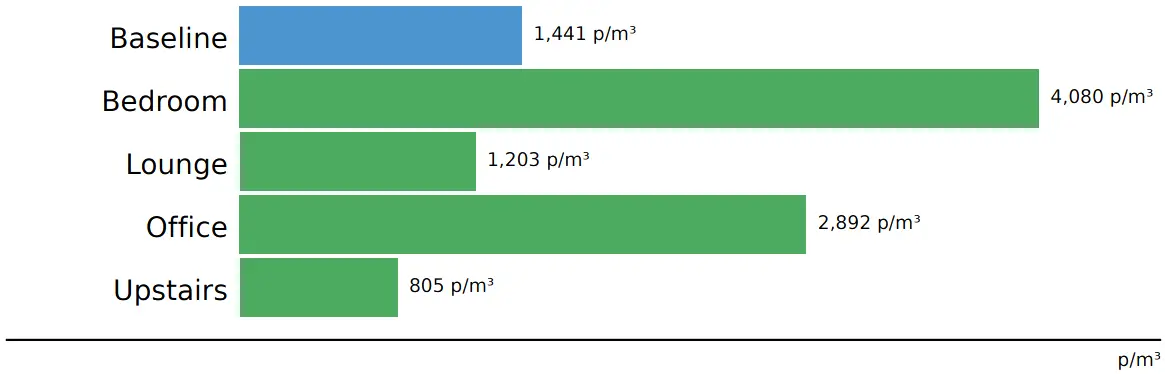
Every room came back green
All interior mold levels were at or below the outdoor baseline. No indoor mold growth detected. No mold treatment suggested by Claro.
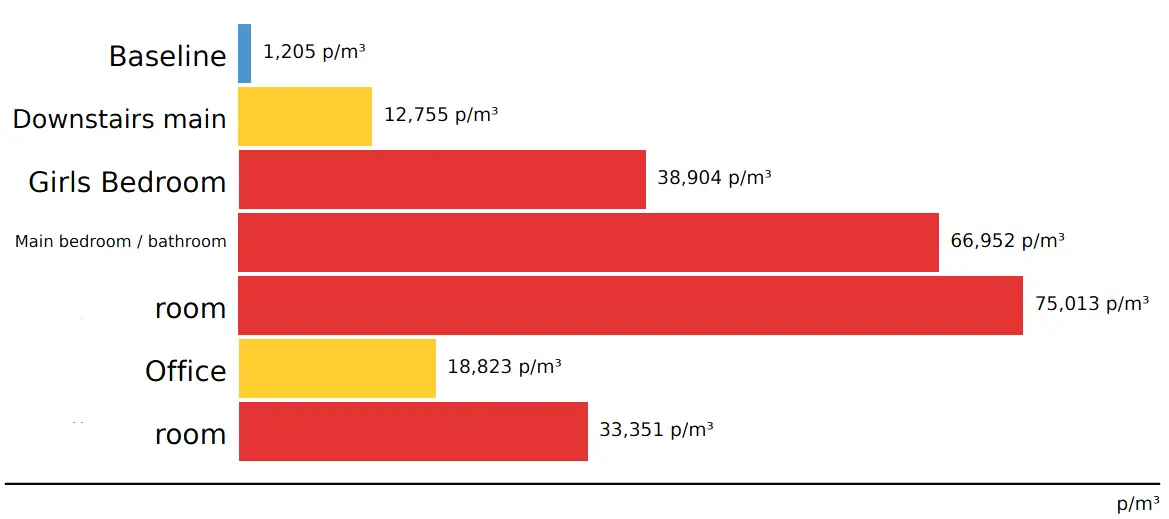
Multiple rooms flagged red
The Instascope confirmed active mold growth before we opened a single wall. We proceeded with a full investigation to locate the source and recommended treatment.
Pros & Cons of Instascope
What it does well
Results in real time, right during your Mold inspection. No waiting for a lab.
Highly accurate measurement of total biological matter in the air.
Automatically compares indoor levels against outdoor air — so you know if the problem is inside your home.
Pinpoints the exact source of mold by room — higher spore counts in specific areas guide the investigation directly to the water or moisture problem driving growth.
What it doesn't do
Does not identify specific mold species — it tells you there's a problem and where, not which mold is present.
May not detect mold that hasn't aerosolized into the air yet.
It identifies airborne impact, not the underlying moisture problem driving the growth.
InstaScope detects fluorescent particles — not whether spores are viable, actively growing, or producing mycotoxins.