What Is a Mold Air Test — And How To Read The Results?
What is the Lab Air Test?
A lab mold air test, also called a spore trap test, works by drawing a measured volume of air through a sticky cassette for capture, whatever is floating in it. That cassette gets sent to a certified lab where technicians count every biological particle under a microscope and identify it by species. The result is a precise list of every mold type present in your air, measured in spores per cubic meter.
Air tests are the most common type of mold test ordered by inspectors, doctors, and industrial hygienists because it gives you species-level detail that real-time devices cannot. If your doctor suspects mold illness, or if an inspector finds something suspicious during a visual walkthrough, a lab air test is usually the next step. It tells you not just that mold is present, but exactly what kind and how much.

Two Types of Mold Air Tests
Non-Viable Spore Trap
This test looks at all the mold spores on the cassette regardless of whether they are able to grow. The lab examines the slide under a microscope and identifies every spore it can see, living or dead. This is the faster option and is used for quick diagnosis of what is floating in your air.
Non-viable testing is what most inspectors use as the standard air test. Results come back in one to three days. The tradeoff is that some mold types look identical under a microscope (Aspergillus and Penicillium, for example, are always grouped together) so you may not get exact species-level identification for every mold present.
Viable Cultured Trap
This cassette is kept in the lab for about five days so the mold can actually grow. The lab watches to see which spores develop into active colonies. Only spores that have grown since the initial collection are considered viable. The rest are considered denatured, meaning they are dead and no longer propagating in your home.
Viable testing takes longer, but it answers a question the non-viable test cannot: is this mold actively growing, or is it just dead material? It also allows the lab to identify molds down to the exact species, which matters when your doctor needs precise data or when the non-viable results are ambiguous.
Claro typically uses Viable Cultured traps after treatment to confirm any mold present can no longer grow.
When we recommend remediation
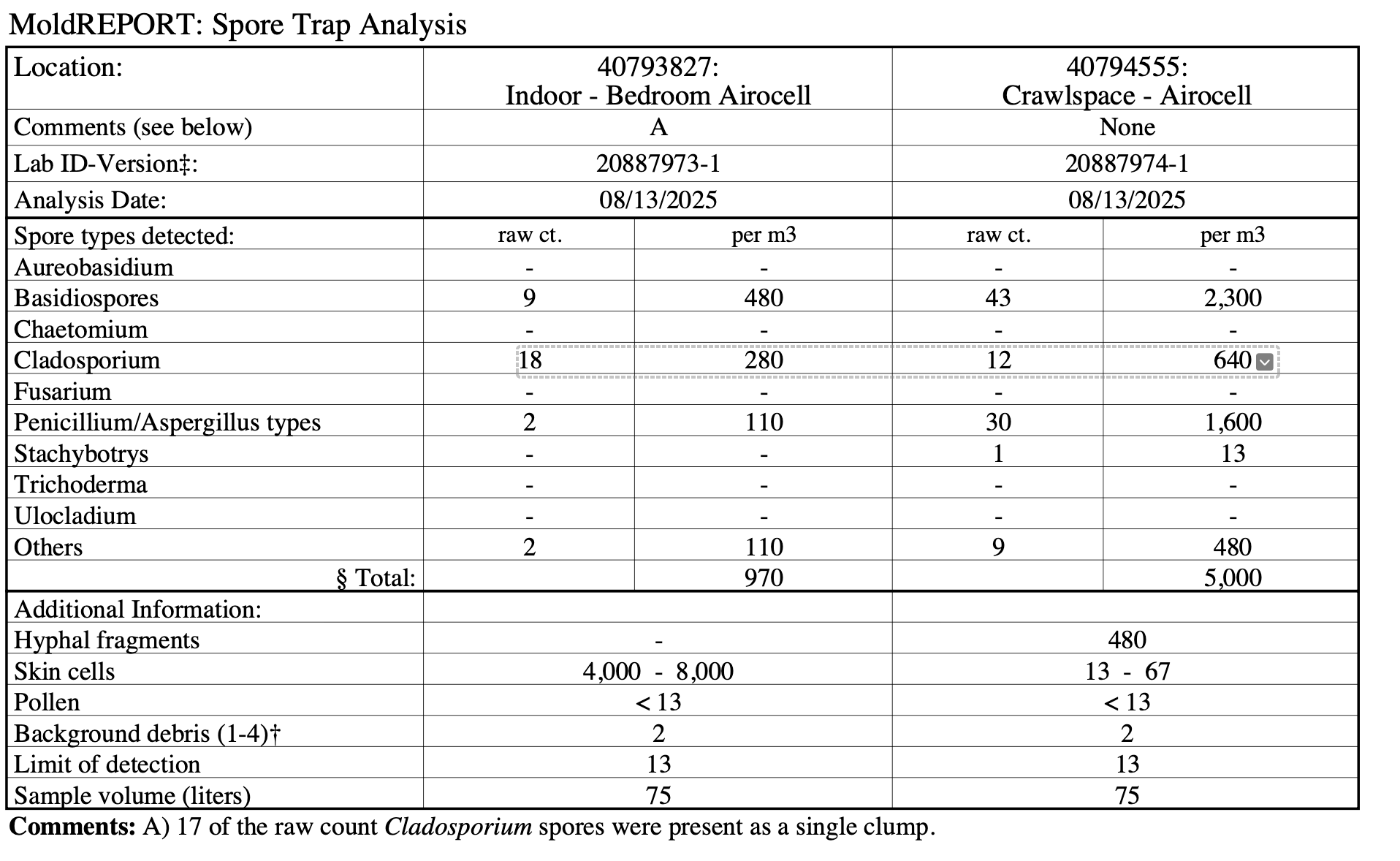
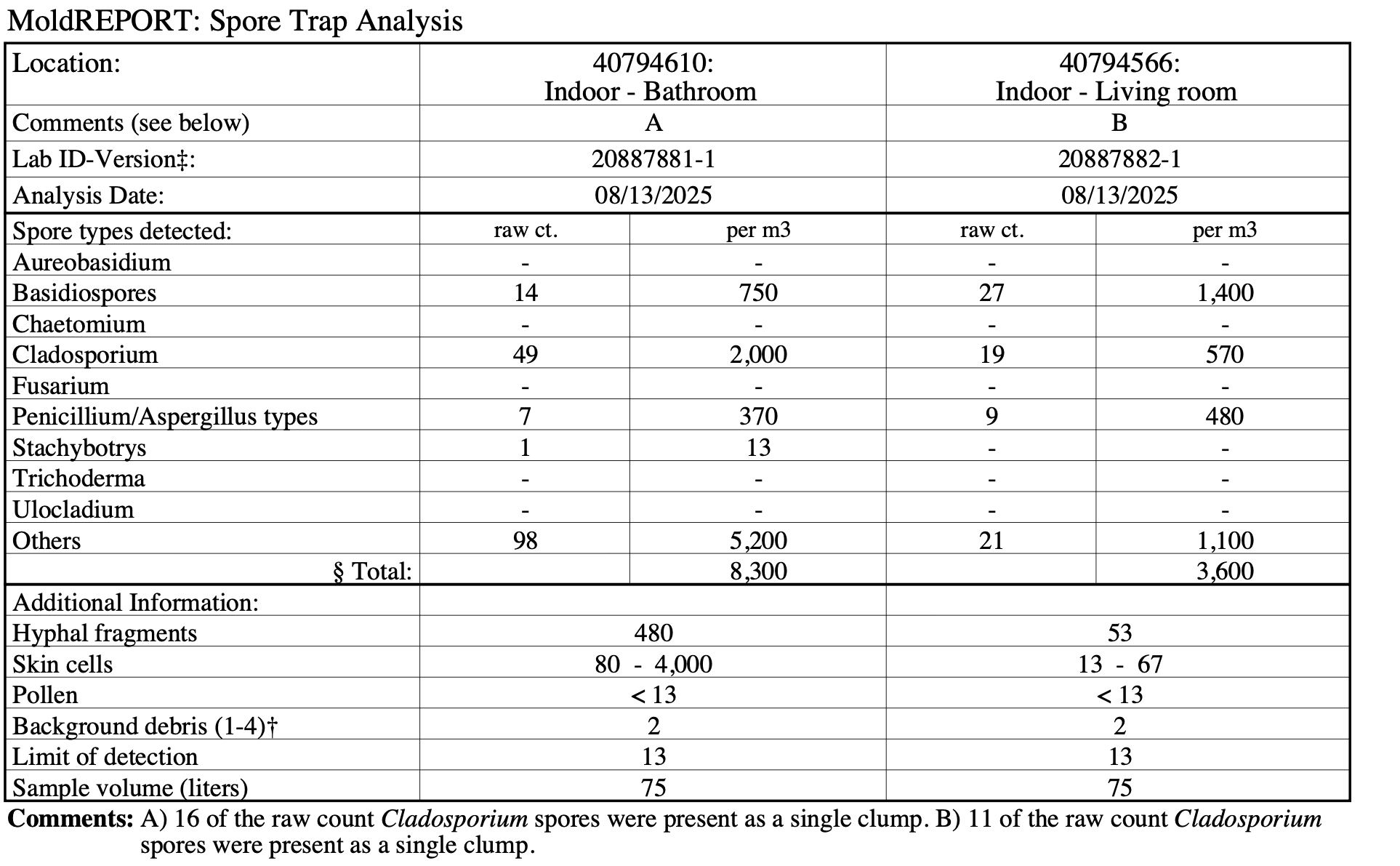
Example Test results
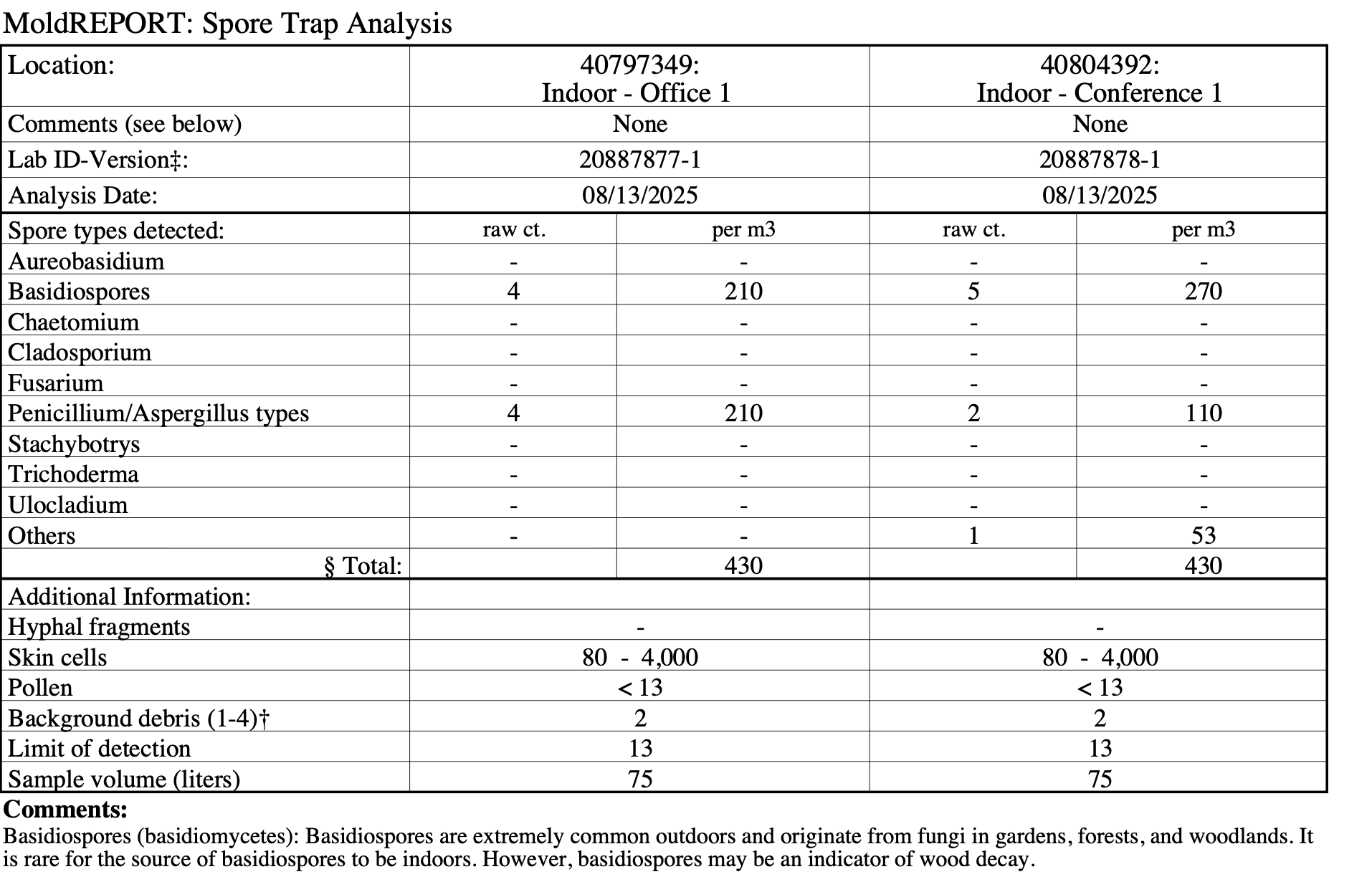
Example 1: treatment not suggested
Example 2: Clear in crawlspace, hasn't fully spread to home yet