
Does a Dehumidifier Help With Mold? (And Will It Kill It?)
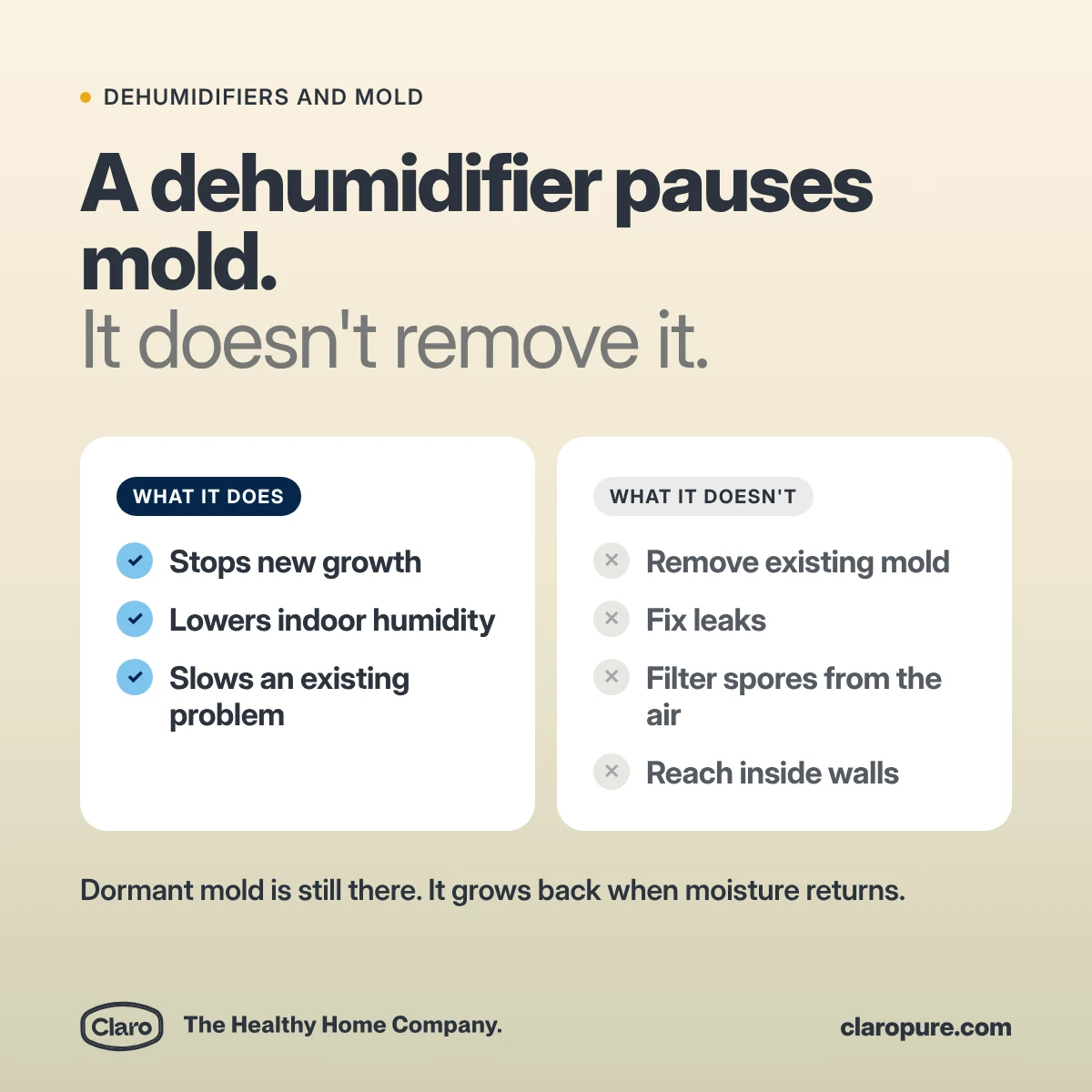
Short answer: No, a dehumidifier does not kill mold. What it does is remove the moisture mold needs to grow. Run one consistently and new mold stops forming, and existing growth goes dormant. But dormant is not dead. The mold is still there, its spores are still viable, and it will start growing again the moment moisture returns. A dehumidifier is one of the best tools for mold prevention, and one of the most misunderstood tools for mold removal.
A dehumidifier helps with: preventing new growth, controlling humidity, and slowing the spread of an existing problem.
A dehumidifier does not: kill mold, remove existing growth, fix leaks, or clean the air.
Key reminder: dormant mold still releases spores when it is disturbed or dries out.
Why Moisture Is the Real Problem
Mold is everywhere. Its spores float through every home, every day, and there is no practical way to keep them out. What spores do not have everywhere is water. Mold needs moisture to germinate and grow, which is why it shows up after leaks, in humid basements and crawl spaces, and around condensation.
The EPA's position is blunt: the best way to control mold is to control moisture. Take the water away and you take away mold's ability to spread. That is exactly what a dehumidifier does, and it is also the limit of what a dehumidifier does.
What a Dehumidifier Actually Does to Mold
Think of a dehumidifier as a pause button, not a delete button.
When indoor humidity drops below the level mold needs, active growth stops. The colony stops expanding and stops releasing the byproducts that cause that musty smell. To a homeowner, the problem looks solved. It is not.
The existing growth remains exactly where it was. Its spores remain viable, sometimes for years. If the dehumidifier fails, the tank fills, or a humid season arrives, growth picks up right where it left off. And if dried-out growth gets disturbed during cleaning or renovation, it can release a concentrated burst of spores into the air.
This is why "will a dehumidifier get rid of mold" has an honest two-part answer: it gets rid of the conditions mold needs, but not the mold itself.
Where a Dehumidifier for Mold Prevention Works Best
A dehumidifier earns its keep anywhere moisture is chronic rather than accidental.
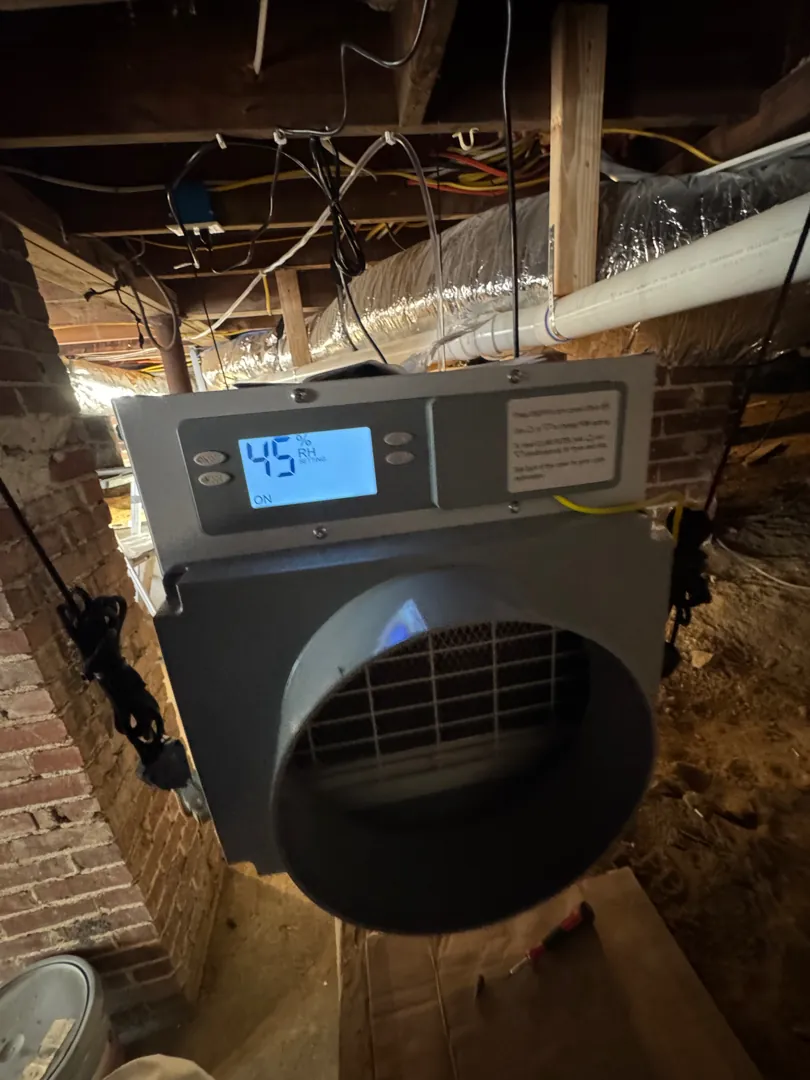
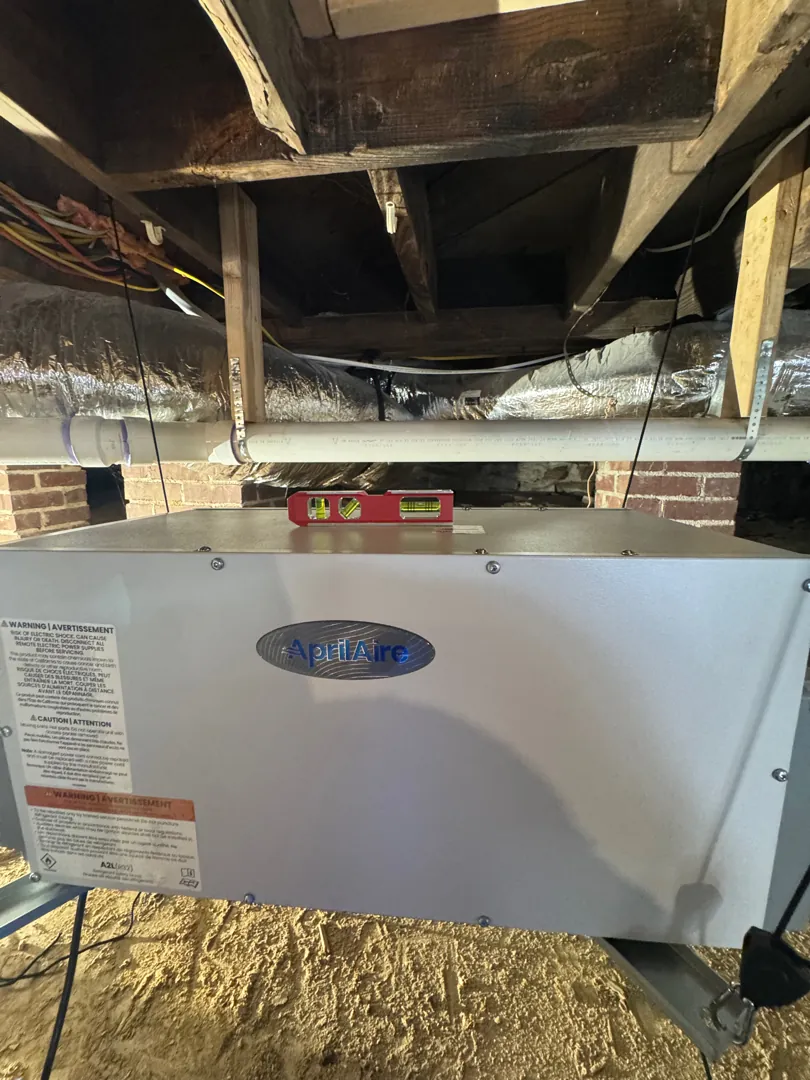
Crawl spaces. Bare earth, vents, and cool surfaces make crawl spaces mold factories. In Tennessee and Georgia, crawl spaces are where we find mold most often. A dehumidifier helps, though persistent crawl space moisture often points to a bigger fix like crawlspace mold remediation and encapsulation.
Basements. Below-grade spaces stay cool and humid. In St. Louis, basements are where we find mold most often. A properly sized dehumidifier running year-round is often the difference between a clean basement and a contaminated one.
Bathrooms and bedrooms. Useful where ventilation is poor, as a supplement to exhaust fans rather than a replacement for them.
After water damage. Once a leak is repaired, dehumidification speeds up drying and buys time before mold can establish. Speed matters, since mold can begin growing within 24 to 48 hours of materials getting wet.
Will a Dehumidifier Get Rid of Mold Smell?
Partially, and this trips people up. The musty odor comes from compounds mold releases while it is actively growing. Stop the growth with dry air and the smell fades. But if the smell persists even after weeks of low humidity, that tells you something important: somewhere, mold is still active and still being fed. A dehumidifier can mask the symptom while the source keeps growing inside a wall or under a floor.
A persistent musty smell with no visible mold is one of the most common reasons homeowners call us. More on that here: What Does Mold Smell Like?
Where a Dehumidifier Falls Short
Active leaks. If water is still getting in, no dehumidifier keeps up. Fix the source first.
Existing visible growth. Dormant mold on drywall, wood, or carpet still needs proper removal.
Inside walls, under floors, or in HVAC. A dehumidifier treats room air. It cannot reach hidden growth.
Airborne spores. A dehumidifier does not filter air. If spores are the concern, that is a job for HEPA filtration, not humidity control.
Allergies. For mold-sensitive people, dormant mold is still a problem. Allergens remain in the material whether or not it is actively growing.
How To Use a Dehumidifier Against Mold
If you are going to rely on one, set it up to actually work.
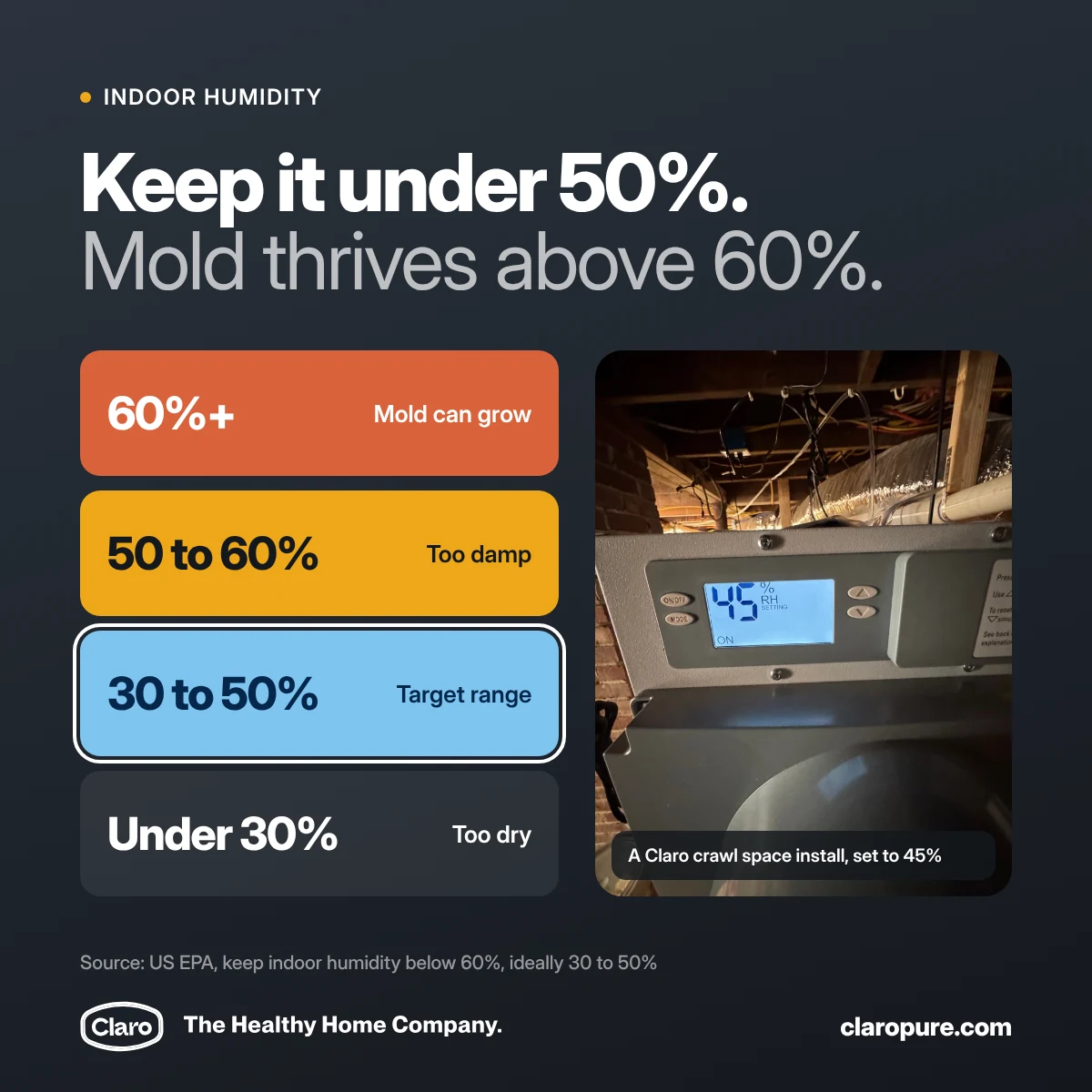
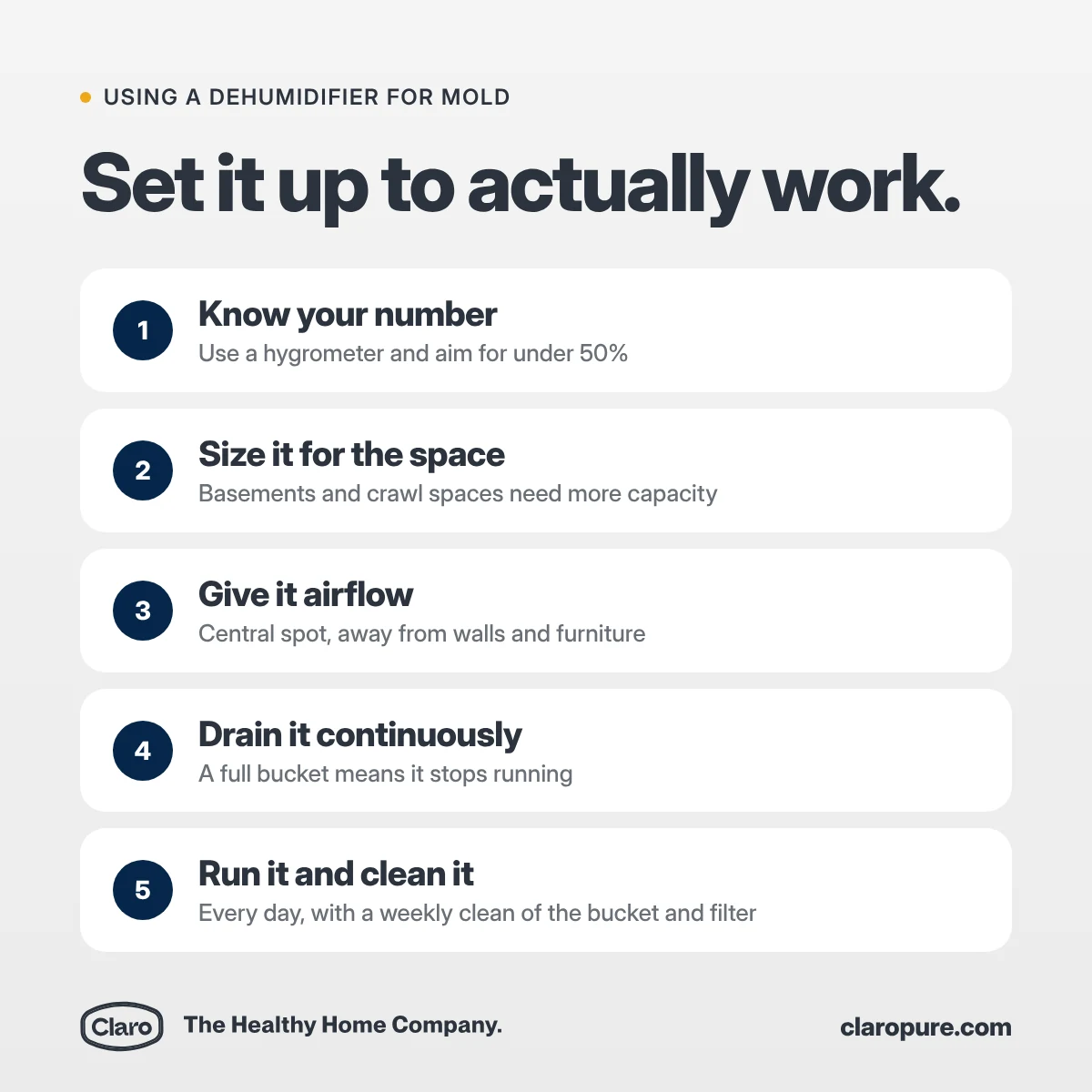
1. Know your number. Get a cheap hygrometer. The EPA recommends keeping indoor humidity below 60 percent, ideally between 30 and 50 percent. Aim for under 50 in mold-prone spaces.
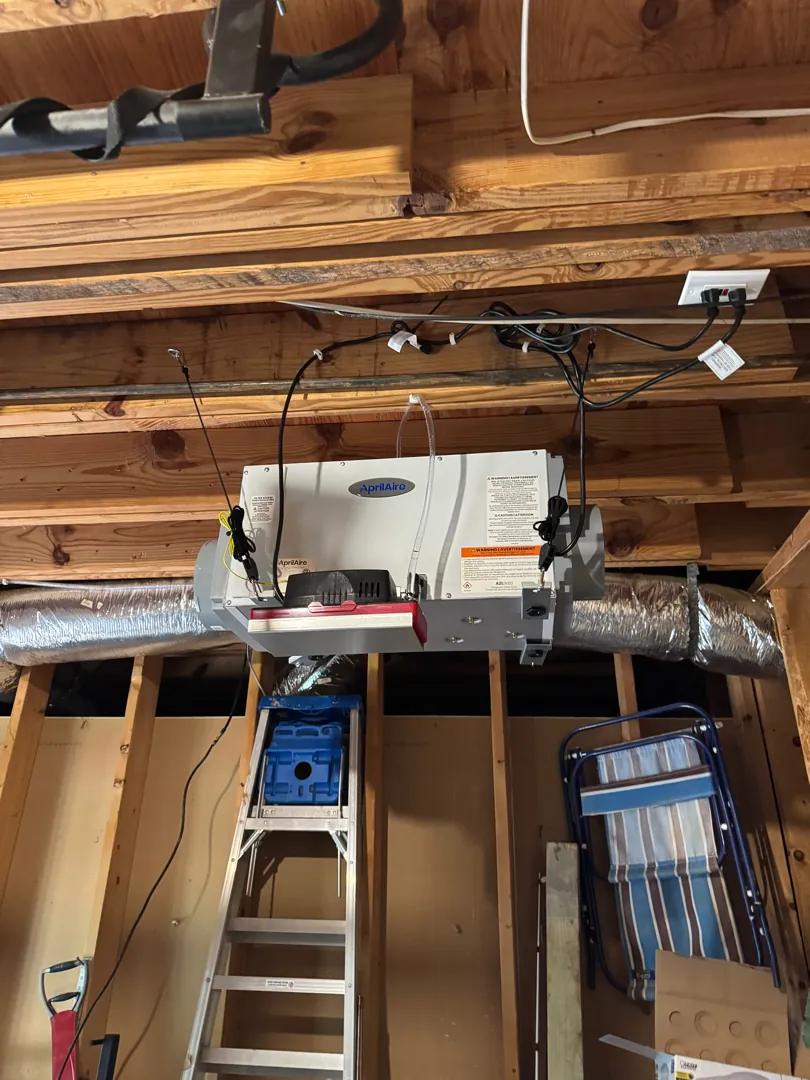
2. Size it for the space. A unit rated for a small bedroom will lose the fight in a damp 1,500-square-foot basement. Check the pint rating and square footage coverage, and size up for below-grade spaces.
3. Give it airflow. Place it centrally, away from walls and furniture, with doors open to adjoining rooms.
4. Use continuous drainage. A bucket that fills at 2 a.m. means the unit sits idle until morning. A drain hose or pump keeps it running.
5. Run it consistently. Humidity control is a habit, not an event. Seasonal or occasional use gives mold windows to grow in between.
Don't Let the Dehumidifier Become the Problem
Here is the part most articles skip: a neglected dehumidifier grows mold itself. The bucket or drain pan holds standing water, and the coils and filter collect damp dust. Left uncleaned, the unit can turn into a mold source that blows spores around the room it was supposed to protect.
Empty and wash the bucket weekly with soap and water, wipe down accessible surfaces, and clean or replace the filter on the manufacturer's schedule. If you open the unit and see black or pinkish growth inside, that growth is part of your home's air.
Signs a Dehumidifier Isn't Enough
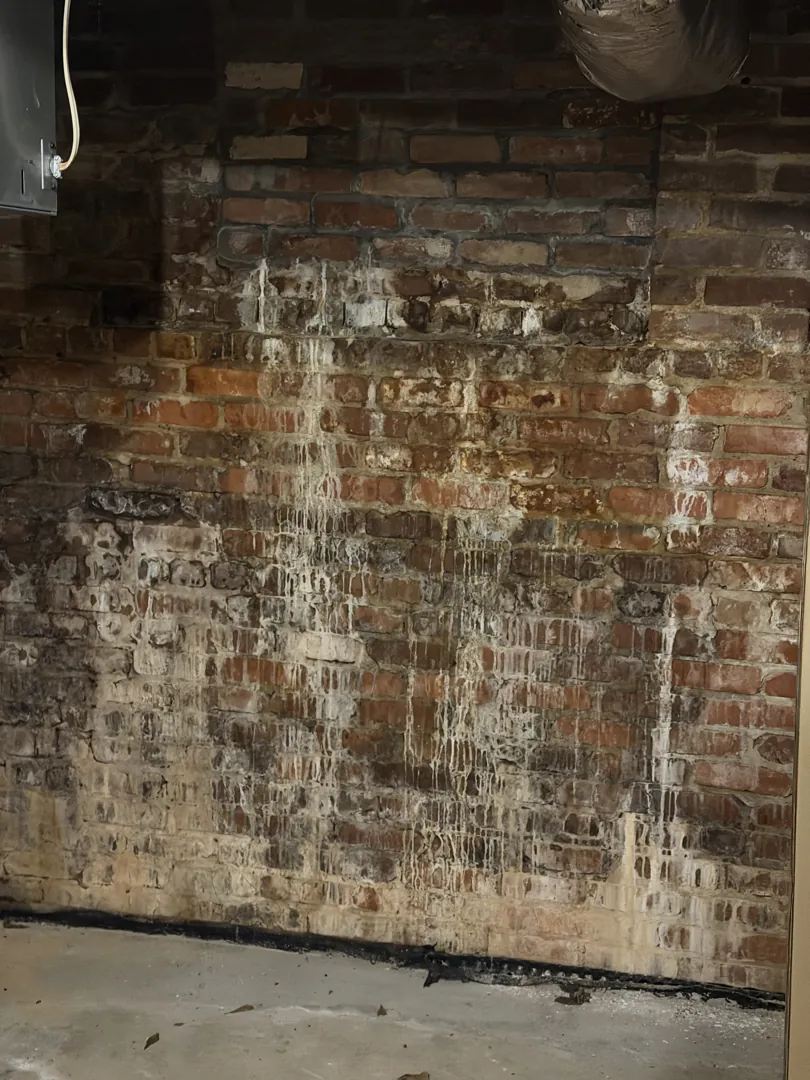
- Visible growth covering more than about 10 square feet
- Growth that returns despite consistently low humidity
- A musty smell with no visible source
- Anything inside walls, under flooring, or in the HVAC system
- Health symptoms that ease when you leave the house
Any of these means the problem is past the prevention stage and into remediation.
Not Sure How Far Yours Has Gone?
If you have been running a dehumidifier and the smell or the growth is still there, it is time for a straight answer. Every Claro job starts with identifying what is actually present and what is feeding it, because we don't treat what isn't there. Our treatment is non-toxic and safe for your family and pets, and it is backed by a 1-year mold-free guarantee.
Ready for a straight answer? Book an inspection with Claro today.