
Case Study: Whole home remediation restored clean air for a young family
A young family in Atlanta reached out to Claro when their younger son's allergies suddenly seemed worse, almost out of nowhere. Around the same time, mold had started appearing in places that are hard to ignore: around nearly every window on the main floor, around electrical outlets and light switches, and near some of the air vents.
The family had bought the home in 2024 and renovated it before moving in. Just before move-in, small spots of mold had shown up around a bathroom exhaust fan and around the windows in their son's bathroom. Those areas were cleaned and painted, and for a while everything seemed fine. Then, the following summer, the spots came back in the same places and began spreading through the house.
Our mold inspection found that the problem was not on the surfaces at all. Moisture had worked its way into the walls around the windows and exterior wall sections in seven different areas of the home, including the master bedroom, both boys' bedrooms, the boys' bathroom, the kitchen bay window, the office and the laundry area. The mold the family could see was only what had made it through to the paint.
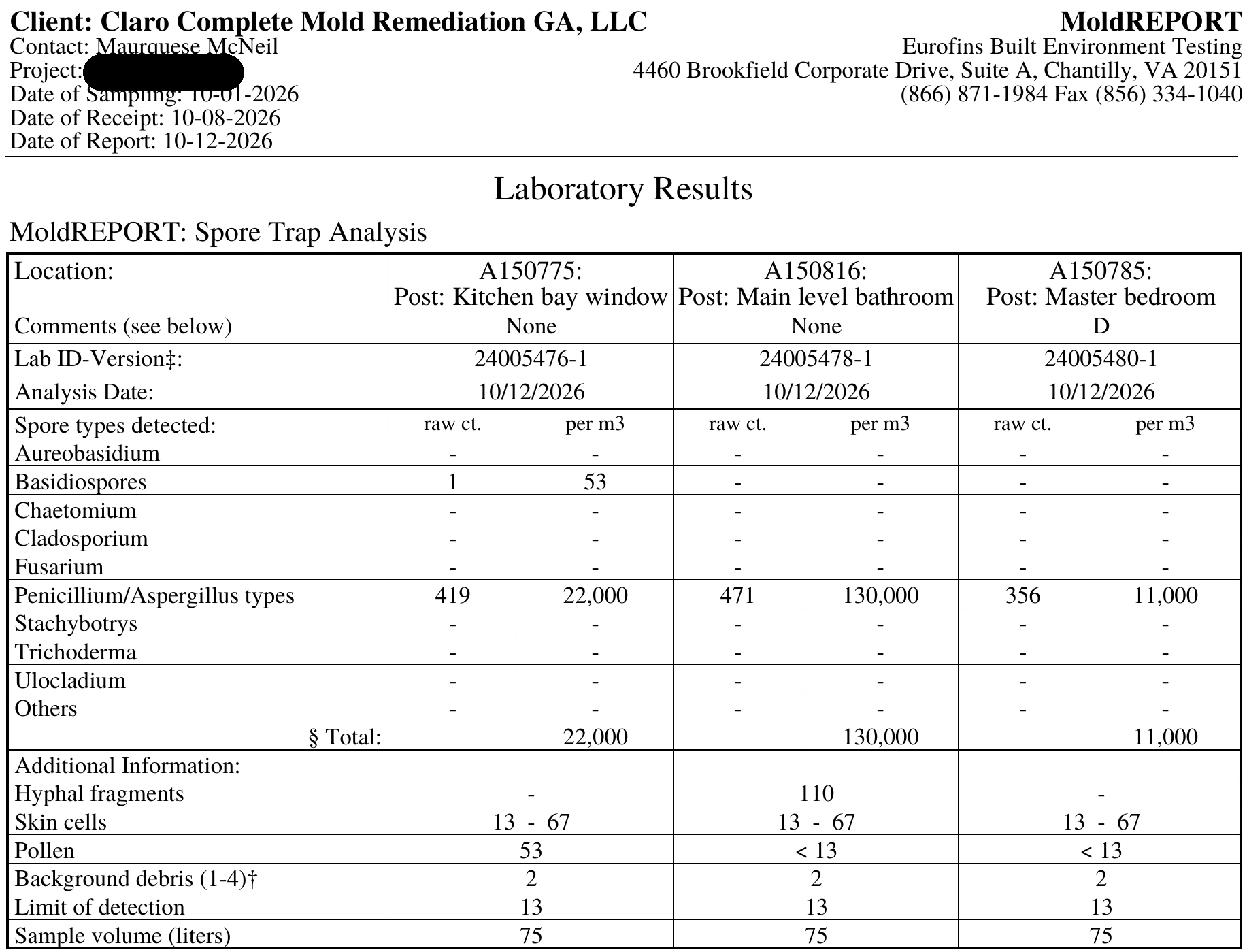
Air samples were collected in every affected room before treatment, first before demolition and again after the damaged walls were opened.
Before demolition, the readings were already elevated throughout the home:
- Main level bathroom: 16,000 spores/m³, including Stachybotrys
- Kitchen window area: 13,000 spores/m³
- Laundry room: 8,800 spores/m³, including Chaetomium
- Boys' bathroom: 83,000 spores/m³
- Master bedroom and boys' bedrooms: 2,100 to 5,600 spores/m³
Nearly all of this came from Penicillium/Aspergillus types, the molds most likely to amplify indoors on damp drywall. Stachybotrys and Chaetomium are water damage marker molds that rarely appear indoors unless materials have stayed wet for a long time, so finding them confirmed this was not a simple humidity or surface problem.
Once the walls were opened, the contamination behind them became clear. The boys' bathroom measured 200,000 spores/m³ with 270 hyphal fragments, a sign of active growth. The main level bathroom reached 130,000 spores/m³, and the boys' bedrooms measured up to 31,000 spores/m³, with Chaetomium detected in one of them. For a family with two young children and a son whose allergies were already flaring, these were the rooms that mattered most.
Because the growth was spread across so many rooms, Claro treated it as a whole home project:
- Sealed containment set up around seven separate work areas, each with air scrubbers running under negative pressure so spores released during demolition stayed out of the rooms the family was still living in
- Hazardous building materials testing before demolition
- Boys' bathroom: removal of the toilet, the surrounding tile, and the drywall behind the toilet and along the window wall
- Bedrooms: removal of water damaged drywall along the exterior window walls in the master bedroom and both boys' bedrooms, plus the affected area around a ceiling vent
- Kitchen, office and laundry: removal of drywall around the kitchen bay window, along the office wall, along the garage entry wall and throughout the laundry room
- InstaPure Dry Fog treatment across the full 5,000 square foot home, including all HVAC ductwork, so spores were not recirculated through the air system into every room
- EverPure Dry Fog application to help protect surfaces against future microbial growth
- Installation of an Aprilaire E070 dehumidifier, capable of removing up to 70 pints of water per day, with a dedicated electrical outlet installed by a licensed electrician
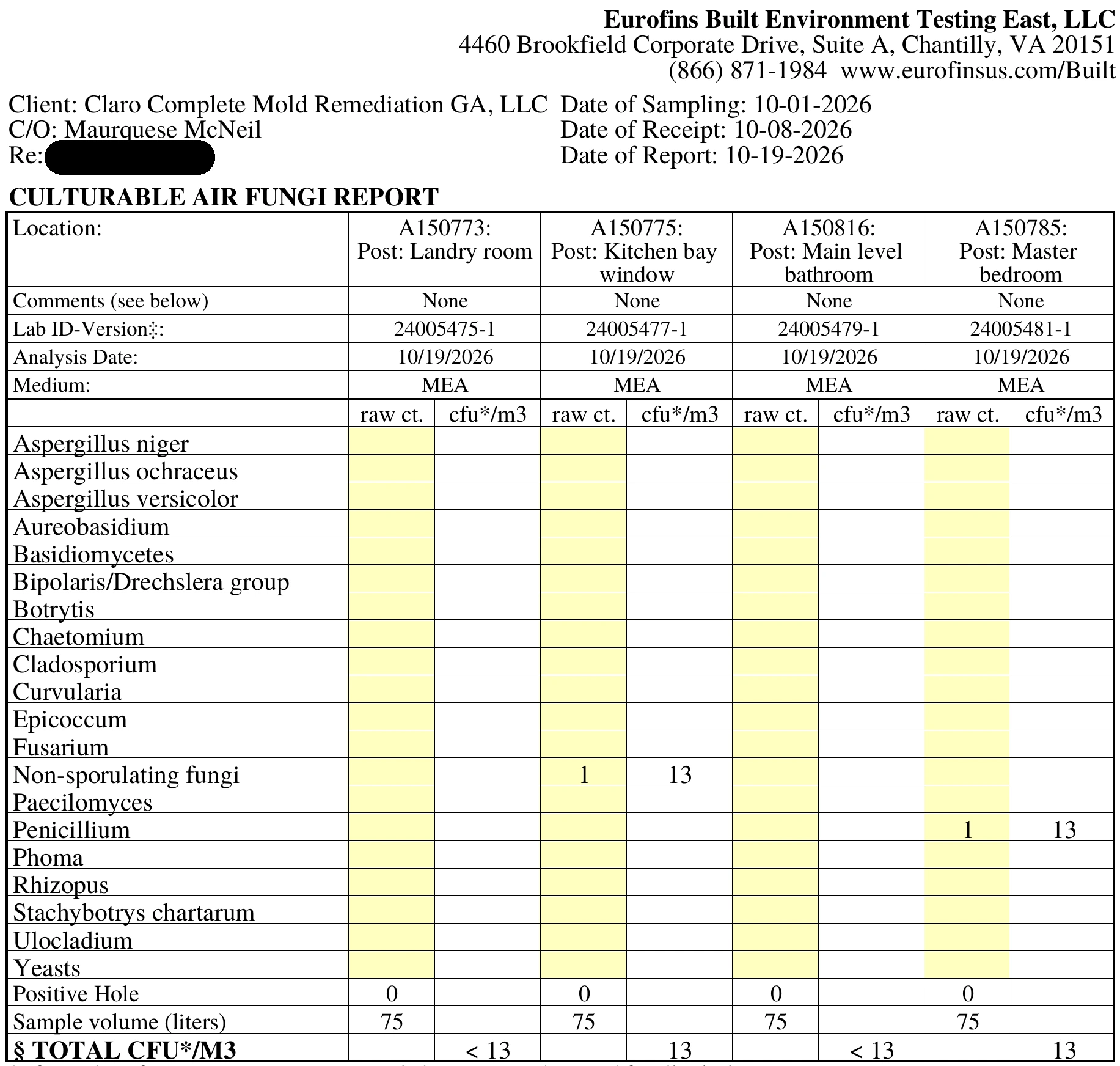
Post remediation culturable air testing, which measures living mold capable of growing, showed the results in the main living areas:
- Main level bathroom: less than 13 CFU/m³, down from 130,000 spores/m³
- Laundry room: less than 13 CFU/m³, down from 16,000 spores/m³
- Kitchen bay window: 13 CFU/m³, down from 22,000 spores/m³
- Master bedroom: 13 CFU/m³, down from 11,000 spores/m³
- Boys' bathroom: 13 CFU/m³, down from 200,000 spores/m³
Results at 13 CFU/m³ represent a single colony, right at the laboratory limit of detection.
For this family, the numbers were never the main point. Their younger son's allergies had flared up without an obvious cause, and the bathroom he and his brother use every day turned out to hold the heaviest contamination in the house. That room went from 200,000 spores/m³ to a single colony. The parents now know what was in the air their children were breathing, where it came from, and that it has been removed at the source.
When a child's allergies get worse for no clear reason, the home is worth a closer look, especially if mold keeps returning around windows, outlets or vents after it has been cleaned or painted. Those spots are often the visible edge of moisture inside the wall, and treating only the surface leaves the source, and the exposure, in place. Claro backs its remediation work with a one year guarantee.