
Case Study: Staged remediation cleared a home and its in-law suite
A family in Brookhaven, Georgia contacted Claro after noticing mold along the tops of the walls and ceiling in a guest bathroom. Their home is an older property that had gone through a major renovation, with a flat roof and a separate, detached in-law apartment. Over the years, it had seen several leak repairs.
Our inspector took hundreds of moisture readings from the attic down, and found elevated moisture in several areas of the main house and the apartment, including the upstairs office, the primary bedroom and bathroom, and the apartment's living area and bathroom. Many of these spots had not yet shown any mold on the surface. Much of it appeared to be moisture left behind inside the walls after earlier repairs, along with high humidity in the apartment after a fallen tree damaged its air conditioning unit.
The family wanted the work done thoroughly, but they also had a dog at home and a new puppy on the way, and did not want to live in the middle of a construction zone. Because the apartment was a separate building with its own air conditioning, Claro planned the project in two stages so the family could stay on the property the whole time.
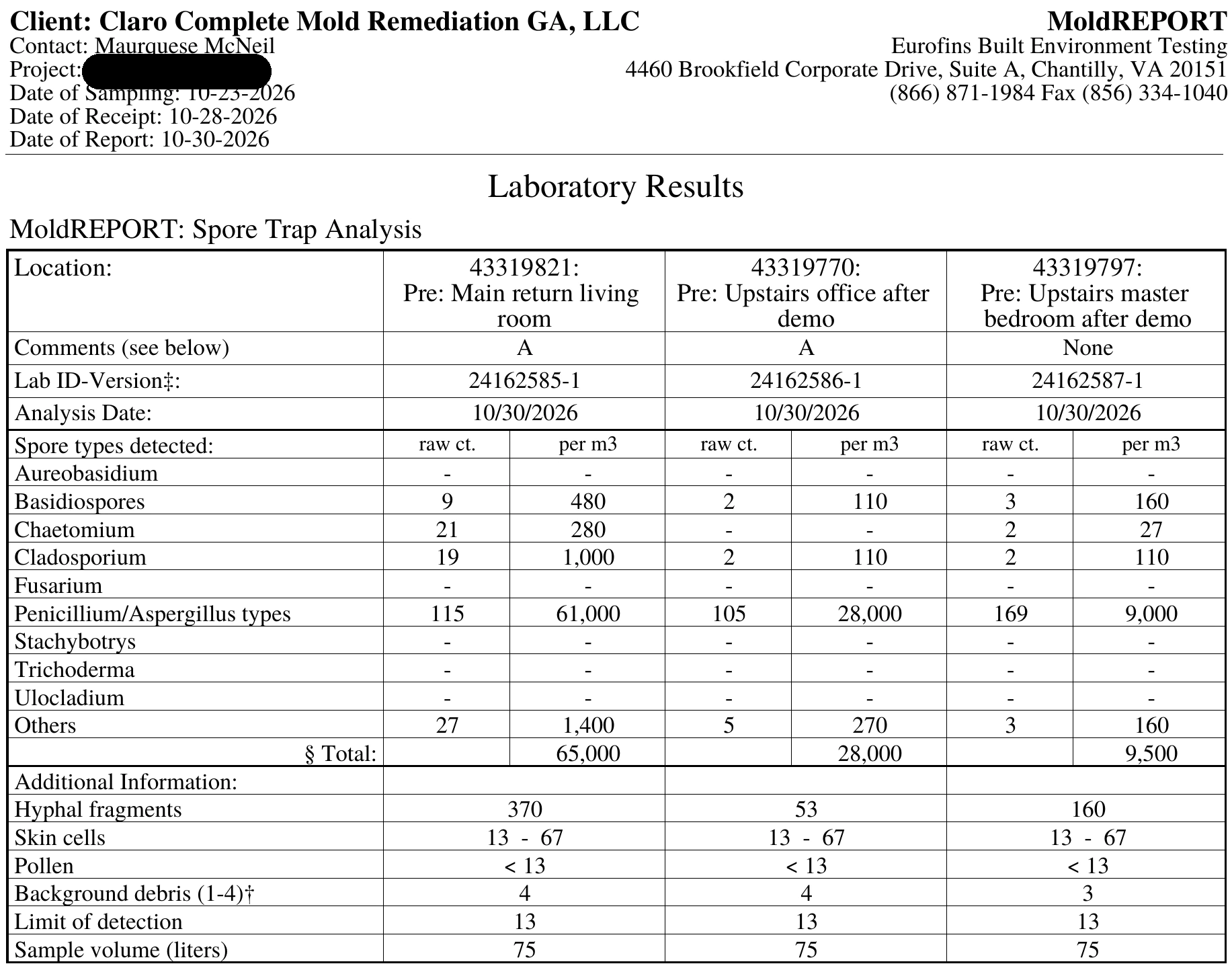
Air samples were collected in both buildings before treatment, after the damaged walls had been opened.
In the main house, the results confirmed that contamination had reached the shared living space:
- Main return, living room: 65,000 spores/m³, including 61,000 Penicillium/Aspergillus types, 280 Chaetomium and 370 hyphal fragments
- Upstairs office: 28,000 spores/m³
- Primary bedroom: 9,500 spores/m³, including Chaetomium
- Primary bathroom: 6,900 spores/m³, including Chaetomium and 270 hyphal fragments
In the apartment, the sample measured 7,000 spores/m³ with hyphal fragments present.
Chaetomium is a water damage marker mold that grows on drywall and other materials that have stayed wet for a long time. It is rarely found in indoor air unless there is a moisture source, so finding it in three rooms of the main house confirmed that water left inside the walls had been feeding active growth. The highest reading came from the return in the living room, where the HVAC system was drawing air from the whole house and circulating it back into every room.
Claro split the project into two stages so the family always had a clean place to stay:
- Stage one, the apartment: containment set up around the affected wall and the bathroom, removal of the damaged drywall along the wall behind the kitchen and the bathroom ceiling and upper walls, drying, and then dry fog treatment of the apartment
- Stage two, the main house: once the family could move into the cleared apartment, containment was set up around four work areas in the main house, with removal of damaged drywall in the upstairs office, two sections of the primary bedroom, and the primary bathroom, including the toilet and surrounding tile
- Air scrubbers under negative pressure in every containment area, so nothing released during demolition reached the rest of the home
- Hazardous building materials testing before demolition
- Drying of all opened areas, with moisture verified before treatment
- InstaPure and EverPure Dry Fog treatment across the full 3,357 square feet of living space in both buildings, including all ductwork
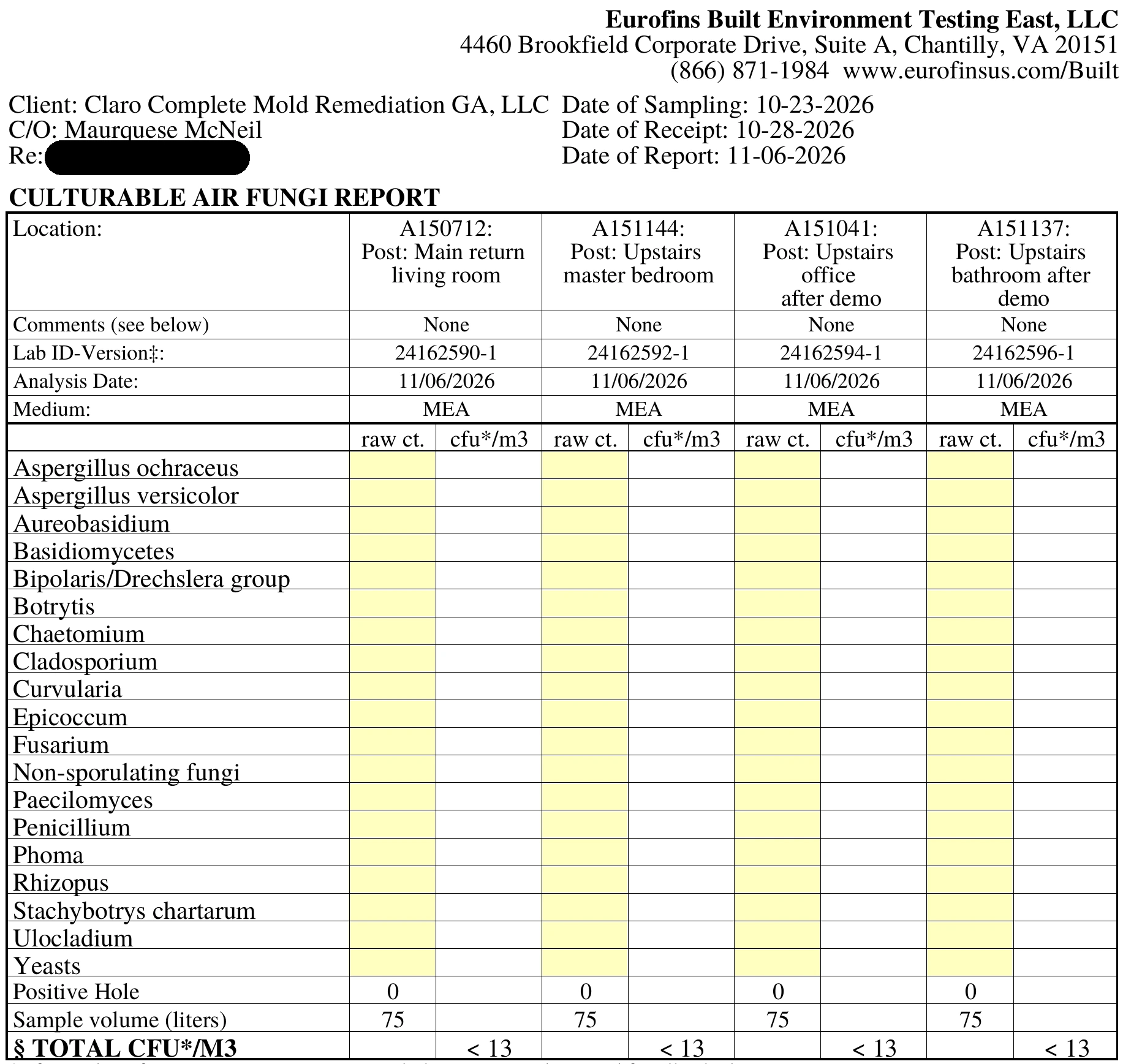
Post remediation culturable air testing, which measures living mold capable of growing, confirmed the results in both buildings:
- Main return, living room: less than 13 CFU/m³, down from 65,000 spores/m³
- Upstairs office: less than 13 CFU/m³, down from 28,000 spores/m³
- Primary bedroom: less than 13 CFU/m³, down from 9,500 spores/m³
- Primary bathroom: less than 13 CFU/m³, down from 6,900 spores/m³
- Apartment: 13 CFU/m³, a single colony at the laboratory limit of detection
No Chaetomium grew in any sample, and every room in the main house grew zero colonies.
Staging the work meant the family, their dog and their new puppy never had to live inside an active remediation or leave the property. Catching the moisture while much of it was still hidden inside the walls also meant the problem was addressed before it could spread further or start affecting anyone's health. For older homes that have been through several repairs, moisture left behind in the walls is one of the most common sources of hidden mold, and a full moisture assessment is the best way to find it.