
Case Study: 31,000 Stachybotrys spores removed from a finished basement
A family in Johns Creek, Georgia found the problem by chance. While pulling Halloween decorations out of storage in their finished basement, they noticed round patches of mold growing on the drywall near the rear basement door. They had no idea how long it had been there, and they suspected water may have collected near the door at some point.
No one in the household had noticed any health effects, and they wanted to keep it that way. The basement is part of their living space, and in a home built in the mid 1980s, they wanted to know whether what they could see was the whole story or only the visible edge of something larger.
Our inspector performed a full top down assessment, from the attic to the basement, taking moisture readings at walls, windows, plumbing fixtures and anywhere water had a history of collecting. The mold inspection confirmed that the growth was concentrated in the wall around the rear basement door, where moisture had been reaching the drywall from outside.
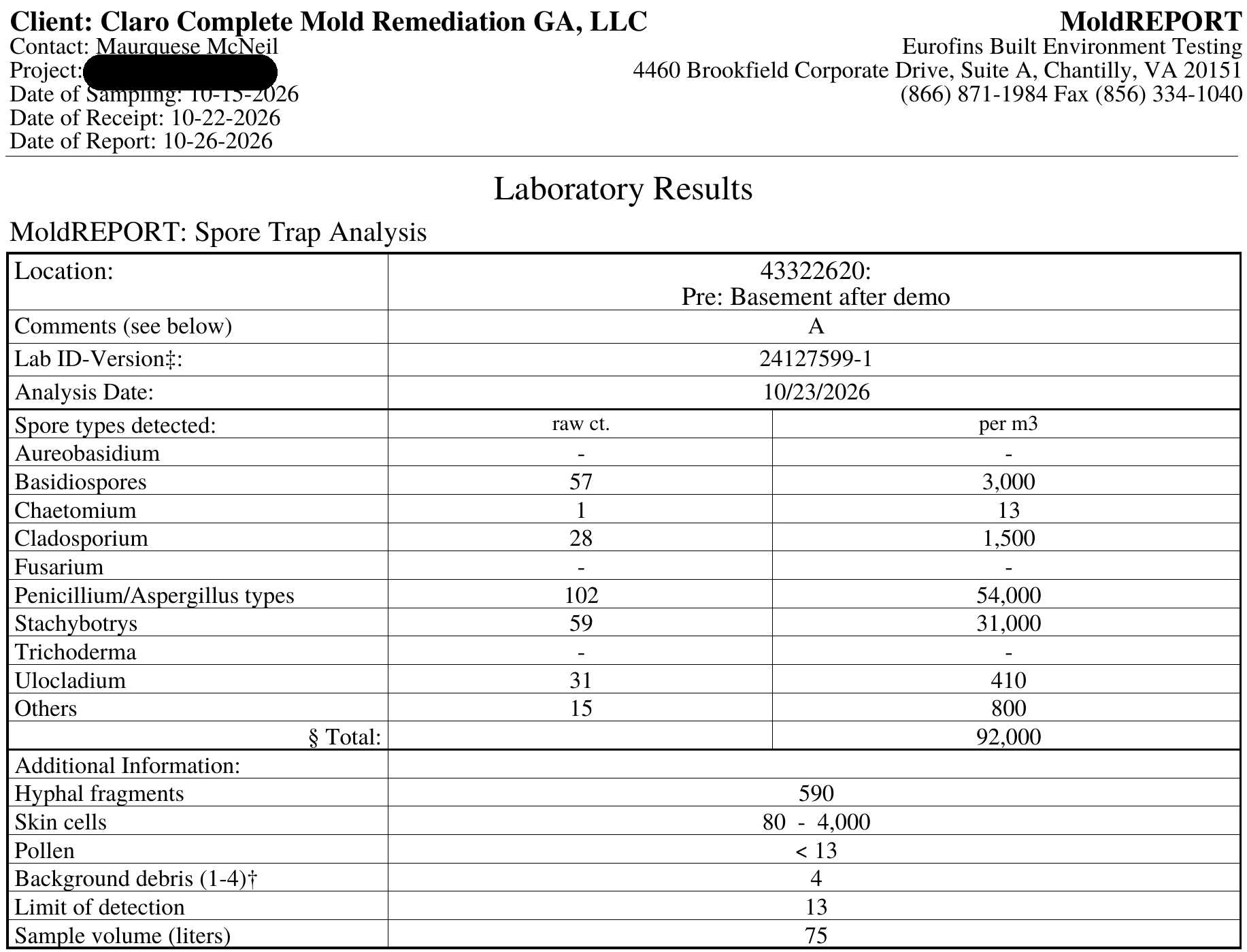
Once the damaged drywall around the basement door was opened, the air sample from that area showed why the family was right to act quickly:
- Total: 92,000 spores/m³
- Stachybotrys: 31,000 spores/m³
- Penicillium/Aspergillus types: 54,000 spores/m³
- Ulocladium: 410 spores/m³
- Hyphal fragments: 590
Stachybotrys, often called black mold, is a water damage marker mold that grows on drywall and other materials that have stayed wet for a long time. It is rarely found in indoor air at all, so a count of 31,000 spores per cubic meter is exceptionally high. Stachybotrys is also known to produce mycotoxins, which is one of the main reasons it is treated so seriously in a home where people live. Ulocladium is another water damage indicator, and the large number of hyphal fragments confirmed active growth inside the wall. The lab also noted heavy debris on the sample, which means the true counts were likely even higher.
Samples from the main HVAC return and the upstairs hallway were much lower, at 4,200 and 2,300 spores/m³, with no Stachybotrys detected. The contamination was concentrated in the basement, which made it possible to remove it before it spread through the rest of the home.
Claro removed the source and treated the entire home:
- Sealed containment around the rear basement door, with an air scrubber running under negative pressure so spores released during demolition could not reach the rest of the house
- Hazardous building materials testing before demolition
- Removal of the affected drywall on both sides of the basement door
- InstaPure Dry Fog treatment across the full 3,214 square foot home, including all HVAC ductwork, to denature mold on surfaces and in the air
- EverPure Dry Fog application to help protect surfaces against future microbial growth
- Installation of an Aprilaire E070 dehumidifier, capable of removing up to 70 pints of water per day, with a dedicated electrical outlet installed by a licensed electrician to keep the basement dry going forward
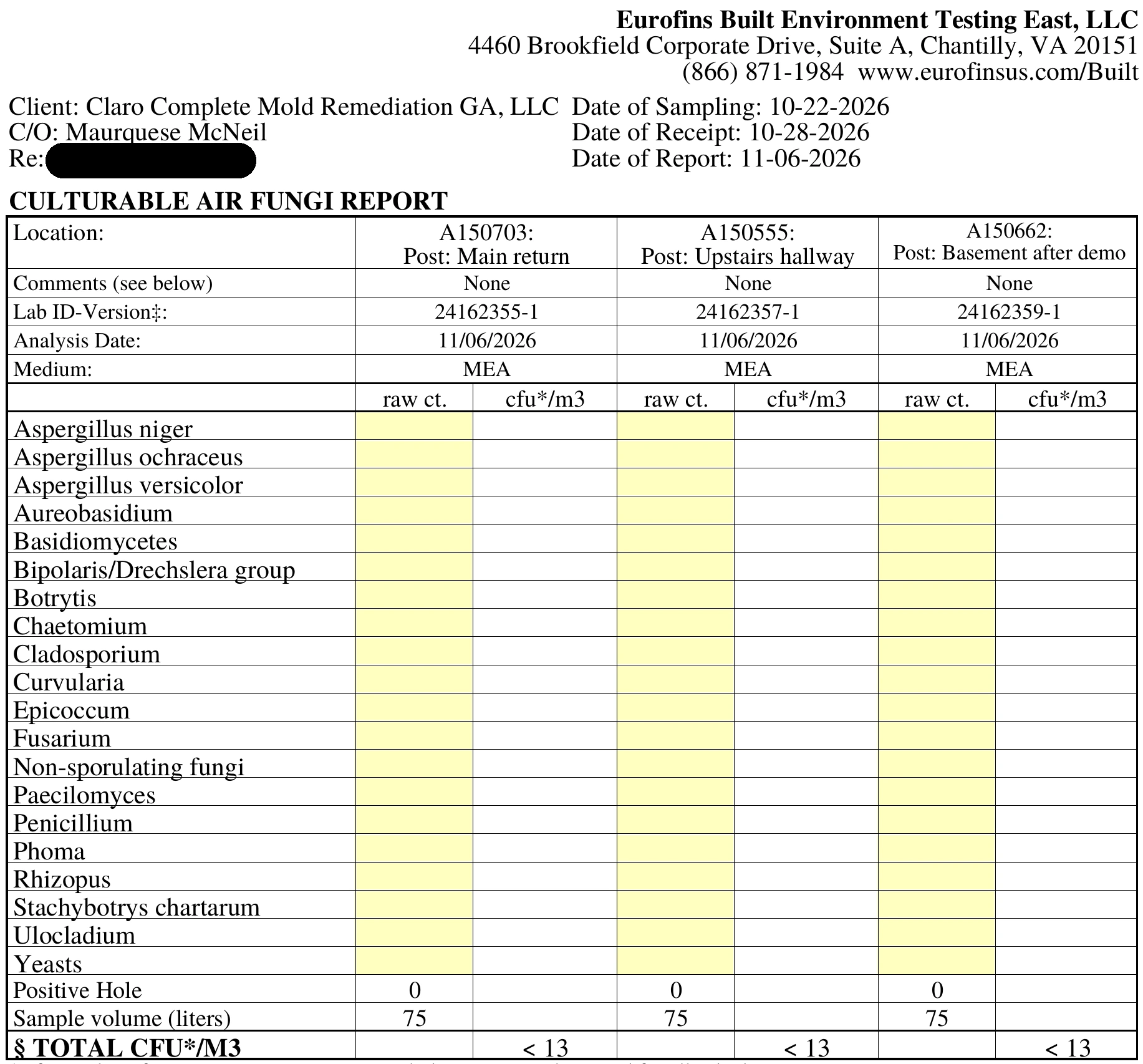
Post remediation culturable air testing, which measures living mold capable of growing, was taken in three areas:
- Basement: less than 13 CFU/m³, down from 92,000 spores/m³
- Main HVAC return: less than 13 CFU/m³
- Upstairs hallway: less than 13 CFU/m³
All three samples grew zero colonies, below the laboratory limit of detection. No Stachybotrys was detected anywhere it was tested.
This family found the problem while doing something as ordinary as getting out holiday decorations, and that timing mattered. A basement wall holding 31,000 Stachybotrys spores per cubic meter is not something anyone wants in their living space, and finding it before anyone developed symptoms meant the source could be removed before it became a health problem. If you notice round or spotted growth on basement drywall, especially near a door or anywhere water may have collected, it is worth having it tested rather than cleaning the surface and moving on.