
Case Study: Skylight leak and crawlspace mold resolved
A homeowner in Atlanta's Grant Park neighborhood contacted Claro after a skylight in the ceiling began leaking. The leak had been going on for a few months while the family waited for a roof replacement, and they had started to have health concerns. An at home mold test came back positive, and when they opened part of the affected wall, they found mold on the insulation and drywall behind it.
Our inspector performed a full walkthrough with moisture readings, from the roofline down to the crawlspace beneath the home. The inspection confirmed water damage from the skylight leak in several rooms, and it also revealed that the crawlspace was contributing to the problem, with mold growth on the framing and conditions that allowed moisture to build up below the living space.
The homeowner's roofers were scheduled to replace the roof, and while doing so they removed the damaged ceiling drywall in the living room and primary bathroom. Claro adjusted the scope to focus on the remaining affected areas and the crawlspace.
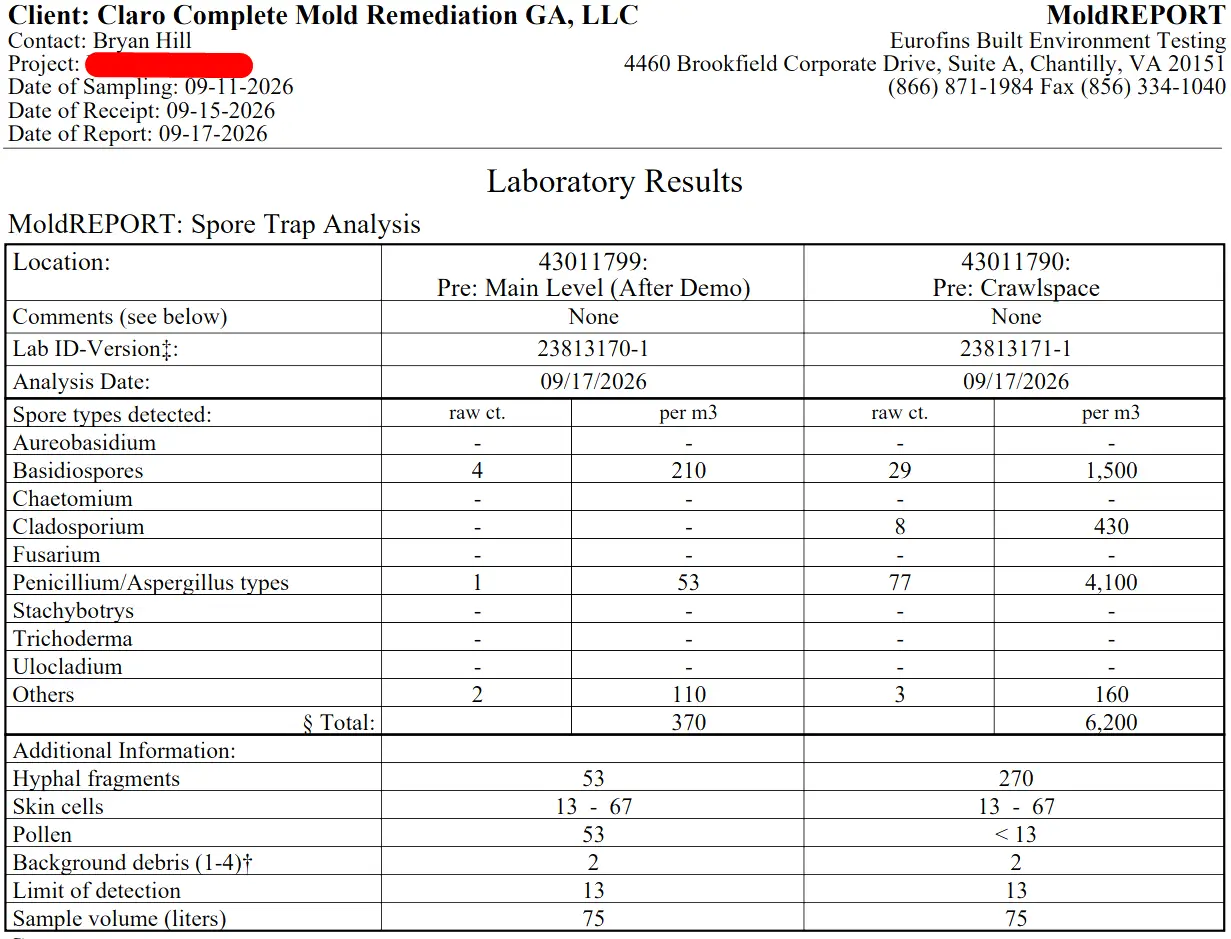
Air samples collected before treatment showed where the main problem was hiding.
The crawlspace sample measured 6,200 spores per cubic meter, including 4,100 spores/m³ of Penicillium/Aspergillus types. These are the most common molds to amplify indoors when materials stay damp, and a count this high below the home points to active growth on the crawlspace framing. The sample also contained 270 hyphal fragments, which are pieces of the mold body itself and a strong indicator of active growth.
The main level sample, taken after the damaged drywall was opened, measured 370 spores/m³ and also contained hyphal fragments.
Crawlspace air matters more than many homeowners realize. As warm air rises through a home, a significant share of the air on the main level is drawn up from the crawlspace below, carrying spores and odors with it. Treating the visible damage upstairs without addressing the crawlspace would have left the source of the problem in place.
Claro coordinated its work around the roof repair so the home could be treated and protected from top to bottom:
- Dining room: sealed containment with an air scrubber under negative pressure, followed by removal of a 2 foot perimeter of drywall around the water stain from the roof leak
- Hazardous building materials testing before demolition
- Crawlspace mold removal: physical cleaning of mold growth on the framing to prepare the surfaces for treatment
- Crawlspace encapsulation: removal of old insulation and debris, sealing of gaps and penetrations, a 20 mil VIPER vapor barrier with taped seams, and R-10 foundation wall insulation
- Deck seal: an open section of deck connecting to the crawlspace was sealed with rigid insulation, spray foam and vapor barrier to stop air movement and pest entry
- Humidity control: an Aprilaire E070 dehumidifier, capable of removing up to 70 pints of water per day, hung in the crawlspace with a condensate pump, sealed vents and a dedicated outlet installed by a licensed electrician
- InstaPure and EverPure Dry Fog treatment throughout the living space, attic, HVAC ductwork and crawlspace
The homeowner's roofing contractor left the opened ceilings unsealed until the dry fog treatment was complete, so the treatment could reach those areas before they were closed back up.
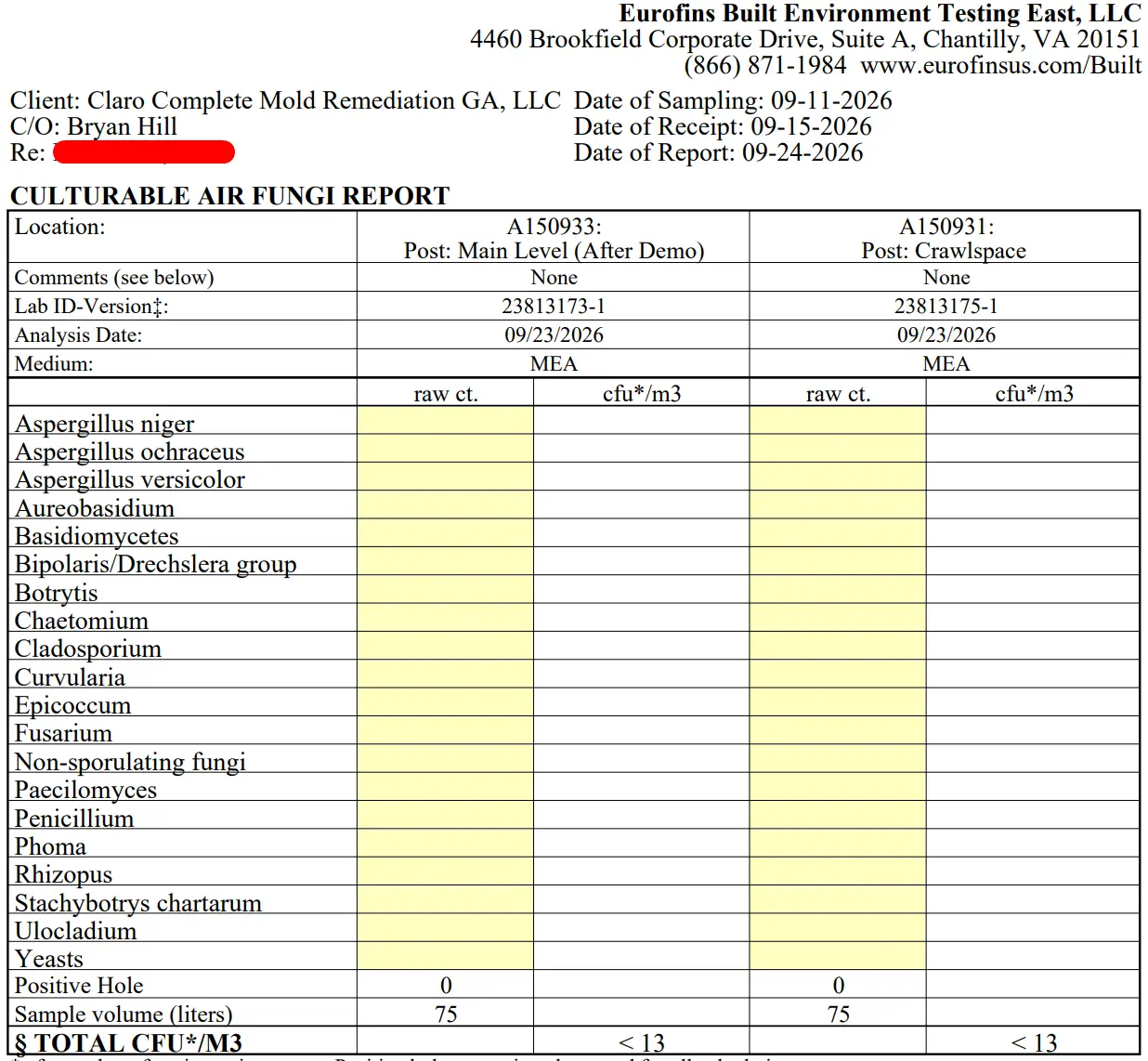
Post remediation culturable air testing, which measures living mold capable of growing, confirmed the results:
- Crawlspace: less than 13 CFU/m³, down from 6,200 spores/m³
- Main level: less than 13 CFU/m³
Both results are below the laboratory limit of detection. With the roof repaired, the crawlspace sealed and dehumidified, and the whole home treated, the conditions that allowed mold to grow have been addressed at every level. Claro backs its remediation work with a one year guarantee.