
Case Study: Shower demolition and dry fog cut spores 99%
A family in Alpharetta, Georgia contacted Claro after noticing persistent moisture in one of their upstairs bathrooms. Their own moisture meter showed consistently high readings around the toilet and along the base of the shower, even after running a heavy duty dehumidifier for several days. A plumber removed and reseated the toilet and found no leak at the wax seal, yet the readings stayed high.
Surface swabs taken in those same spots showed active growth, while samples from other rooms in the home came back clean. The family also had health concerns that prompted them to look closely at indoor air quality. Our inspection pointed to moisture and mold trapped beneath the tile and inside the shower assembly, where surface cleaning and air treatment alone could not reach.
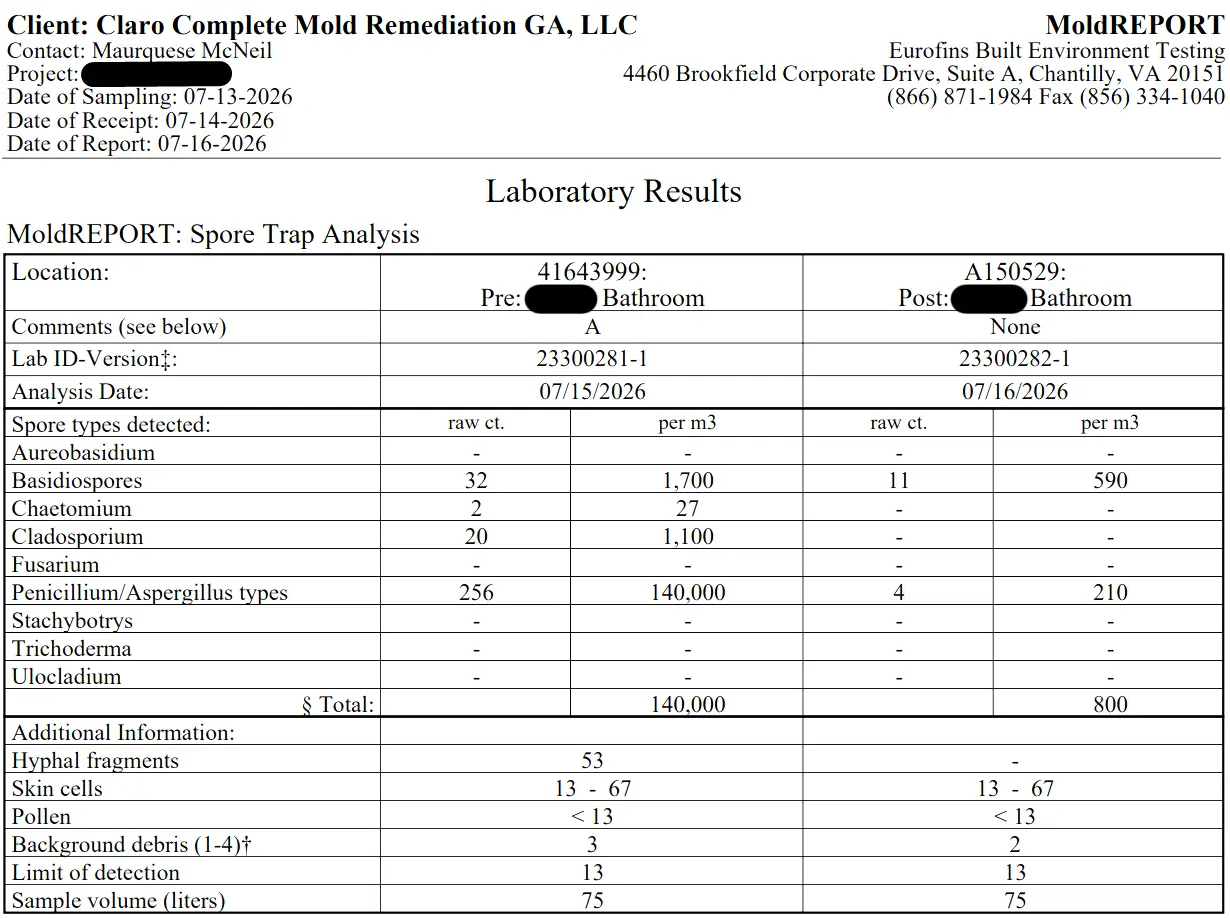
An air sample collected in the affected bathroom before remediation showed a total of 140,000 spores per cubic meter. Nearly all of it came from Penicillium/Aspergillus types, which accounted for 140,000 spores/m³ on their own. These are the most common molds to amplify indoors when building materials stay damp, and a count this high indicates an active growth source rather than spores drifting in from outside.
The sample also showed:
- Basidiospores: 1,700 spores/m³
- Cladosporium: 1,100 spores/m³
- Chaetomium: 27 spores/m³
- Hyphal fragments: 53
Chaetomium is a water damage marker mold. It grows on materials like drywall and subfloor that have been wet for an extended period, so even a small count confirms long term moisture. The presence of hyphal fragments, which are pieces of the mold body itself, further supported active growth within the bathroom.
Because the contamination was inside the building materials, Claro set up a full containment and demolition plan across three bathrooms:
- Sealed containment around each work area, with an air scrubber running under negative pressure to keep spores from reaching the rest of the home
- Hazardous building materials testing before demolition began
- Removal of the affected shower from the floor pan to the ceiling, including all wall tile
- Removal of exterior trim and the lower 2 feet of drywall around the shower
- Removal of the bathroom floor tile, plus floor tile in two additional bathrooms as a preventive measure
- Dry fog treatment of the opened areas to denature remaining mold at the source
- Installation of a new dehumidifier to keep humidity under control going forward
Post remediation testing showed a dramatic improvement. The spore trap sample dropped to 800 spores/m³, a 99.4% reduction. Penicillium/Aspergillus types fell from 140,000 to just 210 spores/m³. Chaetomium, Cladosporium and hyphal fragments were no longer detected. The remaining count was mostly Basidiospores, which are common outdoor spores.
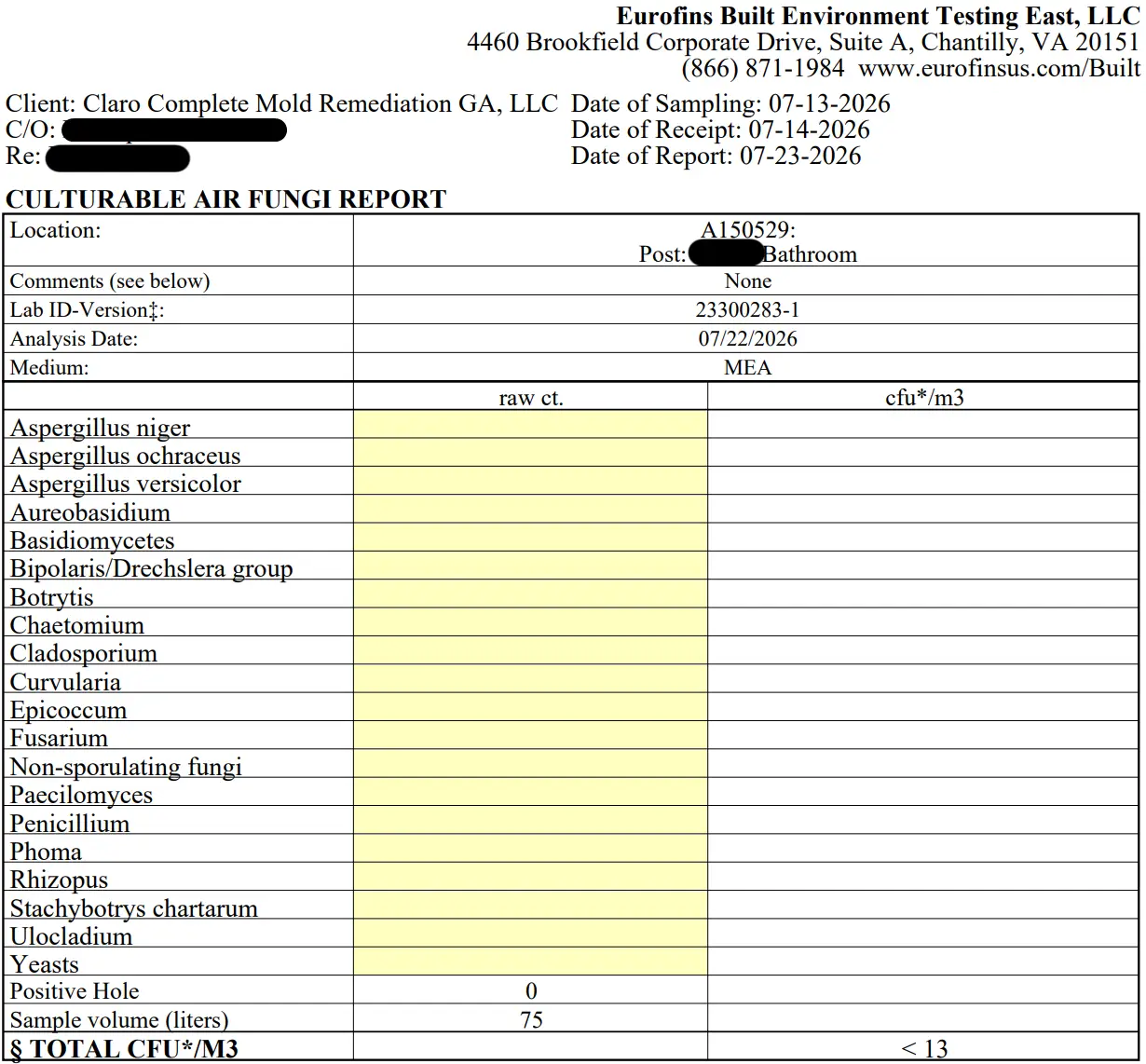
A separate culturable air sample, which measures living mold capable of growing, came back at less than 13 CFU/m³ with zero colonies grown. That is below the laboratory limit of detection.
With clearance confirmed, the family was able to move forward with rebuilding and retiling the bathroom on clean, dry materials. This project shows why persistent moisture readings deserve attention: when mold is hidden behind tile and inside wall cavities, removing the affected materials and treating the source is what delivers lasting results. Claro backs its remediation work with a one year guarantee.