
Case Study: Hidden toilet leak mold caught early
A homeowner in Sandy Springs, Georgia contacted Claro after his house cleaner noticed small spots of mold on wood in a downstairs bedroom. A few other rooms showed similar slight signs. It did not look serious, but he wanted it handled right away, before it had a chance to grow into a bigger problem.
During a full top down inspection, our inspector traced the main source to a basement bathroom that was rarely used. The toilet had been leaking slowly around its wax ring for some time, letting water seep under the floor tile without anyone noticing. Leaks like this are common in bathrooms that do not see daily use, because there is no one around to spot the early warning signs.
The inspection also found water damage around windows in two upstairs bedrooms, which meant the home had more than one moisture source contributing to mold growth.
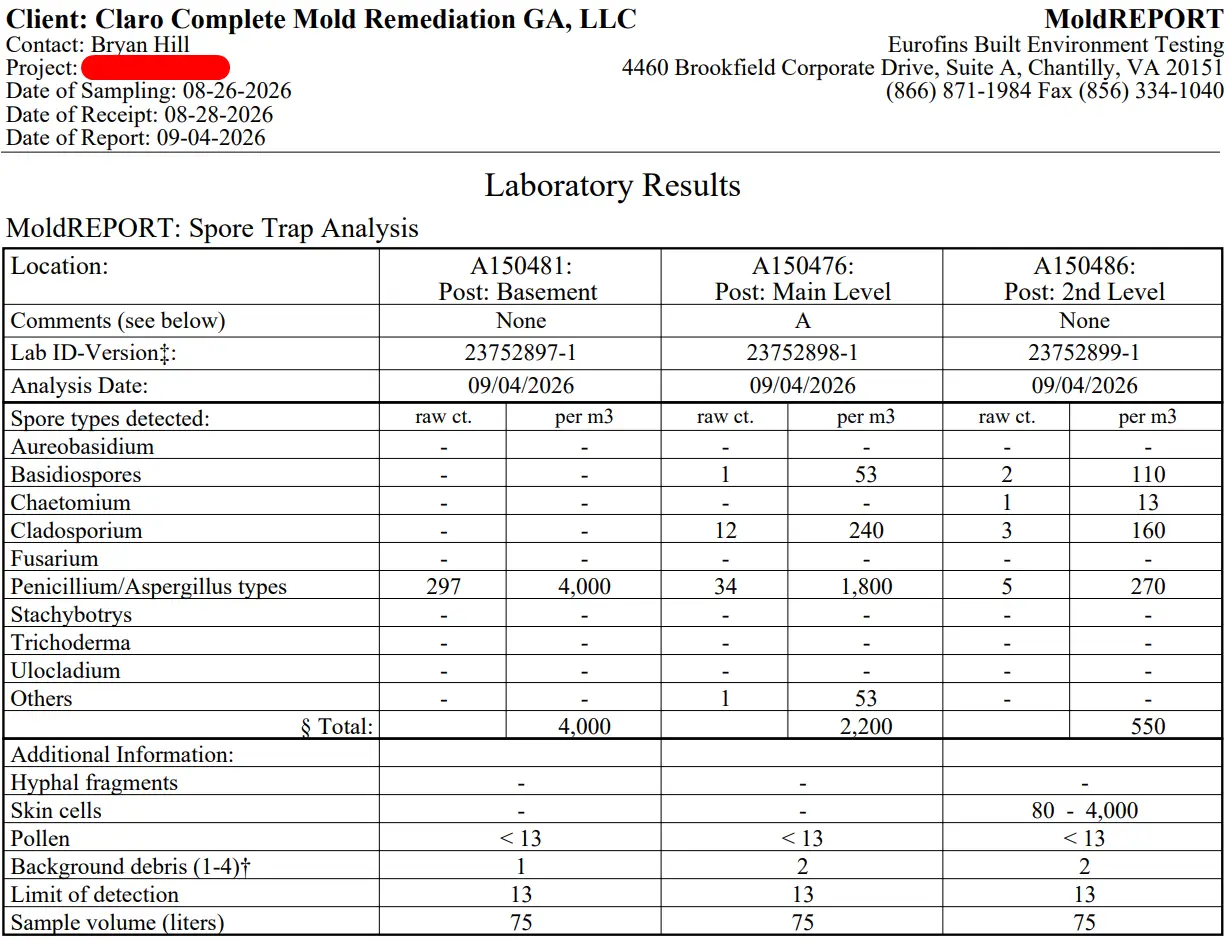
Air samples collected before treatment showed elevated mold levels concentrated in the lower part of the home.
The basement sample measured 4,000 spores per cubic meter, and every one of them was Penicillium/Aspergillus types. Outdoor air is usually dominated by spores like Cladosporium and Basidiospores, so a sample made up entirely of Penicillium/Aspergillus is a strong sign of an active indoor growth source.
The main level showed 2,200 spores per cubic meter, with 1,800 of those again coming from Penicillium/Aspergillus types. This indicated that spores from the basement were beginning to move into the living space above.
The upper level sample was lower at 550 spores per cubic meter, but it included Chaetomium. Chaetomium is a water damage marker mold that grows on materials like drywall that have stayed wet over time, and its presence matched the moisture damage our inspector found around the upstairs windows.
Because a toilet leak involves gray water, simply drying the area is not enough. Contaminated material left under tile and inside the subfloor can keep feeding mold growth even after the leak stops. Claro set up a targeted plan for each affected area:
- Sealed containment around three separate work areas, with an air scrubber running under negative pressure to protect the rest of the home
- Hazardous building materials testing before demolition
- Basement bathroom: removal of the toilet and the surrounding floor tile to expose and treat the contaminated area beneath
- Master bedroom: removal of water damaged drywall around both rear double windows, extending 2 feet into the adjoining walls
- Upper floor bedroom: removal of drywall from the windowsill to the floor around a corner window
- Moisture verification to confirm all opened materials met the dry standard before treatment
- InstaPure Dry Fog treatment throughout the entire home, including all HVAC ductwork, to denature mold on surfaces and in the air
- EverPure Dry Fog application to help protect surfaces against future microbial growth
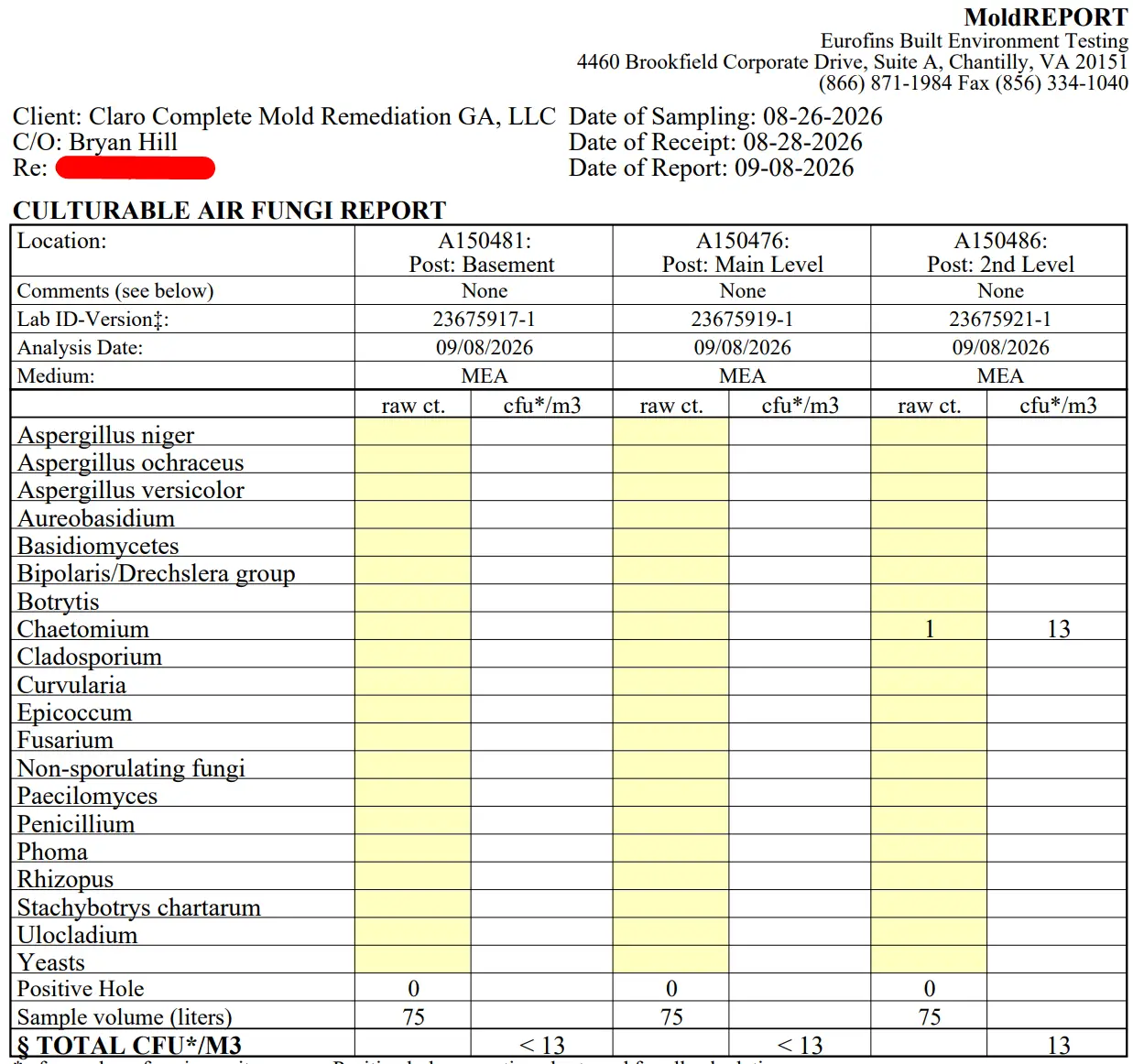
Post remediation culturable air testing, which measures living mold capable of growing, confirmed the results on every level of the home:
- Basement: less than 13 CFU/m³, down from 4,000 spores/m³
- Main level: less than 13 CFU/m³, down from 2,200 spores/m³
- Upper level: 13 CFU/m³, at the laboratory limit of detection
This project is a good example of why early action matters. The homeowner reached out within a week of the first visible spots, and the problem was resolved before it could spread into a larger, more costly remediation. Claro backs its remediation work with a one year guarantee.