
Case Study: Hidden bathroom mold others missed
A homeowner in Johns Creek, Georgia contacted Claro about a small upstairs bathroom that never seemed to dry out. It opens directly into a bedroom, and after every shower, moisture lingered on the ceiling and walls even though the exhaust fan had been replaced. With several family members living in the home, including some who are sensitive to air quality, they wanted to be sure the humidity was not creating a hidden problem.
The family had already done a lot. A roof leak above that bedroom had been repaired years earlier, the ductwork had been professionally cleaned, and both HVAC and plumbing contractors had checked the bathroom fan more than once. None of them had found mold.
Our inspector took a different approach, looking at moisture inside the building materials rather than just how the fan performed. The inspection found that the bathroom's walls and finishes were holding moisture, and it also uncovered a water stained ceiling tile in the basement office with a large patch of dark mold growing on its hidden back side.
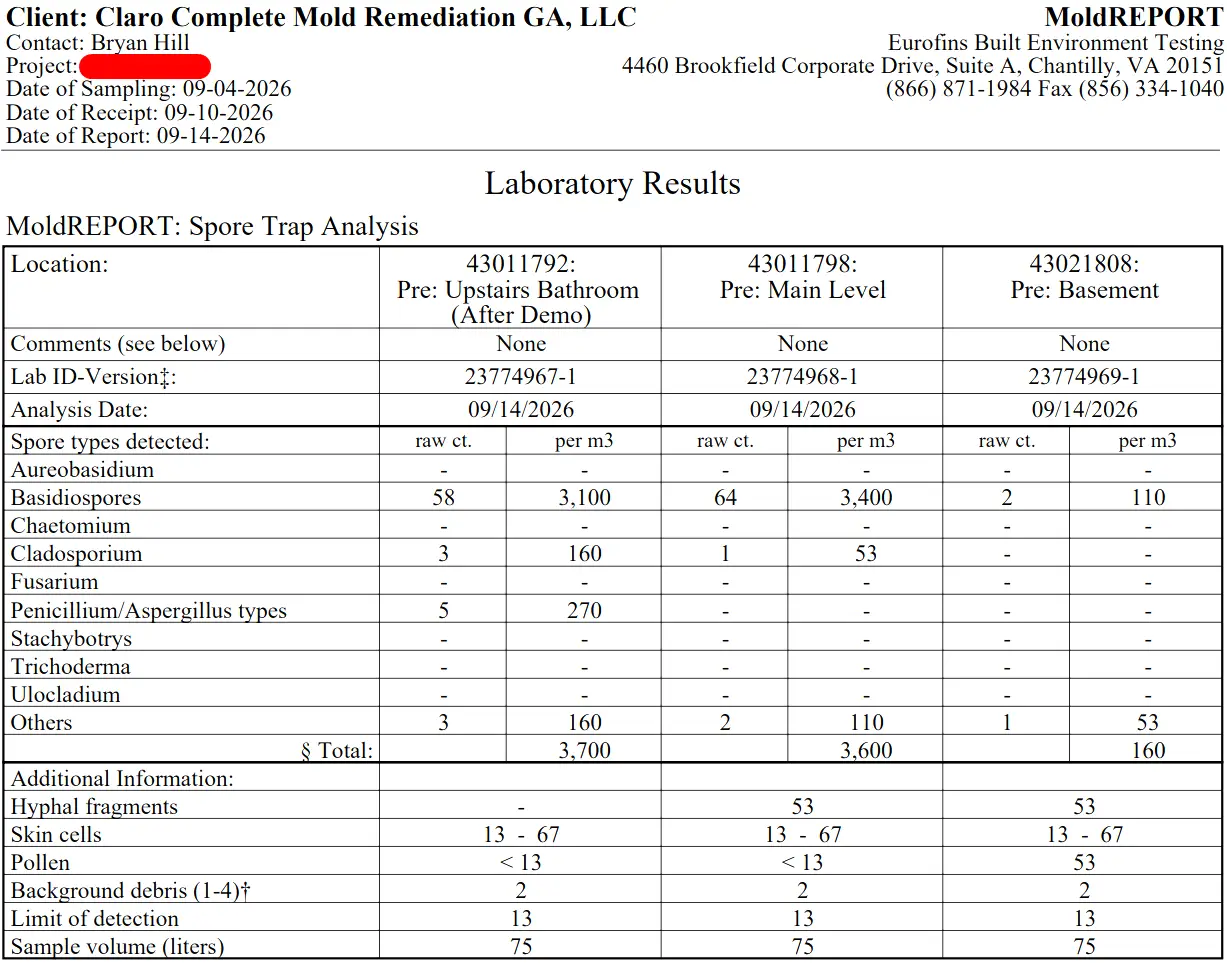
Air samples collected before treatment showed elevated spore levels on the upper floors of the home:
- Upstairs bathroom, after the walls were opened: 3,700 spores/m³
- Main level: 3,600 spores/m³
- Basement: 160 spores/m³
Most of the count on both upper levels came from Basidiospores. These are commonly found outdoors, but indoors they can also come from fungi growing on damp wood and building materials. The upstairs bathroom sample also contained Penicillium/Aspergillus types, which are among the most common molds to amplify indoors where moisture lingers.
Both the main level and basement samples contained hyphal fragments. Hyphal fragments are pieces of the mold body itself rather than spores, and their presence indicates active growth somewhere in the space, even when nothing is visible on the surface.
Claro removed the hidden growth at its source and treated the entire home:
- Sealed containment around both work areas, with an air scrubber running under negative pressure to protect the rest of the home
- Hazardous building materials testing before demolition
- Upstairs bathroom: removal of all tile, the tub, the vanity and all drywall, taking the room down to the studs so every surface could be inspected and treated
- Basement office: removal of the water stained ceiling tile hiding a large patch of dark mold on its back side
- InstaPure Dry Fog treatment throughout the entire home, including all HVAC ductwork, to denature mold on surfaces and in the air
- EverPure Dry Fog application to help protect surfaces against future microbial growth
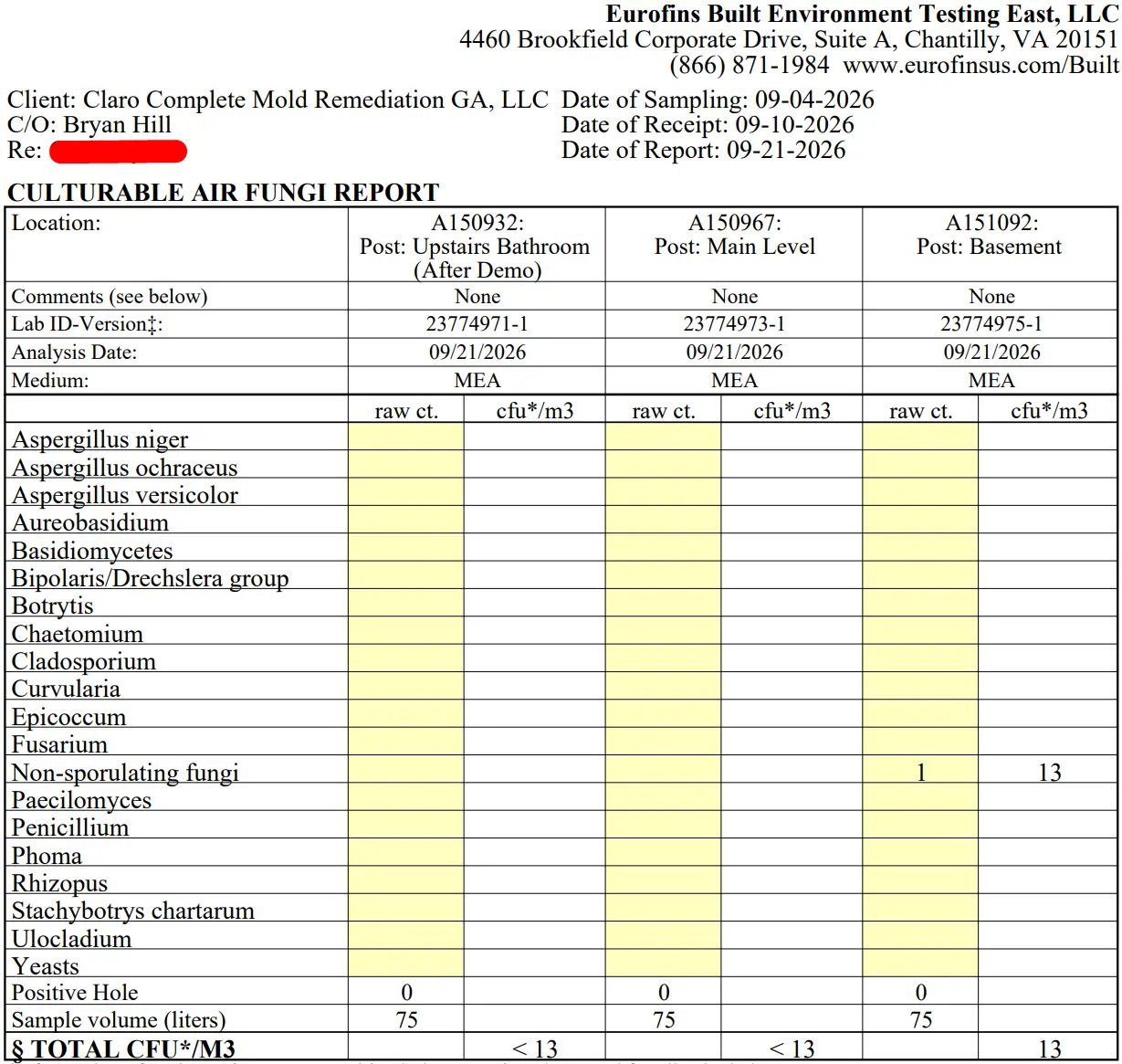
Post remediation culturable air testing, which measures living mold capable of growing, confirmed the results on every level of the home:
- Upstairs bathroom: less than 13 CFU/m³, down from 3,700 spores/m³
- Main level: less than 13 CFU/m³, down from 3,600 spores/m³
- Basement: 13 CFU/m³, a single non-sporulating colony at the laboratory limit of detection
With the bathroom down to clean studs, the homeowners can now rebuild with proper ventilation and moisture resistant materials. This project shows why a visual check is not always enough. Mold that grows behind tile, drywall and ceiling tiles can go unnoticed for years, even after several professional visits. Claro backs its remediation work with a one year guarantee.