
Case Study: Whole home dry fog resolved hidden window mold
A family in Sandy Springs, Georgia reached out to Claro after their upstairs air conditioning had been out of service for about a month during the summer heat. Around the same time, they began noticing mold spots forming on the bathroom ceilings near the exhaust vents that kept returning after cleaning, along with a musty odor in parts of the home.
An air conditioning system does more than cool a home. It also removes moisture from the air, so when it stops running in a Georgia summer, indoor humidity can climb quickly and give mold the conditions it needs to grow. The homeowners wanted to know whether anything more serious was developing behind the surfaces they could see.
During a full top down inspection of the three level home, our inspector traced the problem to moisture damage in the master bedroom wall beneath both rear facing windows, along with elevated mold levels on the lower level.
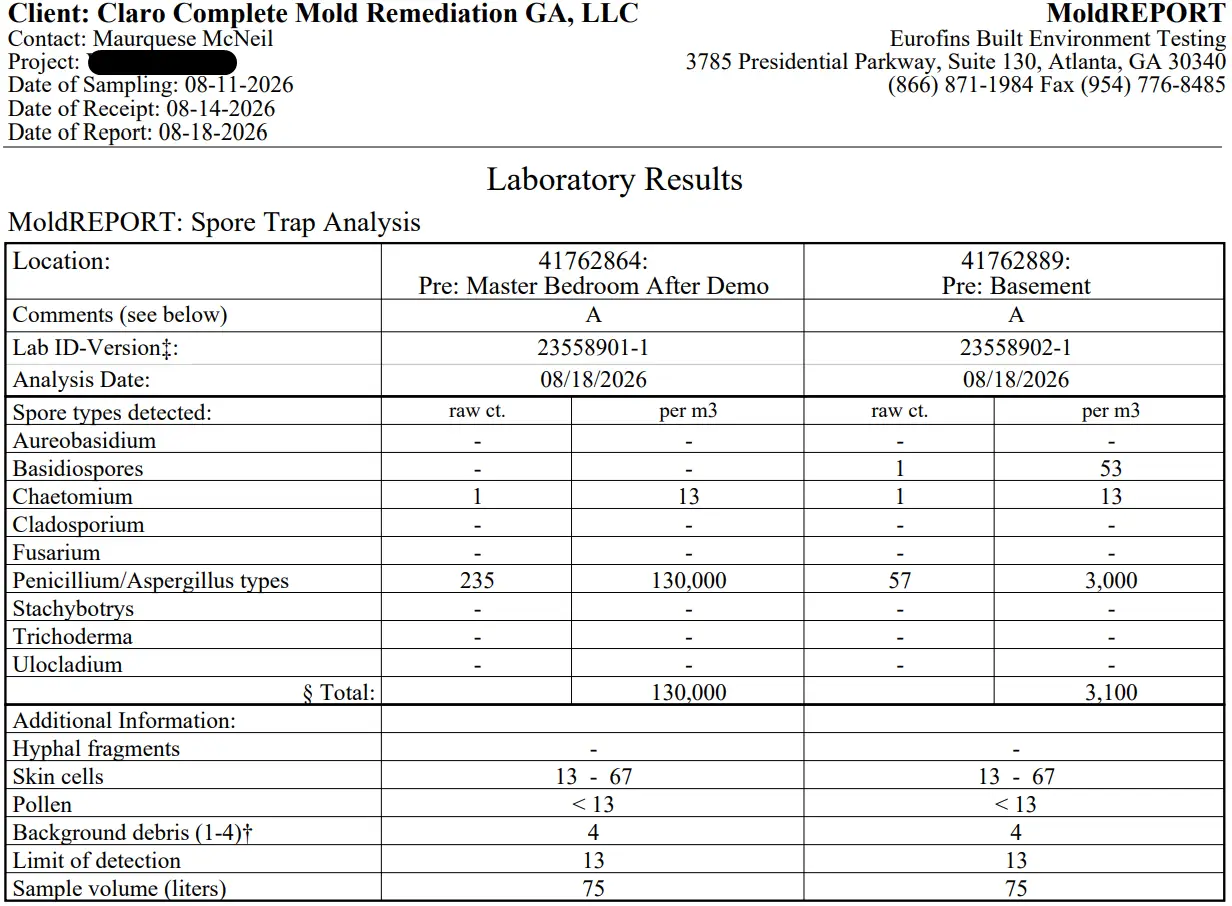
Air samples collected before treatment confirmed active mold growth in two areas of the home.
In the master bedroom, a sample taken after the damaged wall section was opened showed a total of 130,000 spores per cubic meter, nearly all of it Penicillium/Aspergillus types. These are the most common molds to amplify indoors when materials stay damp, and a count this high points to a growth source inside the wall cavity.
On the lower level, the sample showed 3,100 spores per cubic meter, including 3,000 Penicillium/Aspergillus types, which indicated that elevated humidity was affecting more than one floor.
Both samples also detected Chaetomium. Chaetomium is a water damage marker mold that grows on drywall and other materials that have stayed wet for an extended period. Its presence in both areas confirmed that moisture, not just surface staining, was driving the growth.
Claro addressed both the contamination and the conditions that caused it:
- Sealed containment around the master bedroom work area, with an air scrubber running under negative pressure
- Hazardous building materials testing before demolition
- Removal of the damaged drywall from the windowsill to the floor beneath both rear windows, extending 6 inches past each window frame
- Moisture verification of the opened wall before treatment
- InstaPure Dry Fog treatment across the full 5,000 square foot living space, including all HVAC ductwork, to denature mold on surfaces and in the air
- EverPure Dry Fog application to help protect surfaces against future microbial growth
- Treatment and detailed wipe down of the demolition area
- Installation of an Aprilaire E070 whole home dehumidifier, capable of removing up to 70 pints of water per day, with a condensate pump and a dedicated electrical outlet
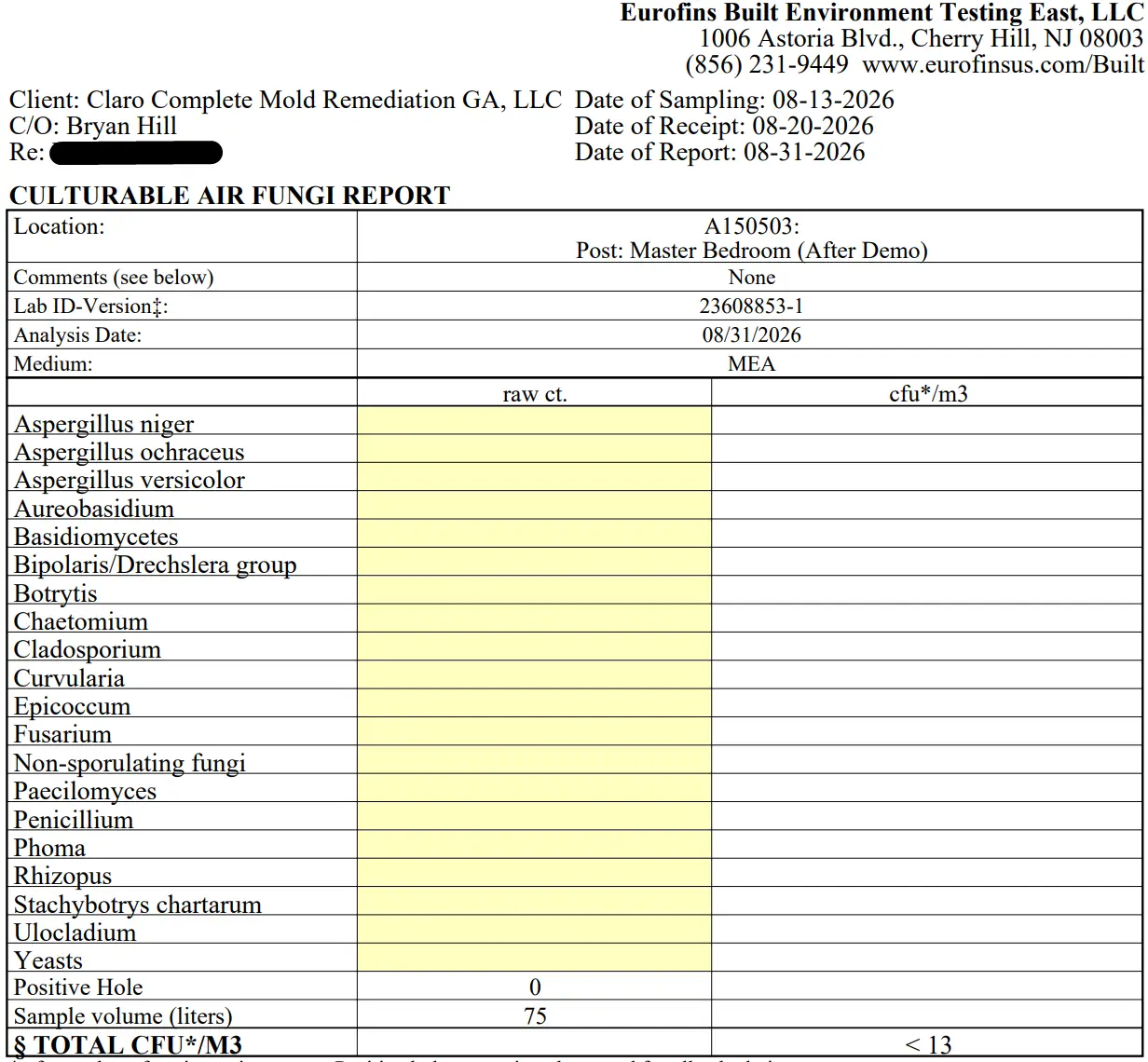
Post remediation testing in the master bedroom came back at less than 13 CFU/m³ on a culturable air sample, with zero mold colonies grown. That result is below the laboratory limit of detection, down from 130,000 spores/m³ before treatment.
With the source removed, the home treated from top to bottom and a permanent dehumidifier in place, the family has both clean air now and protection against the humidity that started the problem. Claro backs its remediation work with a one year guarantee.