
Case Study: Drainage and encapsulation stopped hidden subfloor mold
A homeowner in Atlanta contacted Claro after noticing that a section of her wood floors had started to cup, with the edges of the boards rising above the centers. She had someone look in the crawlspace below, and they found condensation and mold growing on the underside of the subfloor directly beneath the affected area.
The home already had a vapor barrier in the crawlspace, and there was no obvious leak or water source. After an especially wet and humid summer, she wanted to understand what was actually causing the moisture and how to fix the crawlspace for good.
Our inspector found that groundwater was collecting in the crawlspace with no way to drain, keeping the space damp and feeding mold growth on the wood framing and subfloor. The existing vapor barrier was not enough to control the moisture on its own.
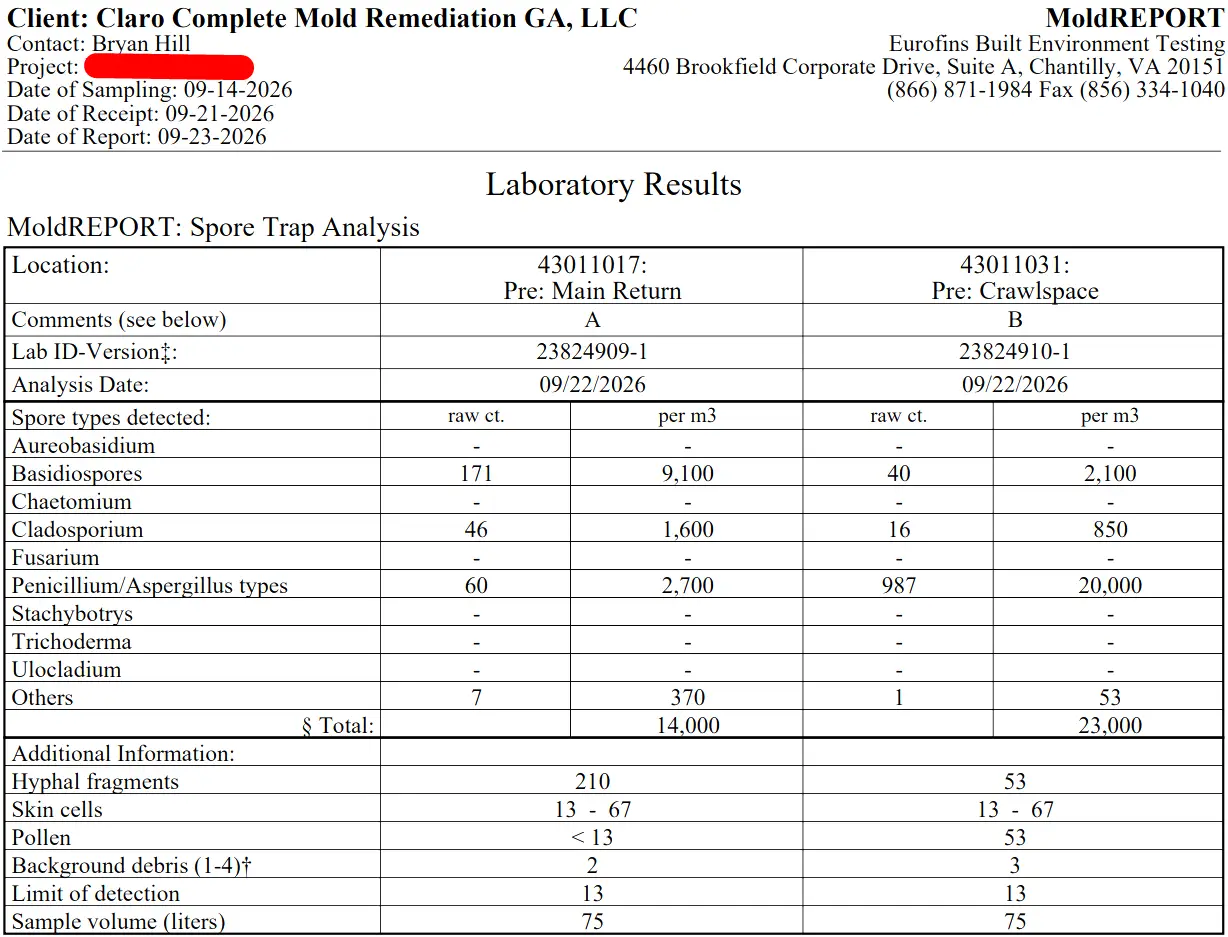
Air samples collected before treatment confirmed significant mold activity both below and inside the home.
The crawlspace sample measured 23,000 spores per cubic meter, and 20,000 of those were Penicillium/Aspergillus types. These are the most common molds to amplify on damp wood, and a concentration this high points to active growth on the crawlspace framing and subfloor.
The main level sample, taken at the HVAC return, measured 14,000 spores per cubic meter. It included 2,700 spores/m³ of Penicillium/Aspergillus types along with Basidiospores and Cladosporium. More telling, it contained 210 hyphal fragments. Hyphal fragments are pieces of the mold body itself rather than spores, and finding them in the return air indicated that material from active growth was circulating through the home's air system.
Air in a crawlspace does not stay there. As warm air rises, a significant share of the air on the main level is drawn up from below, which is why crawlspace contamination so often shows up in the living space as well.
Cleaning the mold alone would not have lasted, because the crawlspace was still collecting water. Claro addressed the moisture source first, then the contamination:
- Interior foundation drains: perforated drain pipe installed below grade around the crawlspace perimeter, surrounded by drainage aggregate and sediment sock, to collect groundwater before it reaches the crawlspace air
- Sump pump: a 1/3 HP sump pump and basin with a bolted down lid installed at the lowest point, discharging water to the exterior away from the foundation
- Crawlspace mold removal: physical cleaning of mold growth on the subfloor and framing to prepare surfaces for treatment
- Crawlspace encapsulation: removal of the old vapor barrier and debris, sealing of gaps and penetrations, a 20 mil VIPER vapor barrier with taped seams, and insul-barrier wall insulation, backed by a transferable workmanship warranty
- Humidity control: an Aprilaire E070 dehumidifier, capable of removing up to 70 pints of water per day, hung in the crawlspace with a condensate pump, sealed vents and a dedicated outlet installed by a licensed electrician
- Antimicrobial wipe down of visible growth on the ceiling around the attic fan
- InstaPure and EverPure Dry Fog treatment throughout the living space, HVAC ductwork and crawlspace
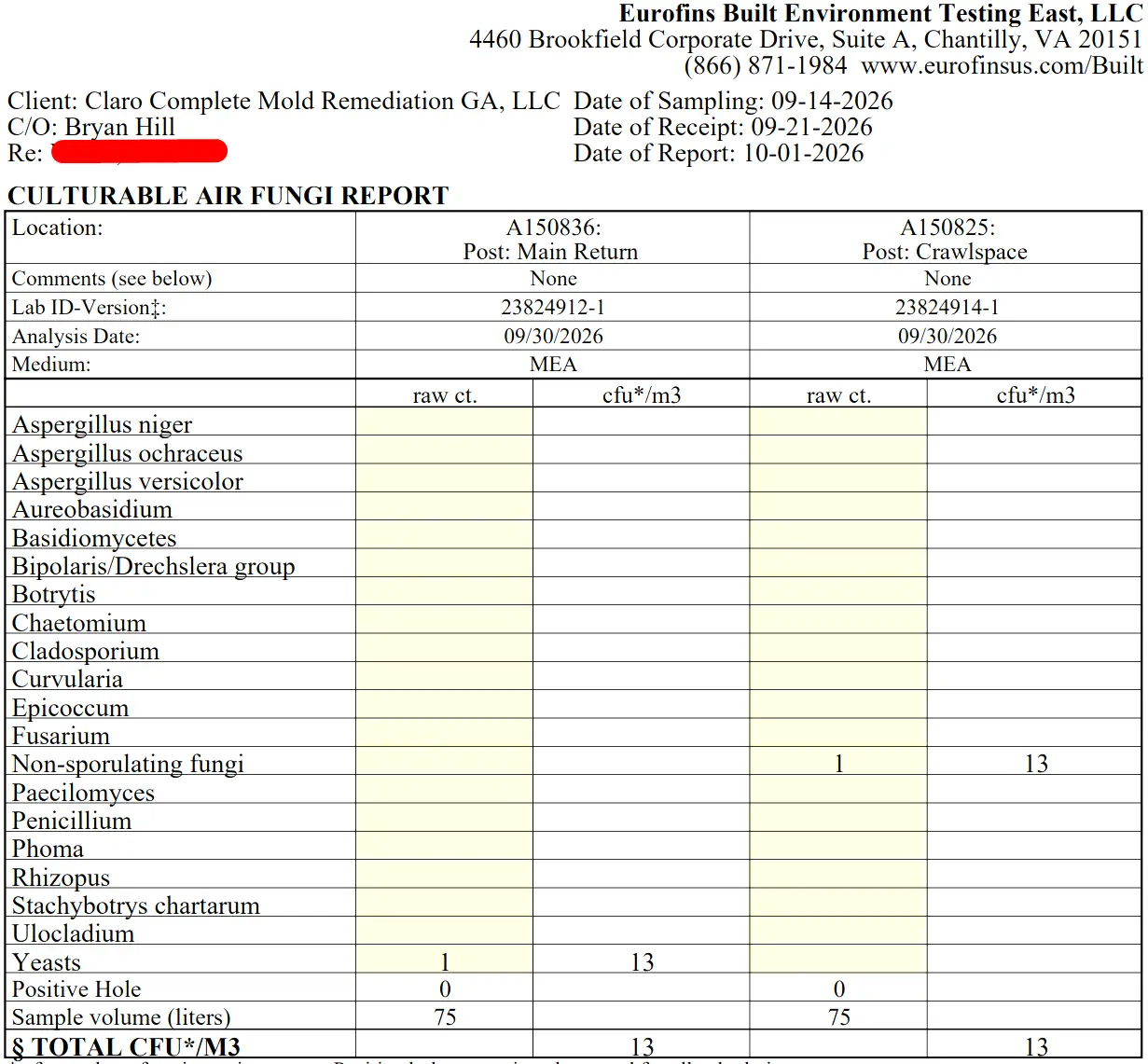
Post remediation culturable air testing, which measures living mold capable of growing, confirmed the results:
- Crawlspace: 13 CFU/m³, down from 23,000 spores/m³
- Main level return: 13 CFU/m³, down from 14,000 spores/m³
Each result was a single colony of a common, non-concerning organism, right at the laboratory limit of detection. No Penicillium or Aspergillus grew in either sample.
This project shows why cupping or buckling wood floors should never be ignored. Floors often change shape in response to moisture below them long before mold becomes visible inside the home. Catching it early meant the problem stayed in the crawlspace and subfloor instead of spreading further. Claro backs its remediation work with a one year guarantee.