
Case Study: Encapsulation upgrade stopped mold in an aging crawlspace
An Atlanta homeowner contacted Claro about a crawlspace that, on paper, had already been taken care of. The space had been encapsulated by another company several years earlier, and a recent check confirmed the liner itself was still intact. But the crawlspace dehumidifier had stopped working, and dark growth had started appearing on the framing in the area beneath the front porch.
No one in the home had noticed any health effects, and the homeowner wanted to keep it that way. Since the dehumidifier needed replacing anyway, it made sense to have the whole crawlspace properly assessed and cleaned up at the same time, rather than wait for the problem to spread.
Our mold inspection found that the original job had left gaps. The section of crawlspace under the porch was open to the outside through the deck, letting humid air in, and without a working dehumidifier there was nothing to control the moisture. Air from a crawlspace naturally rises into the living space above, so what was growing below the home was also making its way into the air the family breathed.
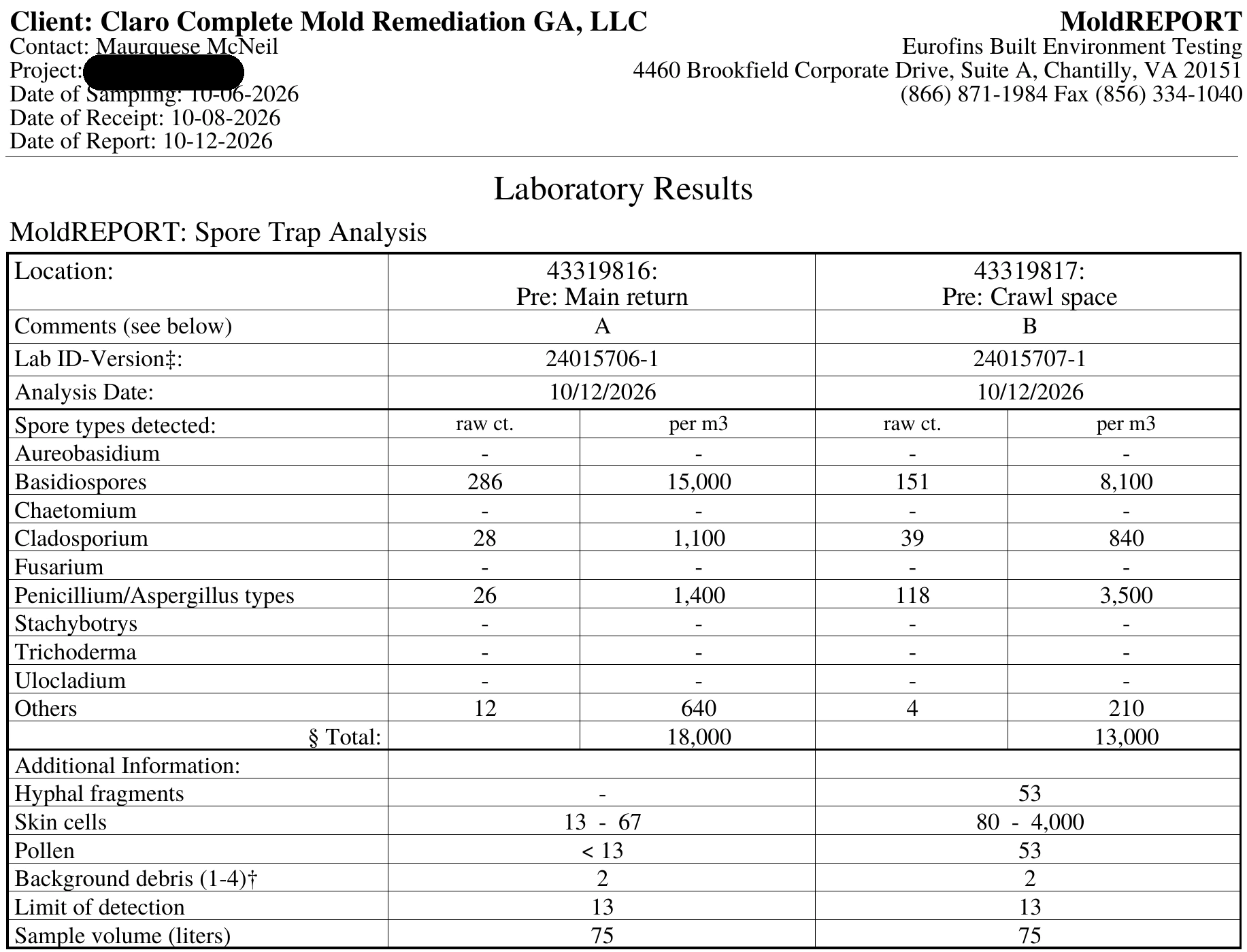
Air samples collected before treatment confirmed that the crawlspace problem had reached the living space.
- Crawlspace: 13,000 spores/m³, including 8,100 Basidiospores, 3,500 Penicillium/Aspergillus types and hyphal fragments
- Main HVAC return: 18,000 spores/m³, including 15,000 Basidiospores
Basidiospores are usually associated with outdoor air, but at concentrations this high indoors they often point to wood decay fungi growing on damp framing. That matched what our inspector saw beneath the porch, where humid outside air had been reaching the wood for years. Hyphal fragments, which are pieces of the mold body itself, confirmed active growth in the crawlspace.
The reading at the HVAC return was even higher than the crawlspace. That showed the contamination was not staying below the floor. It was being drawn into the air system and circulated through the rooms of the house every time the system ran.
Claro corrected what the original encapsulation had missed and treated the whole home:
- Crawlspace mold removal: physical cleaning of mold growth on the framing to prepare surfaces for treatment
- Full encapsulation upgrade: removal of old insulation and debris, sealing of gaps and penetrations, a 20 mil VIPER vapor barrier with taped seams across the 1,608 square foot crawlspace, R-10 foundation wall insulation and R-19 band insulation
- Porch seal: the open connection between the crawlspace and the porch deck was closed off with a rigid insulation wall, an access hatch and spray foam, so outside air can no longer reach the framing
- Humidity control: a new Aprilaire E070 dehumidifier, capable of removing up to 70 pints of water per day, hung in the crawlspace with a condensate pump, sealed vents and a dedicated outlet installed by a licensed electrician
- InstaPure and EverPure Dry Fog treatment throughout the living space, all HVAC ductwork and the crawlspace, so spores already circulating through the house were treated along with the source
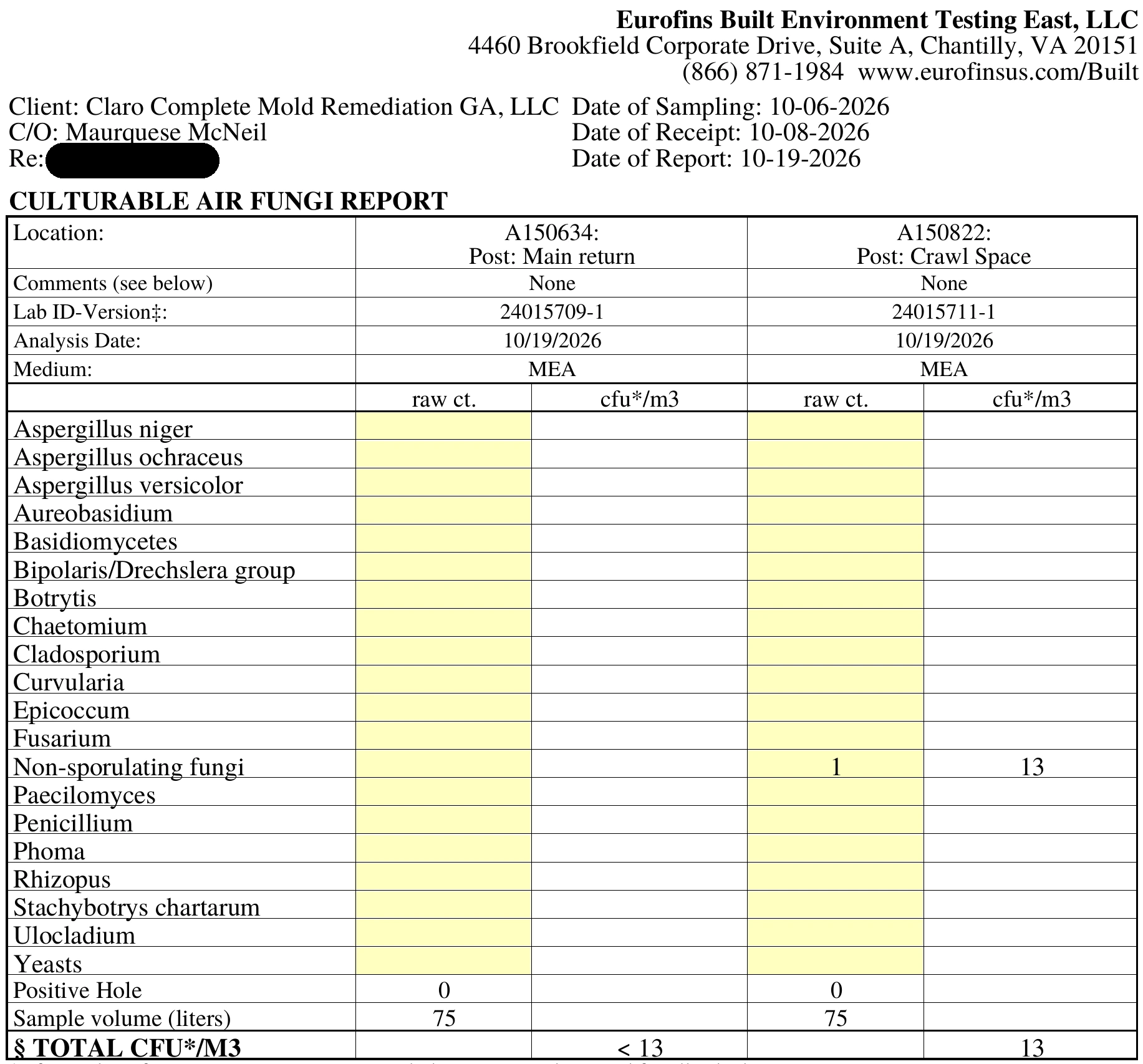
Post remediation culturable air testing, which measures living mold capable of growing, confirmed the results:
- Main HVAC return: less than 13 CFU/m³, down from 18,000 spores/m³
- Crawlspace: 13 CFU/m³, a single non-sporulating colony, down from 13,000 spores/m³
Both results are at or below the laboratory limit of detection. The air moving through the home's HVAC system is now clean, and with the porch opening sealed and a working dehumidifier in place, the crawlspace can stay dry going forward.
This project is a good reminder that an encapsulation is a system, not a one time fix. When a dehumidifier fails or an opening is left unsealed, moisture returns and mold follows, often without any obvious sign inside the home. Because so much of a home's air passes up from the crawlspace, keeping that system working protects the air the whole household breathes. Claro backs its remediation work with a one year guarantee.