
Case Study: Downspout moisture fed mold in church classrooms
A church in Marietta, Georgia reached out to Claro after mold appeared across the lower level of its activities building. This was not a storage basement. The level is filled with classrooms and gathering spaces that are used by children and adults throughout the week, so the leadership wanted the problem handled quickly and thoroughly.
The lower level sits below grade and had a history of moisture going back many years. This time, mold had spread across surfaces and carpet within just four to five weeks, following a period of heavy rain.
The church's trustees had already identified a likely cause. A roof downspout ran parallel to the foundation wall instead of directing water away from it, which kept rainwater collecting right against the building. Our inspection confirmed widespread contamination in the classroom carpet and ceiling tiles, along with water damage in the kitchen cafe beneath the ice machine.
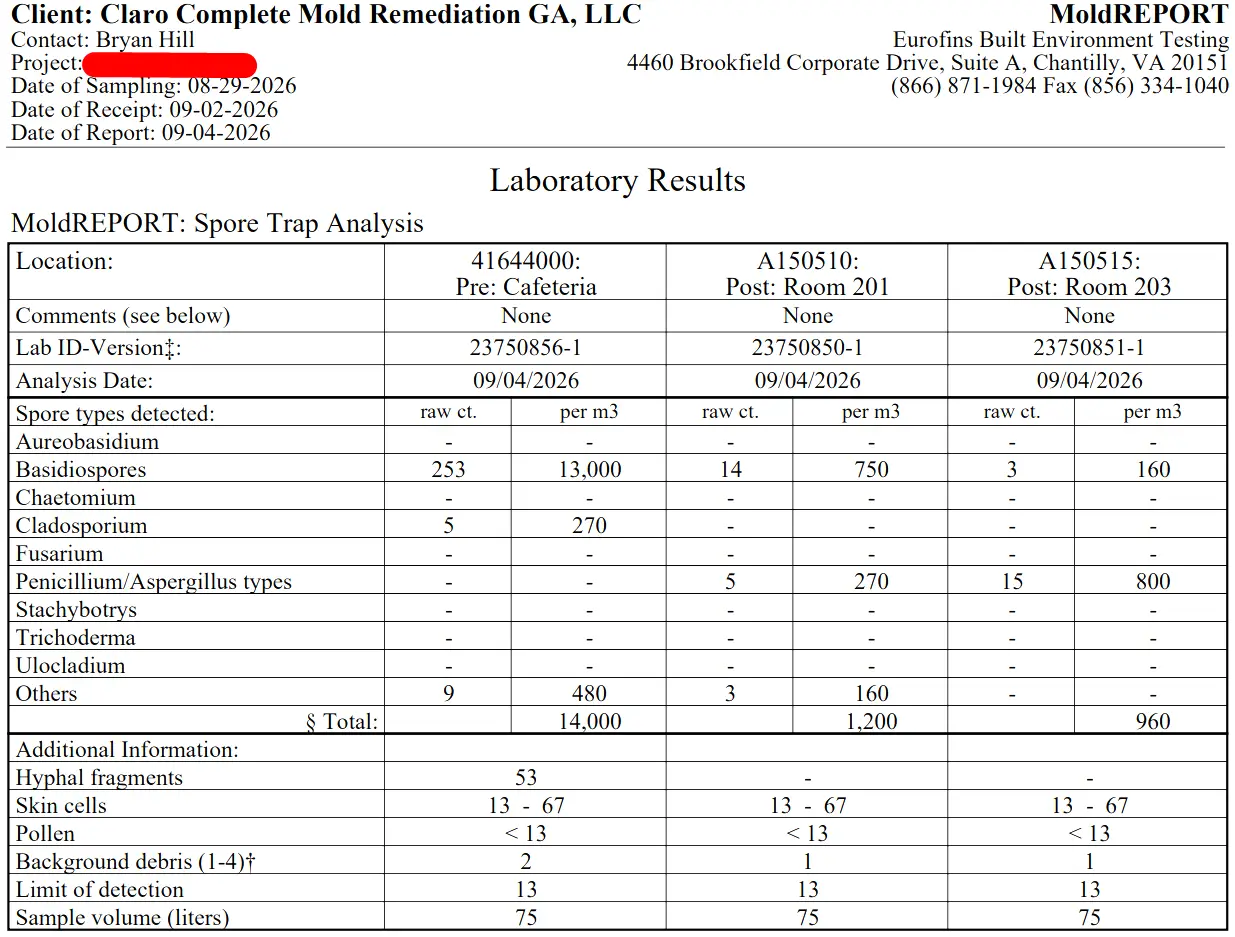
Air samples collected before treatment confirmed active mold growth on the classroom level.
The cafeteria sample measured 14,000 spores per cubic meter. Most of that count came from Basidiospores at 13,000 spores/m³. Basidiospores are often associated with outdoor air, but at this concentration indoors they can also point to wood decay fungi growing on damp building materials. The sample also contained 53 hyphal fragments, which are pieces of the mold body itself and a sign of active growth nearby.
The classrooms showed a different pattern:
- Room 201: 1,200 spores/m³, including Penicillium/Aspergillus types
- Room 203: 960 spores/m³, with 800 of those from Penicillium/Aspergillus types
Penicillium/Aspergillus types are the most common molds to amplify indoors on damp carpet, drywall and ceiling tiles. When they make up most of a sample, as they did in Room 203, it indicates an indoor growth source rather than spores drifting in from outside.
Because the space is used by children and adults every week, Claro planned the project to fully remove contaminated materials and protect the rest of the building during the work:
- An air scrubber was delivered ahead of demolition to begin cleaning the air and create negative pressure inside the containment areas
- Hazardous building materials testing before demolition
- Classroom level: removal of all carpet, carpet tile and glued down carpet from the classrooms, all ceiling tiles across the entire level, and the framing for a tiered seating platform
- Kitchen cafe: removal of a 6 by 6 foot section of linoleum flooring beneath the ice machine, plus a 6 by 2 foot flood cut on the shared wall behind it
- InstaPure Dry Fog treatment throughout the entire building, including all HVAC ductwork, to denature mold on surfaces and in the air
- EverPure Dry Fog application to help protect surfaces against future microbial growth
- Installation of an Aprilaire E100 dehumidifier, capable of removing up to 100 pints of water per day, with a dedicated electrical outlet to keep the below grade level dry going forward
During the electrical work for the dehumidifier, our licensed electrician also discovered a hazardous main electrical panel. It was replaced as part of the project, removing a safety risk the congregation had not known about.
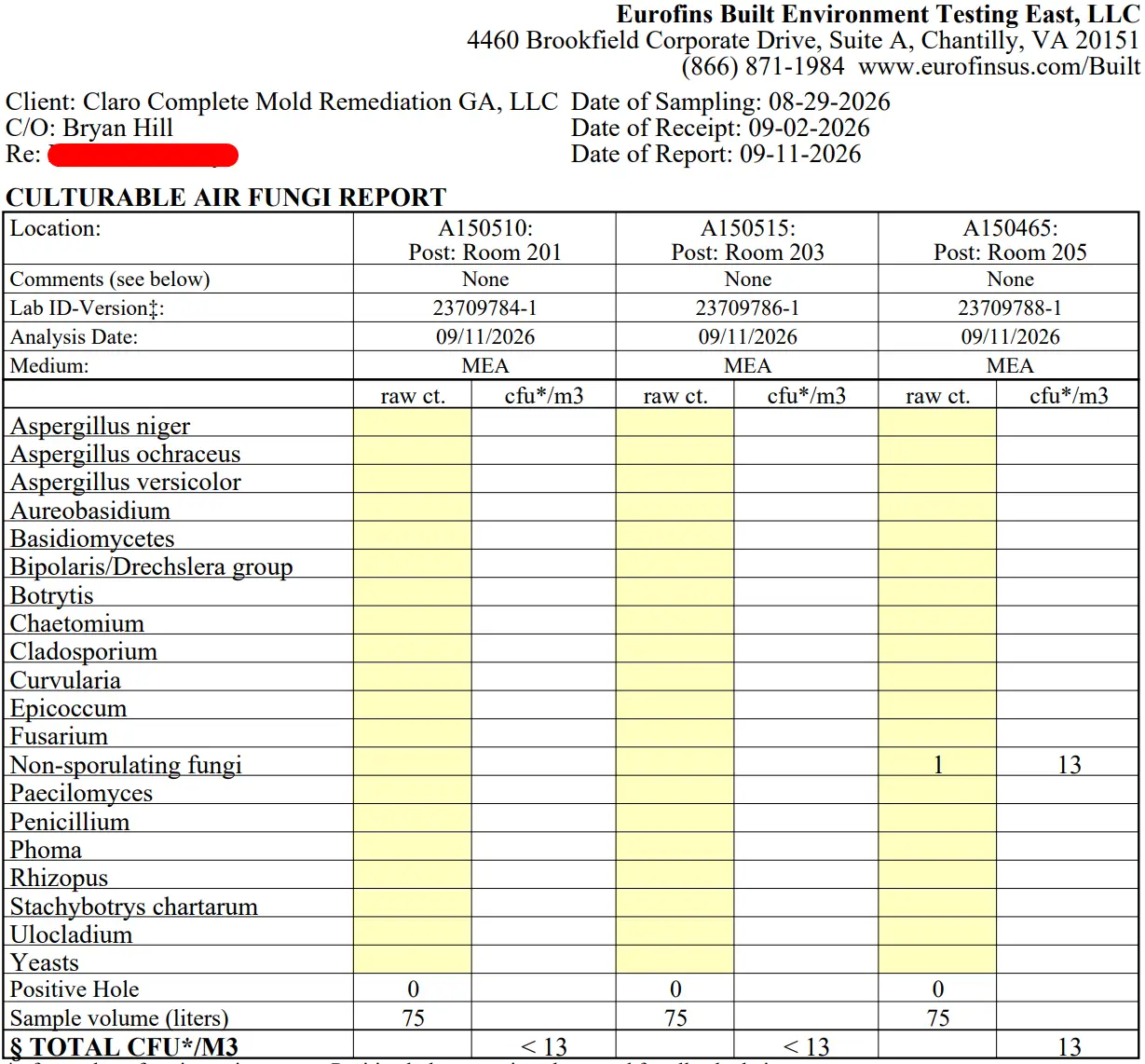
Post remediation culturable air testing, which measures living mold capable of growing, confirmed the results in the classrooms:
- Room 201: less than 13 CFU/m³, down from 1,200 spores/m³
- Room 203: less than 13 CFU/m³, down from 960 spores/m³
- Room 205: 13 CFU/m³, a single non-sporulating colony at the laboratory limit of detection
The classrooms were returned to use with clean, verified air and a dehumidifier in place to manage the moisture that has affected the level for years. We also recommend redirecting the downspout away from the foundation, since controlling water at its source is the best long term protection. Claro backs its remediation work with a one year guarantee.