
Case Study: Burst water heater created mold throughout home requiring demolition
A Nashville homeowner experienced catastrophic water damage when the hot water heater in the attic burst. Ceilings collapsed, walls became saturated with water, and the extent of the damage required comprehensive demolition and mold remediation before reconstruction could begin.
Attic water heater failures create cascading damage throughout a home. Water pours down from above, saturating insulation, drywall, subflooring, and structural components that cannot be dried in place once compromised.
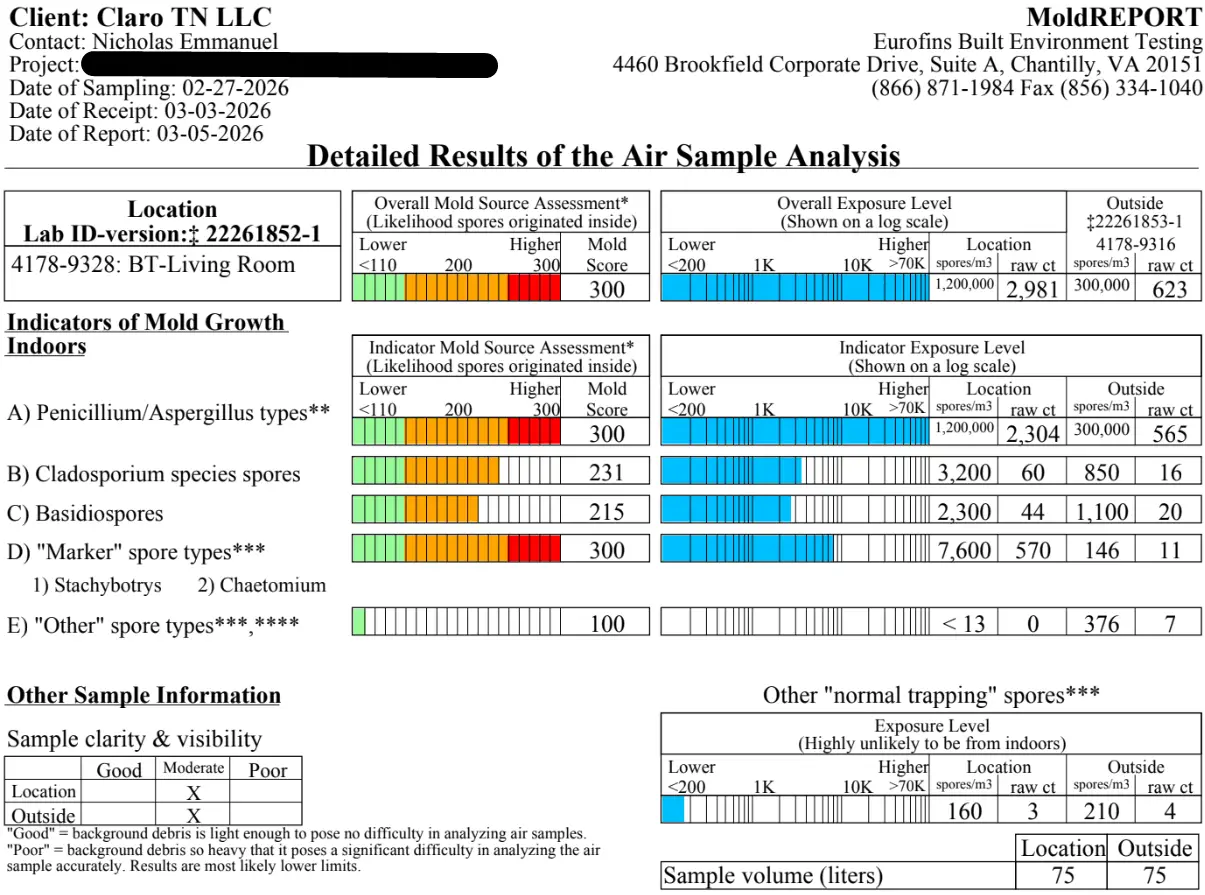
Claro's testing revealed the severity of contamination created by the water heater failure. The living room showed catastrophic levels: Overall Mold Source Assessment of 300 (maximum severity) with 2,981 spores per cubic meter indoors compared to 300,000 outside—but the specific indoor mold types were concerning.
Penicillium/Aspergillus dominated with a MoldSCORE of 300 and 2,304 spores. Cladosporium registered MoldSCORE 231 with 3,200 spores indoors versus 850 outside. Basidiospores showed MoldSCORE 215 with 2,300 spores. Most alarming was the Marker spore types (Stachybotrys and Chaetomium) at MoldSCORE 300 with 7,600 spores indoors—these are water-damage indicator species that signal severe moisture intrusion.
Inspection revealed water damage beyond what could be dried or repaired in place. The kitchen required complete demolition of water-damaged cabinetry, laminate/LVP flooring, irreparable subfloor components, trim, and drywall. Throughout the home, water-damaged insulation needed removal, along with molded drywall, trim, and flooring damaged beyond repair. The crawlspace showed visible mold requiring cleanup.

Claro performed comprehensive demolition and remediation to address the catastrophic water heater damage. The work included complete kitchen demolition (cabinetry, flooring, irreparable subfloor, trim, drywall), general demolition throughout affected areas (water-damaged insulation, molded drywall/trim, damaged flooring), dumpster service for construction debris removal, crawlspace mold removal and cleanup, and whole-home treatment using Claro's patented two-step process with results guaranteed for one year.
Air scrubbers ran throughout the demolition process to control airborne contamination. The extensive work eliminated the marker spore types that had indicated severe water damage, removed the Penicillium/Aspergillus and other contamination, and prepared the home for reconstruction knowing all compromised materials had been properly removed.
This case demonstrates why attic water heater failures require comprehensive intervention rather than spot repairs. The burst heater had created water damage that saturated structural components throughout the home. Simply drying visible surfaces wouldn't address insulation, subfloors, and wall cavities that had absorbed water and developed mold. Proper remediation meant demolition to bare structure, mold treatment, and guaranteed results before rebuilding could begin.