
Case Study: Attic mold stopped spreading through HVAC
A new homeowner in Florissant got an unwelcome surprise after moving in: mold up in the attic, quietly feeding spores down through the home's HVAC system into the rooms below. Air testing confirmed the markers of active indoor mold growth—the kind that signals a real problem, not ordinary household dust.
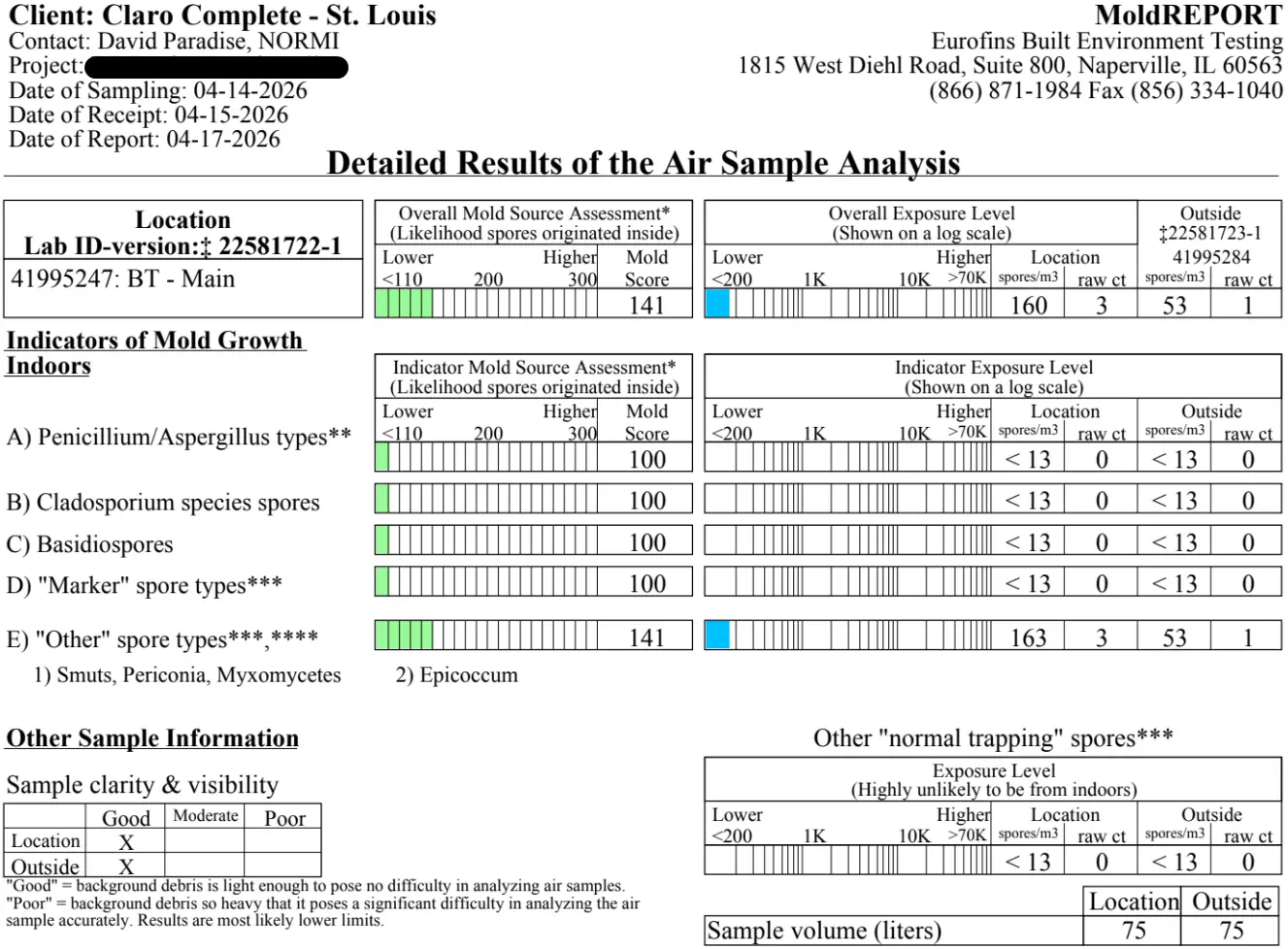
Claro performed an inspection and professional air testing. The results showed the markers of active indoor mold growth—the specific mold types including Stachybotrys and Chaetomium that indicate a genuine indoor source rather than ordinary outdoor spores. The HVAC system was pulling air through the contaminated attic space and circulating it into the living areas below.
With the HVAC system involved, treating only the visible attic growth would have left the duct-borne spores behind. The contamination was being actively distributed through the home's air circulation system.
Claro treated the entire affected environment with its patented dry fogging process—the attic where the growth lived, and the HVAC system that had been spreading it. The dry fog reaches spores and residue inside ductwork and building cavities that surface cleaning simply can't touch.
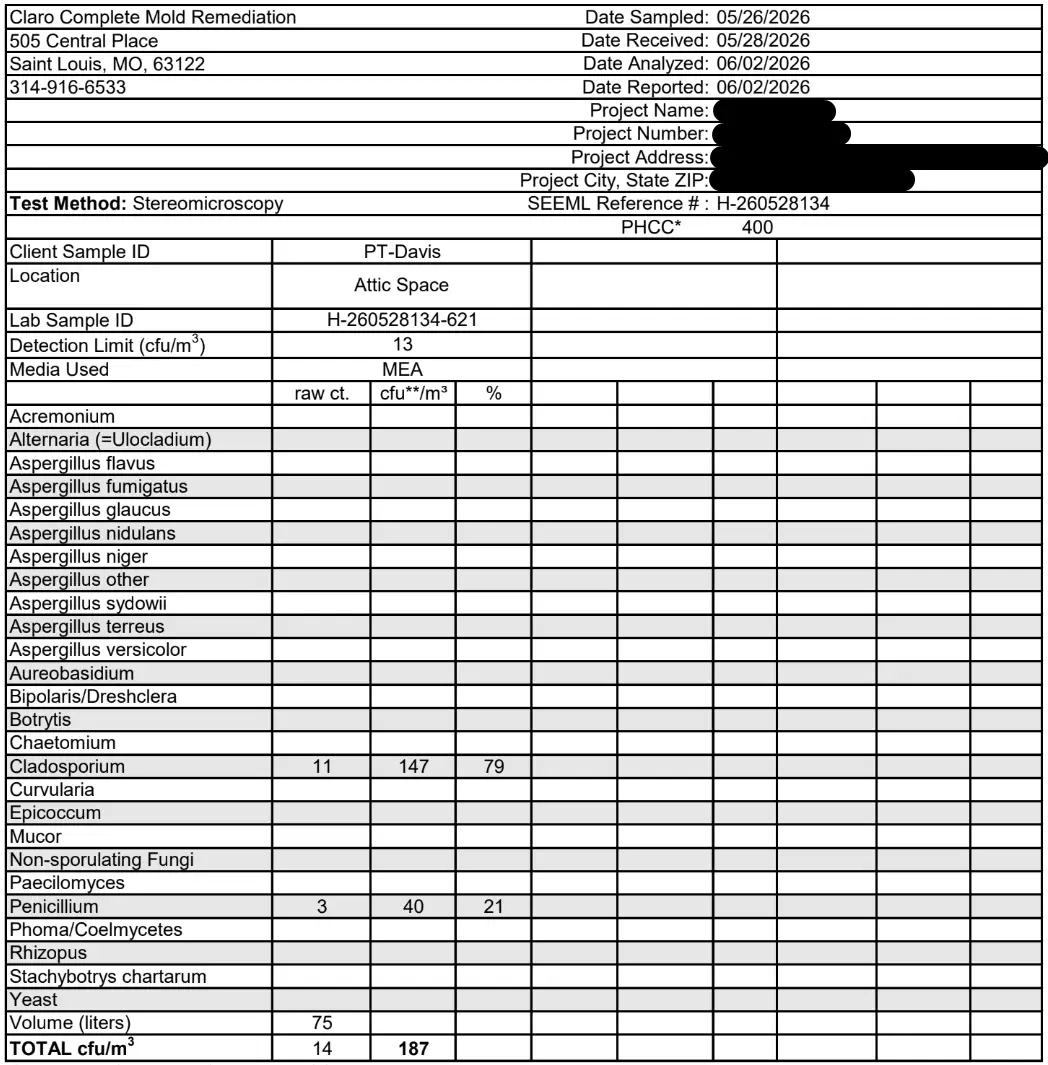
Afterward, Claro performed a post-treatment retest through an independent lab. The result came back at 187 CFU/m³—only a trace of common, everyday mold, with the indoor-growth markers gone completely. The family had documented, lab-verified proof that their new home was clean—backed by Claro's one-year guarantee.
This case demonstrates why attic mold with HVAC involvement requires whole-system treatment. The air distribution network had been actively spreading contamination throughout the home. Professional treatment of both the source and the delivery system eliminated the problem completely.