
What Is a Mold Surface Test And What Do Results Mean?
What Is a Surface Tape Lift or Swab Mold Test?
A surface tape lift test or swab test identifies exactly which mold species is growing on a specific surface. It is the most precise way to confirm whether a suspicious spot is actually mold, and which kind.
Air tests tell you what is floating in the air. A tape lift tells you what is actively growing on your walls, floors, ceiling, or materials.
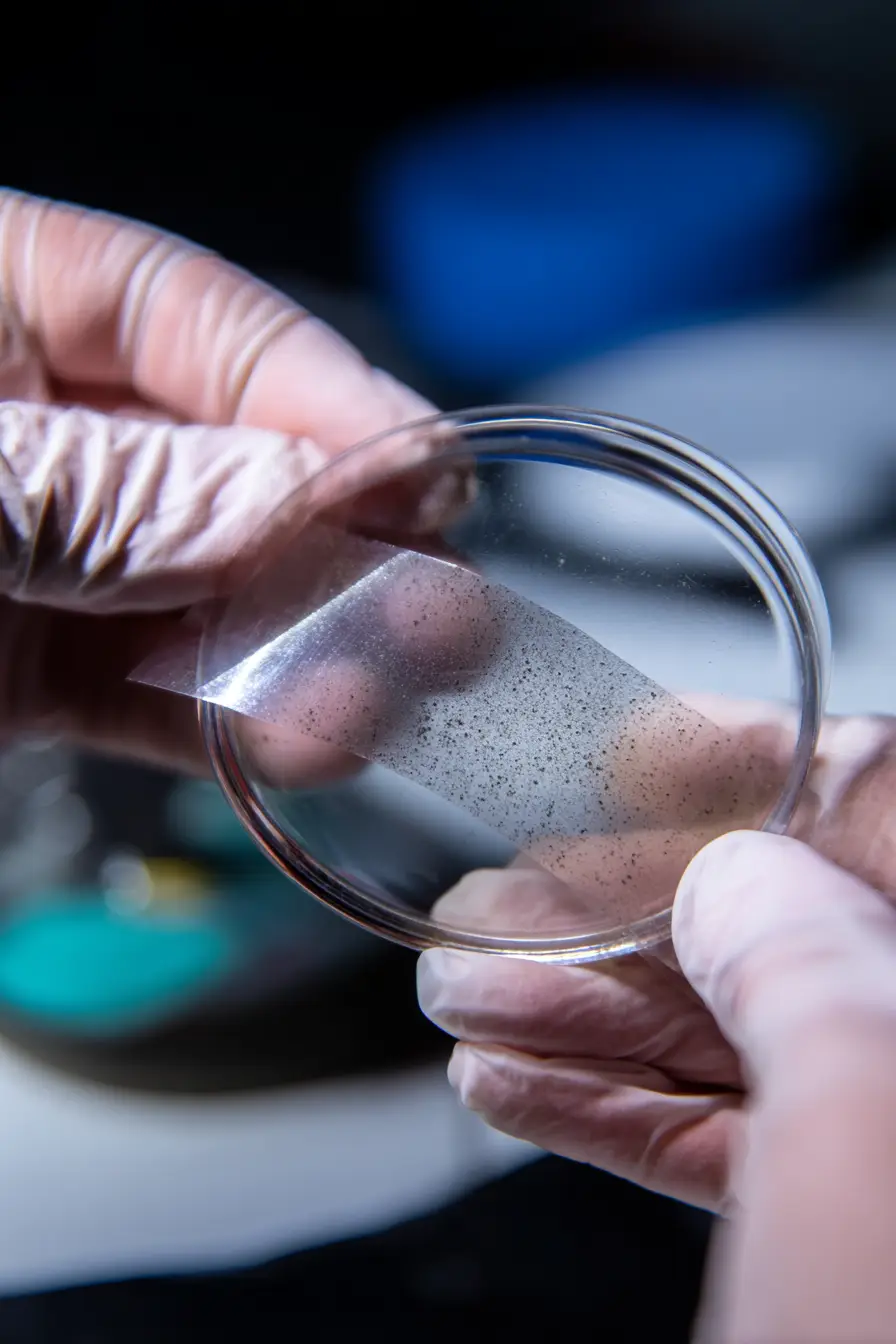
A swab or tape lift is simple in concept, but the lab analysis is detailed. An inspector presses a piece of clear adhesive tape directly against a suspicious surface or swipes it with a cotton swab, whether that is a wall, a ceiling joist, a piece of drywall, or a floor. The tape or swab picks up whatever is on that surface, including spores, hyphae, and fungal structures. This is then sent to a certified lab where technicians examine it under a microscope and identify every mold species present.
Unlike air tests, which measure what is floating in your air, this is a direct examination of a specific spot. It tells you not just that mold exists somewhere in your home, but exactly what is growing on a particular surface and how heavily it has colonized that material. If your inspector points to a dark patch on your bathroom wall and wants to know what it is, a swab or tape lift is how you find out.
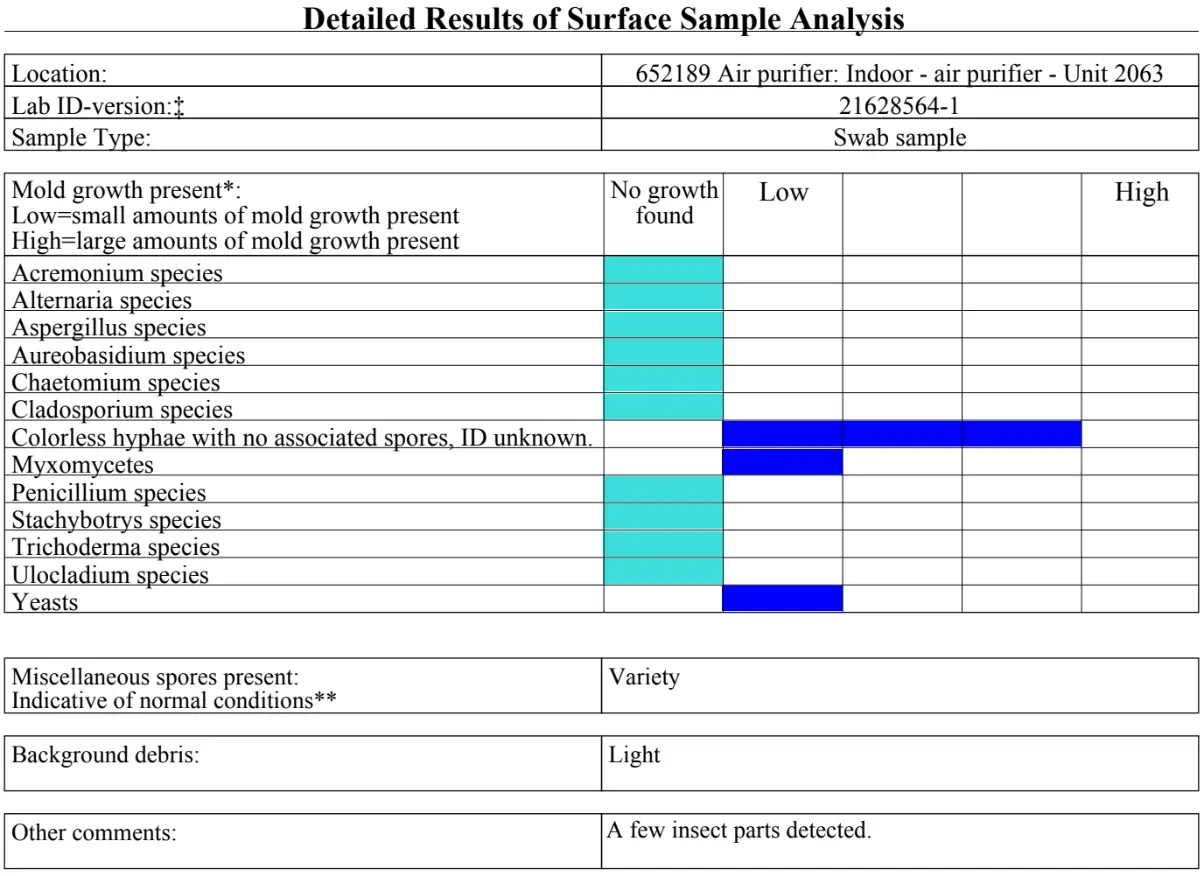
What the report tells you
Exact mold species
Growth level
Location confirmation
Active vs. settled spores
How to read growth levels
No active mold growth detected on this surface. Any spores present are likely settled from ambient air, not originating from this location.
No action needed on this surface.
Some mold present. Could be early-stage growth or cross-contamination from a nearby source. Depends heavily on species identified.
Monitor and investigate moisture source. Treatment likely needed if a toxic species is identified.
Mold is actively colonizing this material. A moisture source is feeding it. The material may still be salvageable depending on what it is.
Remediation recommended. Locate and fix the moisture source first.
Significant colony established. The material is deeply contaminated and is almost certainly contributing spores to the surrounding air.
Material removal and replacement recommended. Full remediation required.
Species always overrides growth level. If Stachybotrys or Chaetomium shows up at any density, treatment is recommended immediately — even at light levels. These molds are toxic and a small colony is never a small problem.
Pros & Cons of Tape Lift / Swab Mold Test
When a tape lift is the right call
There is a visible spot or stain and you need to confirm it is actually mold before doing anything else.
You want to know the exact species — especially to rule out or confirm Stachybotrys or other toxic molds.
You are scoping a remediation job and need to know which materials are contaminated and how badly.
A doctor or specialist has asked for surface-level mold identification tied to a specific location in your home.
Where a tape lift falls short
It only tests where you can see and reach. Mold inside walls, under flooring, or in a crawlspace will not show up unless samples are taken there directly
Wet or heavily soiled surfaces do not transfer well to tape. A swab or bulk sample is better in those cases.
It does not tell you how much mold is in your air — that requires a separate air test.
Light-colored molds like some Aspergillus and Penicillium strains can be missed visually before sampling.