
10 Mold Sickness Signs Most People Write Off as Something Else
We talk to a lot of homeowners who spent months trying to figure out what was wrong before anyone connected their symptoms to mold. Symptoms are easy to dismiss or attribute to stress and poor sleep. But when mold is the underlying cause, they don't go away on their own. They tend to get worse, and they often affect multiple people in the same household at the same time.
Mold toxicity, sometimes called mold illness or Chronic Inflammatory Response Syndrome (CIRS), occurs when the body reacts to mycotoxins, the toxic compounds certain mold species produce.
Not everyone exposed to mold will develop serious symptoms, but for people who are sensitive, the effects can be significant and wide-ranging, the effects can be significant and wide-ranging — something we've seen firsthand in the homes we've treated. Here are ten signs worth paying attention to:
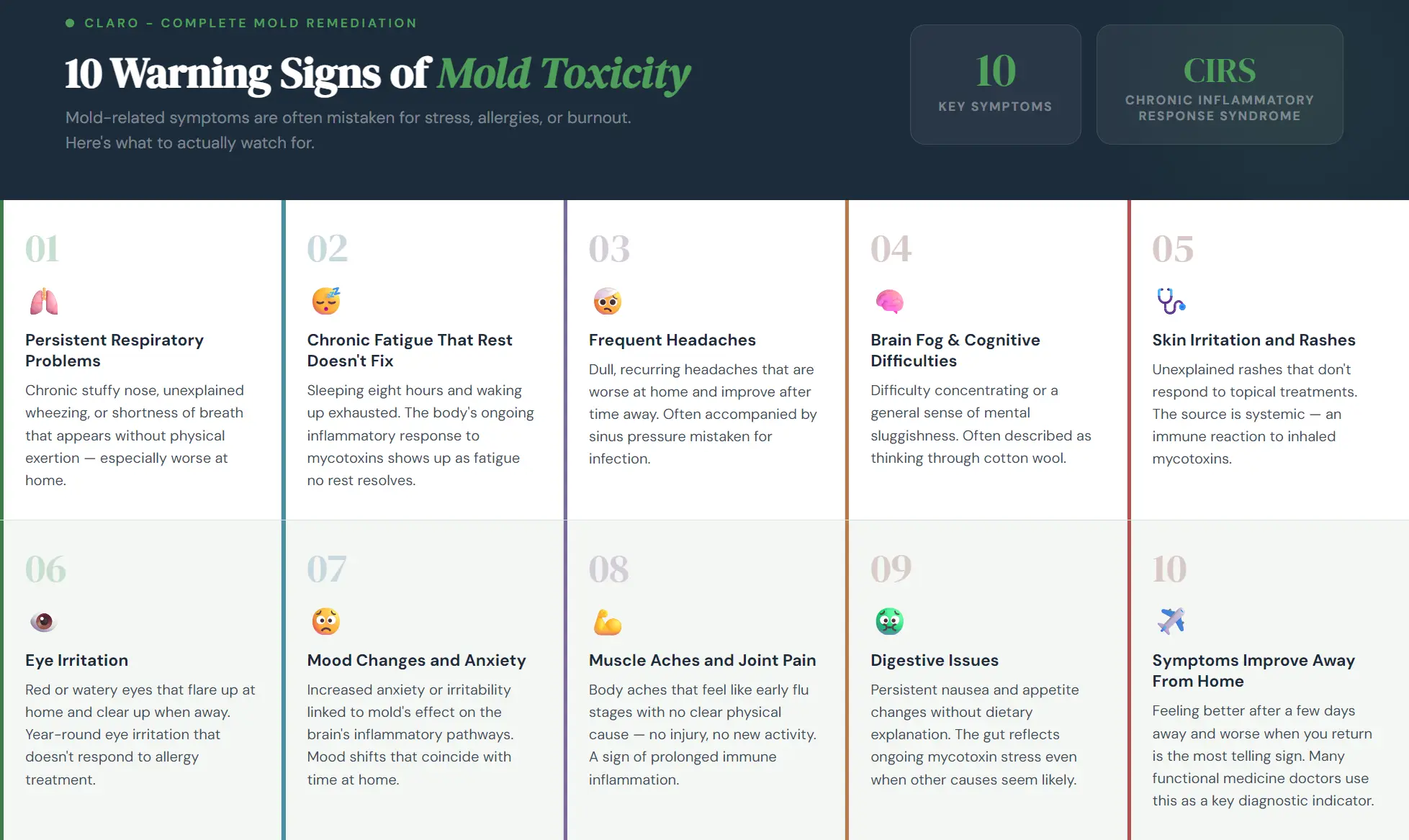
1. Persistent Respiratory Problems
A chronically stuffy nose that doesn't respond to allergy medication, unexplained wheezing, or shortness of breath that shows up without physical exertion are among the most common early signs. If breathing issues flare up at home and improve when you're away for a few days, that pattern alone is worth taking seriously.
2. Chronic Fatigue That Rest Doesn't Fix
This isn't ordinary tiredness after a long week. Mold-related fatigue feels persistent and disproportionate. You sleep eight hours and wake up exhausted. The body's ongoing inflammatory response to mycotoxins is taxing, and that constant low-grade stress shows up as fatigue that no amount of rest seems to resolve.
3. Frequent Headaches
Regular headaches, particularly ones that are worse at home and improve after time away, are a commonly reported symptom in people with mold exposure. They tend to be dull and recurring rather than sharp or isolated. Some people also experience sinus pressure alongside them, which often gets mistaken for a sinus infection.
4. Brain Fog and Cognitive Difficulties
This one tends to catch people off guard because it doesn't feel like a physical symptom. Brain fog from mold exposure can look like difficulty concentrating or a general sense of mental sluggishness. It's often described as feeling like thinking through cotton wool.
For people who are otherwise sharp and high-functioning, this symptom is frequently what prompts them to start looking for an environmental cause.
5. Skin Irritation and Rashes
Unexplained rashes or skin that itches without an obvious trigger can be a sign of mold exposure. The reaction is typically an immune response to inhaled mycotoxins. These rashes often don't respond well to standard topical treatments because the source of the irritation is systemic rather than local.
6. Eye Irritation
Red, watery eyes that flare up at home and settle down elsewhere are a common indicator of mold exposure. Some people also notice increased light sensitivity during periods of high exposure. Like many of these symptoms, eye irritation tends to get dismissed as seasonal allergies, but if it's happening year-round and clears up when you travel, mold is worth considering.
7. Mood Changes and Anxiety
The connection between mold exposure and mental health is less well-known but increasingly documented. Research has linked mycotoxin exposure with increased anxiety and irritability. The inflammatory pathways that mold activates in the body also affect the brain, which can alter mood and emotional regulation in ways that feel completely disconnected from any obvious external cause.
If someone in your household has noticed a shift in mood that coincides with time spent at home, it's worth factoring in.
8. Muscle Aches and Joint Pain
Widespread muscle soreness or joint pain without a clear physical cause can be a sign the immune system is in a prolonged inflammatory state. People with mold toxicity often describe it as feeling like the early stages of flu, with body aches that come and go without explanation.
9. Digestive Issues
Persistent nausea and appetite changes that don't have an obvious dietary explanation have both been reported alongside other mold toxicity symptoms. The gut has a significant relationship with the immune system, and when the body is dealing with ongoing mycotoxin exposure, the digestive system often reflects that stress. These symptoms are easy to write off as diet-related, which is part of why mold exposure gets ruled out late in the process.
10. Symptoms That Improve Away From Home
This is arguably the most telling sign of all. If you feel noticeably better after a few days away and the symptoms return when you come back, your home environment is almost certainly a factor. The pattern is consistent enough that many functional medicine doctors use it as a key diagnostic indicator when mold toxicity is suspected.
What to Do If You Recognize These Signs
Recognizing the symptoms is the first step, but mold toxicity can't be resolved without finding and eliminating the source. If several of these signs apply to you or your family, especially if multiple people in the household are affected, the next step is getting your home properly assessed.
We've worked with families who had been through multiple doctors and rounds of medication before anyone thought to check their indoor air quality. In most of those cases, the mold was present but hidden in a crawl space or behind a wall, not visible from any living area.
If you suspect mold may be affecting your health, book an inspection and we'll take a thorough look. Finding it is the only way to start fixing it.