
Case Study: Tenant sick for 3 months from bedroom mold in apartment
A Spring Hill apartment tenant contacted Claro after suffering from unexplained illness for three months. A physician assistant friend recommended she test for mold, and a home test kit came back positive. With her symptoms appearing strongest in her bedroom, she needed professional testing immediately.
The apartment showed no obvious signs of mold anywhere, but the tenant's persistent symptoms and positive home test suggested hidden contamination that required professional investigation.
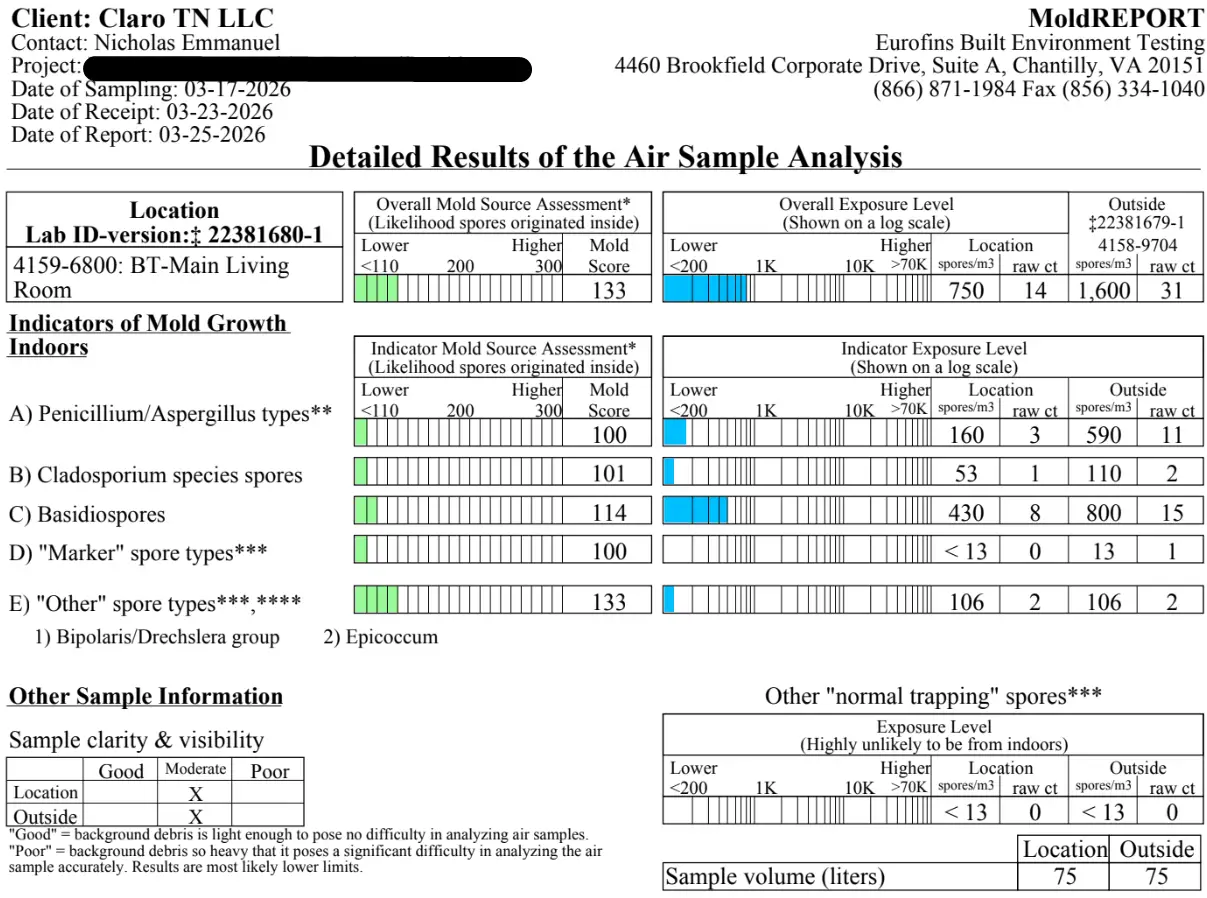
Claro conducted comprehensive testing of the tenant's bedroom, upstairs areas, and outdoor reference samples to identify the source of her three-month illness. The bedroom registered an Overall Mold Source Assessment of 133 with 750 spores per cubic meter indoors compared to 1,600 outside—not catastrophically elevated, but concerning given the specific mold types present.
The detailed analysis revealed multiple contamination indicators. Penicillium/Aspergillus types showed a MoldSCORE of 100 with 160 spores indoors versus 590 outside. Cladosporium registered a MoldSCORE of 101 with 53 spores versus 110 outside. Most concerning was Basidiospores at MoldSCORE 114 with 430 spores indoors compared to 800 outside.
While the total spore count wasn't extremely high, the specific mold types and their indoor concentrations explained the tenant's symptoms. Certain mold species can cause health reactions even at moderate levels, particularly in enclosed bedroom spaces where people spend 8 hours per night breathing the same air. The tenant's three months of illness corresponded directly to chronic exposure in her sleeping environment.

Understanding the urgency—a tenant who had been sick for three months needed immediate relief—Claro treated the apartment to eliminate the contamination causing her symptoms. The bedroom received focused attention as the primary source of exposure.
The tenant's health improved after treatment. The bedroom that had harbored multiple mold species creating her symptoms for three months was finally clean. She could sleep without breathing contaminated air that had been making her sick.
This case demonstrates why unexplained persistent illness warrants mold testing—especially when symptoms are strongest in specific rooms. The tenant had suffered for three months before a physician assistant friend suggested mold as the cause. No visible mold meant the contamination went undetected until professional testing revealed what the home test kit had indicated: her bedroom environment was making her sick. For apartment tenants experiencing unexplained health issues, testing can identify hidden problems that explain months of suffering.