
Case Study: Renovation trapped moisture under new flooring creating crawlspace mold
A Nashville homeowner noticed a persistent smell in her home but couldn't find visible mold anywhere. About a year earlier, she'd renovated the living room and kitchen after water damage, replacing the flooring to restore the space.
The renovation looked great. But the smell remained. She suspected it was coming from the crawlspace, though when inspected, the crawlspace didn't smell at all. The real problem was hiding somewhere else entirely.
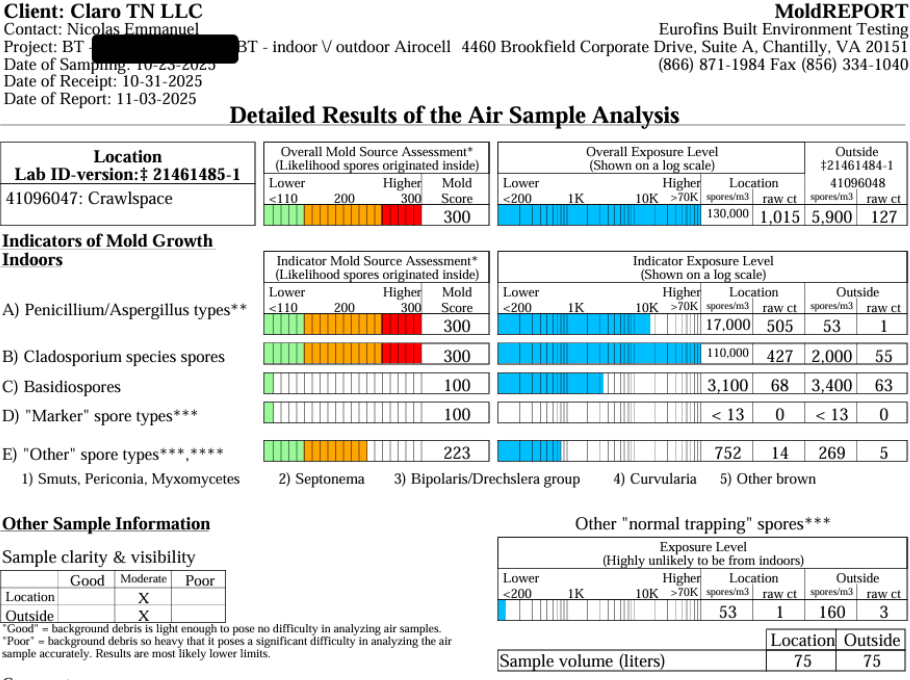
Claro conducted comprehensive testing to locate the source of the smell. The crawlspace showed catastrophic contamination with an Overall Mold Source Assessment of 300—the highest severity rating possible. The exposure level registered a staggering 1,015 spores per cubic meter inside the crawlspace, compared to just 127 outside.
The dominant species was Penicillium/Aspergillus at 505 spores with a MoldSCORE of 300—maximum severity. Cladosporium measured 427 spores indoors versus only 55 outside, with a MoldSCORE of 300. Even Basidiospores showed concerning levels at 68 spores indoors compared to 63 outside.
The source became clear: during the renovation, the contractors had installed new flooring over the water-damaged subfloor without properly drying it first. Moisture was trapped beneath the new floor, and over the course of a year, it had migrated down into the crawlspace where it created perfect conditions for explosive mold growth. The smell wasn't coming from the crawlspace itself—it was coming from the mold that the trapped moisture had created below the living space.

Claro treated the crawlspace comprehensively to eliminate the severe contamination that had developed from the trapped moisture. Post-treatment testing confirmed complete remediation: total culturable fungi dropped to less than 13 CFU/m³—essentially undetectable.
All the dangerous mold species that had established themselves were eliminated. The Penicillium/Aspergillus, Cladosporium, and Basidiospores that had created the persistent smell were gone. The homeowner could finally breathe easy knowing the source had been addressed.
This case demonstrates a critical lesson about renovation work: fixing water damage isn't just about replacing visible materials. If you don't properly dry the underlying structure before installing new flooring, you're not fixing the problem—you're trapping it. And trapped moisture always finds somewhere to go. In this case, it migrated to the crawlspace and created a severe mold problem that took a year to manifest but required professional intervention to solve.