
Case Study: New roof installation sealed attic too tightly causing severe mold buildup
An Ashland City homeowner recently replaced his old metal roof with a new roof, expecting an improvement. Instead, he discovered mold buildup throughout his attic space. The house had two windows in the attic, and he suspected the ridge vent might also be contributing to the problem.
His concern was specific: the old metal roof had allowed some air movement, but he feared the new roof was sealed too tightly, trapping moisture in the attic with nowhere to go.
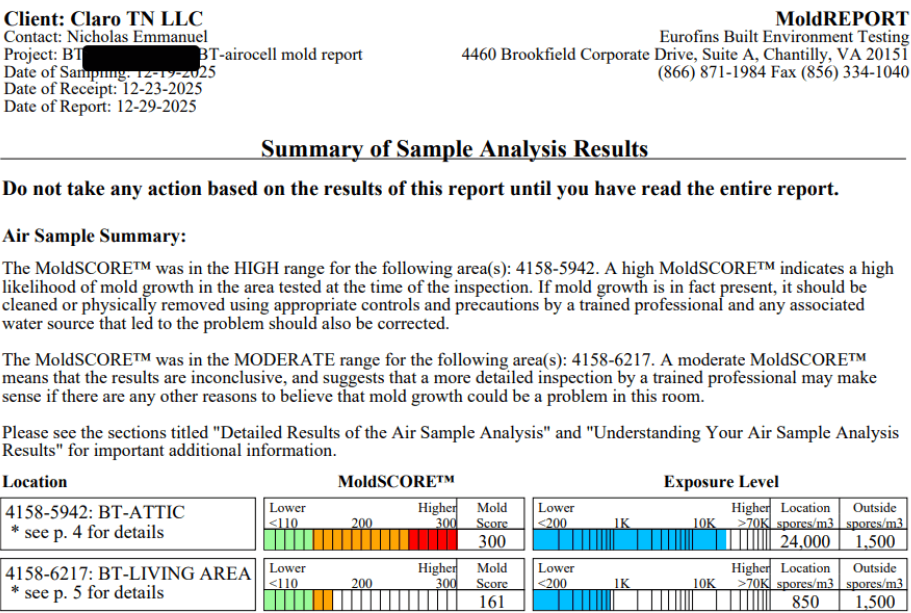
Claro conducted comprehensive testing to assess the severity of the attic contamination. The results confirmed the homeowner's fears: the attic showed a MoldSCORE of 300—the highest severity rating possible—with a staggering 24,000 spores per cubic meter indoors compared to just 1,500 outside.
The living area below registered a MoldSCORE of 161 with 850 spores versus 1,500 outside. While lower than the attic, this indicated that contamination from above was affecting the living space as well.
The diagnosis was clear: the new roof installation had created an overly sealed attic space. Without proper ventilation, moisture from daily household activities—cooking, showering, breathing—rose into the attic and became trapped. The two existing windows and ridge vent weren't providing adequate air exchange for an enclosed attic space.
Over time, this trapped moisture created perfect conditions for explosive mold growth. The 24,000 spore count was sixteen times higher than outdoor levels—a catastrophic contamination level that required immediate intervention.
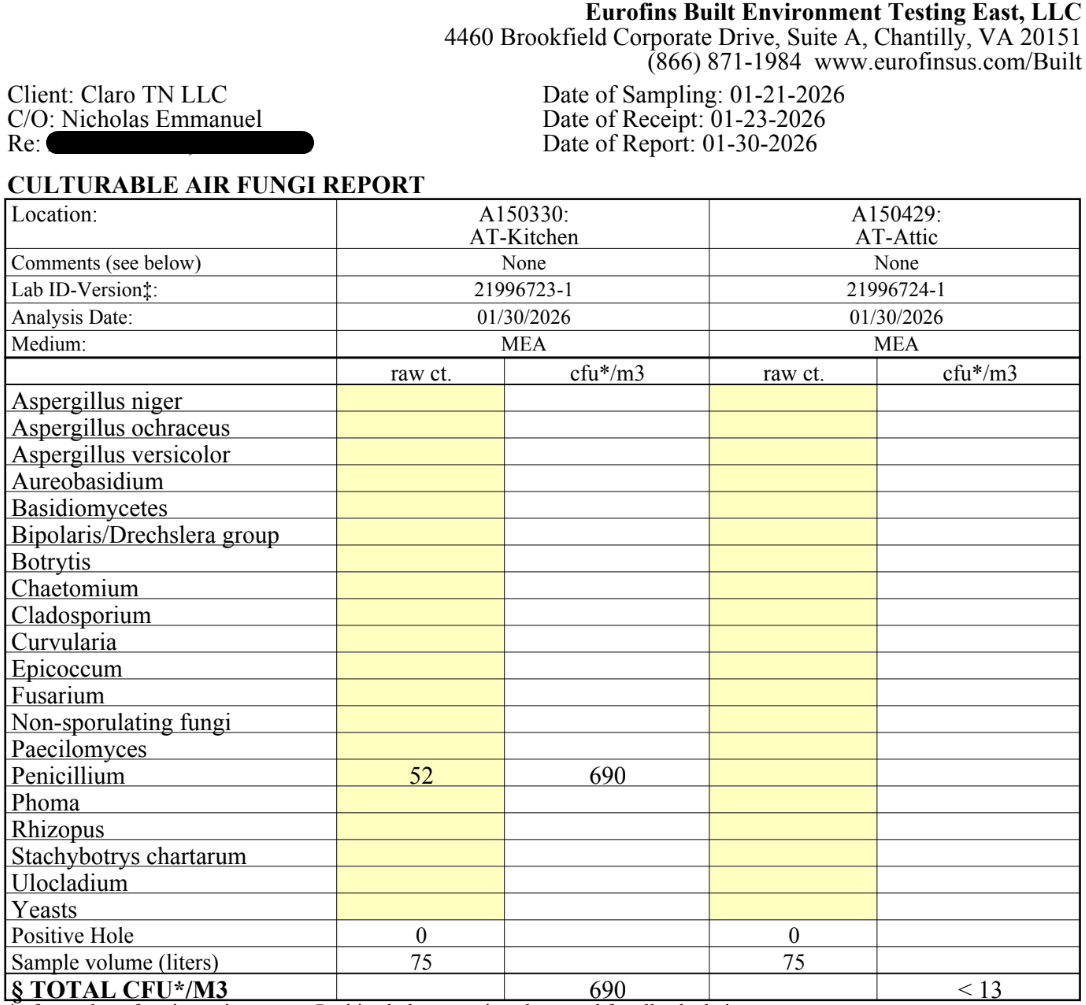
The homeowner moved forward with comprehensive treatment. Claro fogged the entire attic space to eliminate the severe contamination. Post-treatment testing confirmed remarkable results: the attic dropped to less than 13 CFU/m³, and the kitchen registered 690 CFU/m³—a dramatic reduction from the pre-treatment levels.
The homeowner, being handy, planned to address the ventilation issue himself by adding proper attic vents to the new roof. Claro provided recommendations for adequate ventilation to prevent moisture buildup from recurring. The key lesson: a well-sealed roof is important for weather protection, but attics need intentional ventilation paths—not accidental ones—to prevent moisture accumulation.
This case demonstrates a critical but often overlooked aspect of roof replacement: proper attic ventilation must be part of the plan. When contractors seal a roof tightly without ensuring adequate intake and exhaust vents, they create conditions for severe mold problems. The 24,000 spores in this attic developed simply because moisture had nowhere to go after the new roof was installed.
If you're planning a roof replacement, make sure your contractor addresses attic ventilation as part of the project. A sealed roof without proper vents isn't an upgrade—it's a recipe for catastrophic mold growth.