
Case Study: HVAC failure while away led to extensive downstairs mold damage
A Franklin family returned from a trip to discover their worst nightmare: their downstairs HVAC system had failed while they were away, and the house smelled terrible. Mold was visible on walls, ceilings, and surfaces throughout the entire downstairs area.
The HVAC failure had created perfect conditions for rapid mold growth—elevated humidity with no air circulation in a closed home. By the time they returned, the contamination was extensive and impossible to ignore.
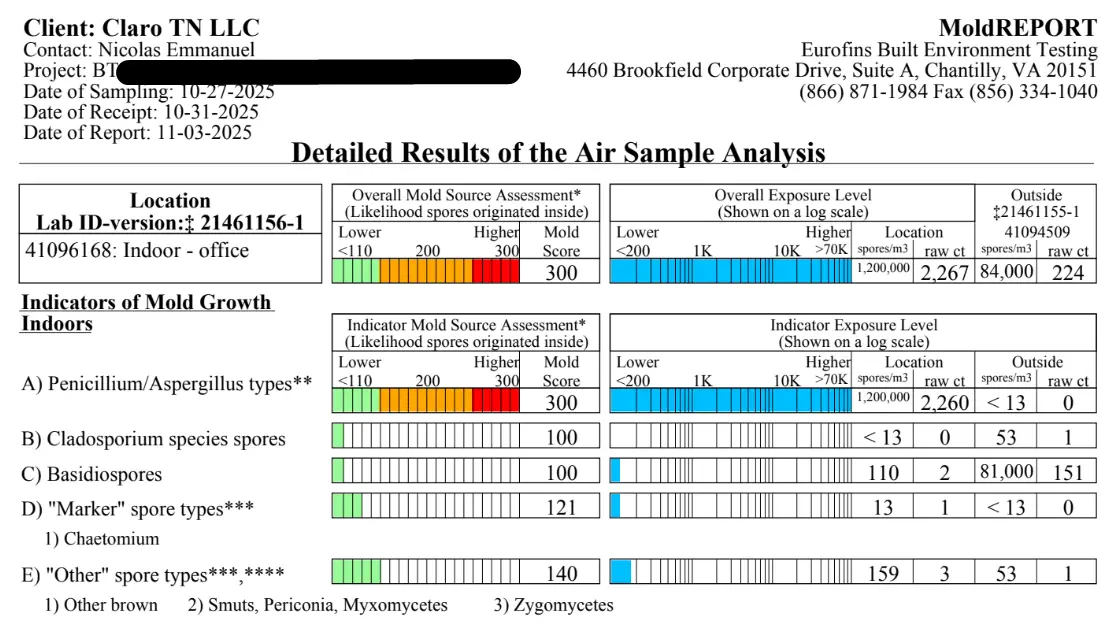
Claro conducted comprehensive testing to understand the full scope of the damage. The office area showed catastrophic contamination with an Overall Mold Source Assessment of 300—the highest severity rating. The exposure level registered 1,200,000 spores per cubic meter, with Penicillium/Aspergillus dominating at 2,260 spores and Basidiospores at an alarming 81,000 spores.
The smell wasn't just unpleasant—it was evidence of active mold growth on multiple surfaces. The visible mold on walls and ceilings confirmed what the testing revealed: this wasn't a simple cleaning job. The HVAC failure had created contamination that required comprehensive remediation.
Claro developed a multi-phase remediation plan to address both the visible damage and hidden contamination. The work included washing down all affected surfaces, painting walls and ceilings, repairing ceiling damage, replacing contaminated flooring, complete duct cleaning, professional carpet cleaning in one area, and comprehensive dry fog treatment of the entire affected space.
Some demolition work was necessary where mold had penetrated too deeply into materials. Carpet repair ensured the home's flooring was restored to pre-damage condition.
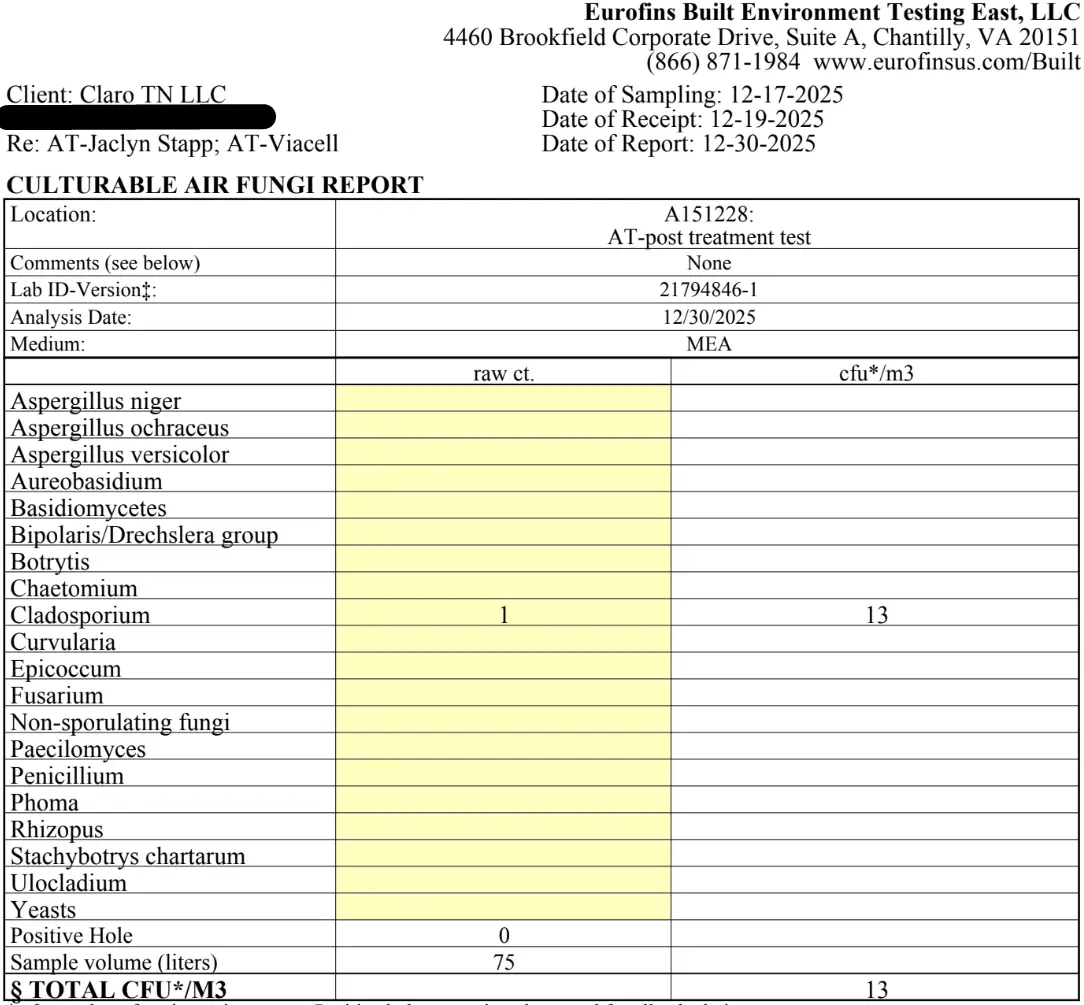
Post-treatment testing confirmed the extensive work paid off: total culturable fungi dropped to just 13 CFU/m³—essentially undetectable. The catastrophic 1,200,000 spores were eliminated. The Penicillium/Aspergillus and Basidiospores that had dominated the space were completely gone. The smell disappeared, and the downstairs was safe and habitable again.
This case demonstrates what can happen when HVAC systems fail in closed homes—and why comprehensive remediation is sometimes necessary to truly solve severe contamination problems. Quick surface cleaning wouldn't have addressed the extent of damage this HVAC failure created.