
Case Study: Former gym's lingering humidity issues made store owner's wife ill
A Franklin business owner purchased a commercial property that had previously been a gym—a space where sweaty bodies and high humidity had been the norm for years. He renovated the building to convert it into his retail store, investing significant time and money into the rehabilitation.
But something wasn't right. Despite the renovations, the building still felt off. And his wife experienced something even more concerning: every time she spent time in the store, she felt ill. Headaches, fatigue, respiratory discomfort—symptoms that disappeared when she left the building.
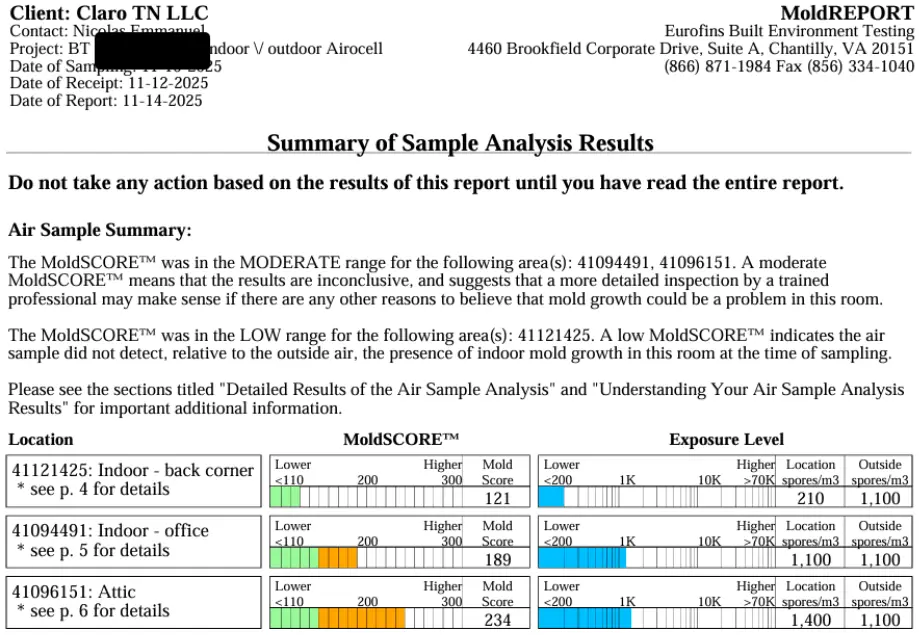
Claro conducted comprehensive air quality testing throughout the commercial space, including the attic and office areas. The results revealed the problem the renovation hadn't addressed.
The attic showed a MoldSCORE of 234 with 1,400 spores per cubic meter. The office registered a MoldSCORE of 189 with 1,100 spores. Even a back corner area tested at MoldSCORE 121 with 210 spores. The outdoor reference was 1,100 spores—meaning the attic was actually higher than outside, and the office was at parity with outdoor levels.
Years of high humidity from the gym had created perfect conditions for mold growth in the attic space and HVAC system. The renovation had updated the visible spaces, but the hidden contamination remained—circulating through the ductwork every time the HVAC ran. The wife's symptoms weren't coincidental. She was reacting to real mold exposure that the previous owner's activities had created and the renovation hadn't eliminated.

Claro performed a comprehensive treatment targeting the sources of contamination: the entire attic space was fogged to eliminate the elevated mold levels, and a full duct cleaning removed years of accumulated contamination from the HVAC system that had been circulating spores throughout the retail space.
Post-treatment testing confirmed complete remediation: the back office dropped to just 13 CFU/m³, and the shop area registered less than 13 CFU/m³—essentially undetectable levels. The attic and ductwork were clean, and the HVAC system was no longer distributing contaminated air.
The wife's symptoms disappeared. She could finally spend time in the store without feeling ill, and the business owner had confidence that his investment was protecting both his family's health and his customers' experience.
This case demonstrates an important lesson for commercial property buyers: previous use matters. High-humidity businesses like gyms, pools, or spas can leave behind hidden mold problems that survive cosmetic renovations. Testing before and after rehabilitation ensures you're not just covering up contamination—you're actually eliminating it.