
Case Study: Family with small children experiencing mold exposure symptoms
An Atlanta family with two small children and both parents were experiencing mold exposure symptoms in their home. With young children at risk, the family needed professional guidance to identify and eliminate contamination sources affecting their health.
For families with small children, mold exposure creates particular urgency. Children's developing respiratory systems are more vulnerable to contamination, and symptoms can affect their health and development in lasting ways.
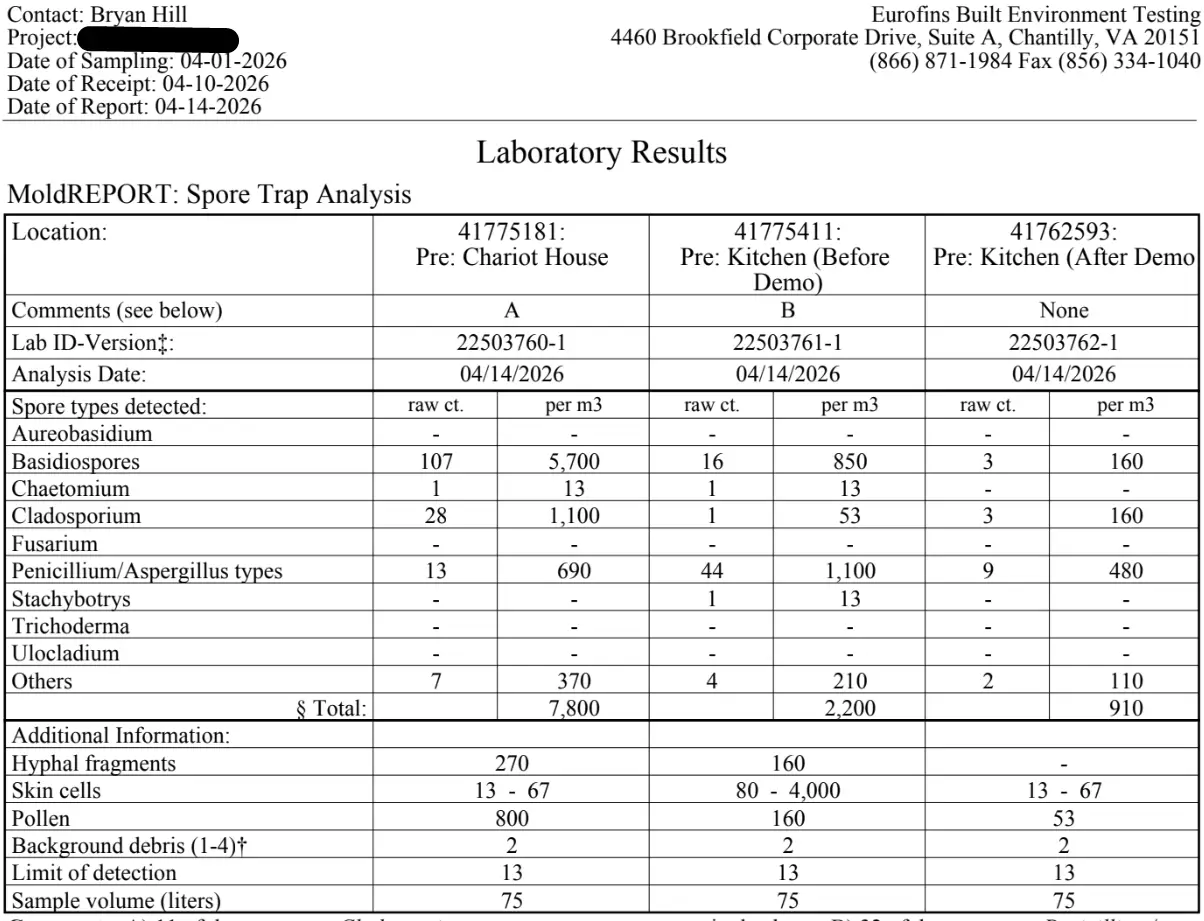
Claro's inspection revealed multiple contamination sources requiring intervention. The Chariot House registered 7,800 total spores with Basidiospores at 5,700, Penicillium/Aspergillus at 690, and Cladosporium at 1,100. Most concerning was Chaetomium at 13 spores—a water-damage indicator species.
The kitchen showed severe contamination before demolition: 2,200 total spores with Penicillium/Aspergillus at 1,100, Basidiospores at 850, and critically, Stachybotrys at 13 spores. The presence of both Chaetomium and Stachybotrys confirmed significant water damage had created toxic mold species affecting the family.
The inspection also identified crawlspace encapsulation issues requiring modifications, including repositioning the dehumidifier for proper moisture control. Water damage above the kitchen stove from a leak needed immediate remediation to prevent continued contamination.
With two small children breathing air contaminated by water-damage indicator species and elevated spore counts throughout living spaces, the family's symptoms weren't surprising—they were direct health effects of toxic mold exposure in their home.
Claro provided comprehensive guidance on crawlspace encapsulation modifications, including repositioning the dehumidifier for optimal moisture control. The team executed water damage remediation above the kitchen stove to address the leak source. Kitchen demolition removed the severely contaminated materials showing Stachybotrys and high Penicillium/Aspergillus levels.
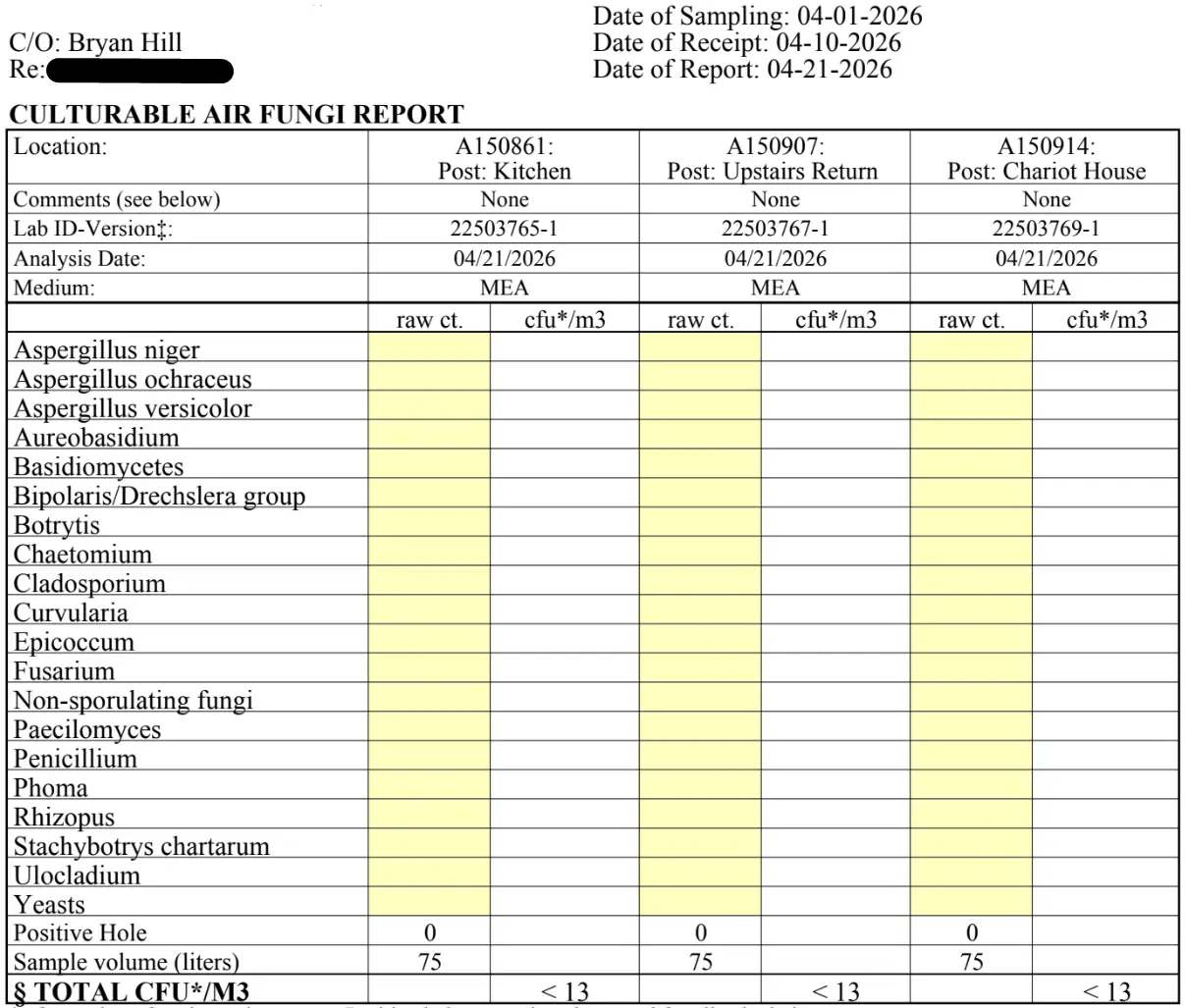
Post-treatment testing confirmed complete success across all areas. The kitchen dropped to less than 13 CFU/m³. The upstairs return registered less than 13 CFU/m³. The Chariot House showed less than 13 CFU/m³. The water-damage indicator species—Chaetomium and Stachybotrys—were eliminated. The family with two small children could breathe clean air throughout their home.
This case demonstrates why families with young children require immediate professional intervention for mold exposure symptoms. The presence of Chaetomium and Stachybotrys indicated toxic water-damage contamination affecting developing respiratory systems. The kitchen leak and crawlspace moisture issues had created conditions for species known to cause serious health effects. Proper remediation meant addressing both the visible water damage and the underlying moisture control problems, with professional testing confirming safe conditions before the family continued occupancy with their young children.