
Case Study: Doctor-diagnosed mold toxicity before home sale
A Silver Point homeowner had been battling unexplained health issues for months. When his doctor in Oklahoma ran specialized testing, the diagnosis was clear: aflatoxin mold exposure. The physician immediately started him on antifungal medication and warned him that the particular mold strain he'd been exposed to could increase cancer susceptibility.
His doctor's recommendation was direct: test your home. The homeowner was preparing to move to Brentwood and sell his lake house, but first he needed to understand where the mold exposure was coming from—and whether it had contaminated the property he was about to list.

The home was a finished lake house in Silver Point where the family spent considerable time. They'd recently begun remodeling before the sale, and when they asked their builder about potential mold, he said he didn't smell anything concerning.
But air quality testing revealed what wasn't visible or detectable by smell. The living room showed 2,100 spores per cubic meter, and the basement registered 1,300 spores—both significantly elevated. Multiple mold species were present including Cladosporium at 590 spores, Penicillium/Aspergillus at 800 spores, and Basidiospores at 320 spores.
The hyphal fragments—which indicate active mold growth—measured between 110-160, and skin cells ranged from 4,000-8,000, suggesting the mold was feeding on organic material throughout the home. This wasn't just surface contamination; it was an active mold problem that had been affecting the homeowner's health for months.
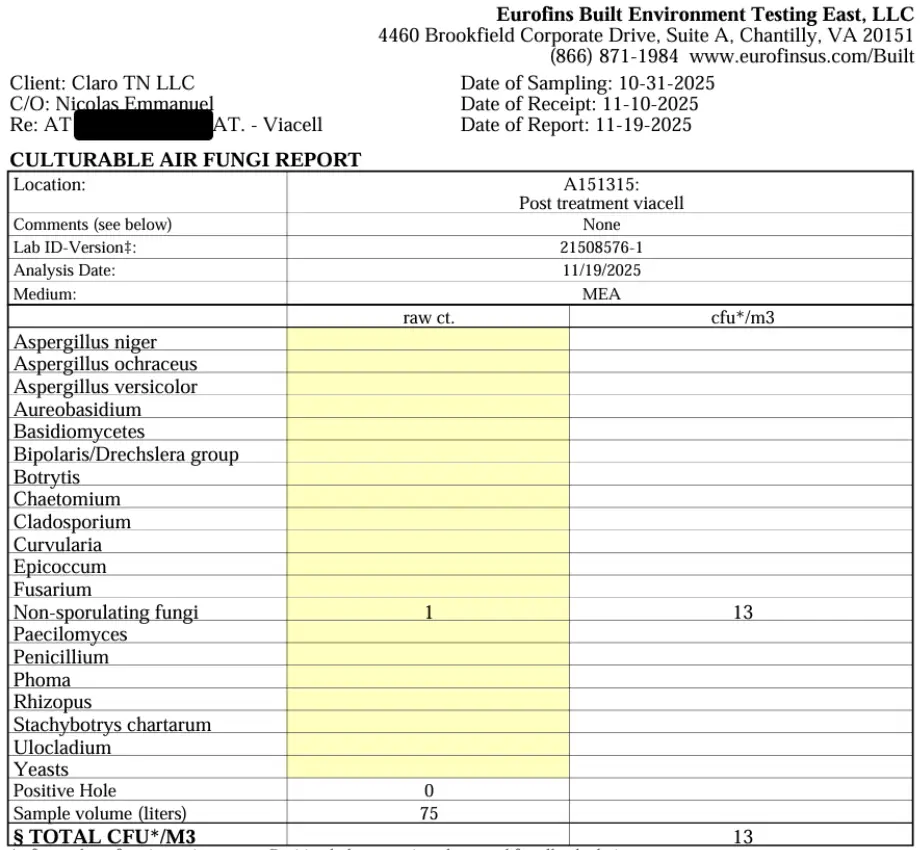
Claro performed a whole-home dry fog treatment to eliminate the contamination before the property sale. The treatment reached every corner of the finished basement, living areas, and hidden spaces where mold had established itself.
Post-treatment testing confirmed complete remediation: total culturable fungi dropped to just 13 CFU/m³—essentially undetectable and well below any concern threshold. All problematic mold species were eliminated, and the home's air quality returned to normal, healthy levels.
The homeowner could now proceed with the sale knowing the property was safe for future occupants, and more importantly, he'd identified and eliminated the source of his mold exposure. Combined with his medical treatment, removing the contamination from his primary environment gave his body the chance to recover.
This case illustrates why medical professionals increasingly recognize mold exposure as a serious health threat—and why testing and proper remediation are essential, especially when selling a home.