
Case Study: Closet mold confirmed after previous testing
A Nashville apartment resident had already been through one round of testing with another company. They'd identified a closet next to the kitchen as the problem area, but the homeowner wanted confirmation before moving forward with treatment.
He also noticed something unusual: persistent mold growth in the toilet bowl and cistern. Even with no visible signs elsewhere in the apartment, that biological indicator suggested contamination was present—it just wasn't showing up on surfaces yet.
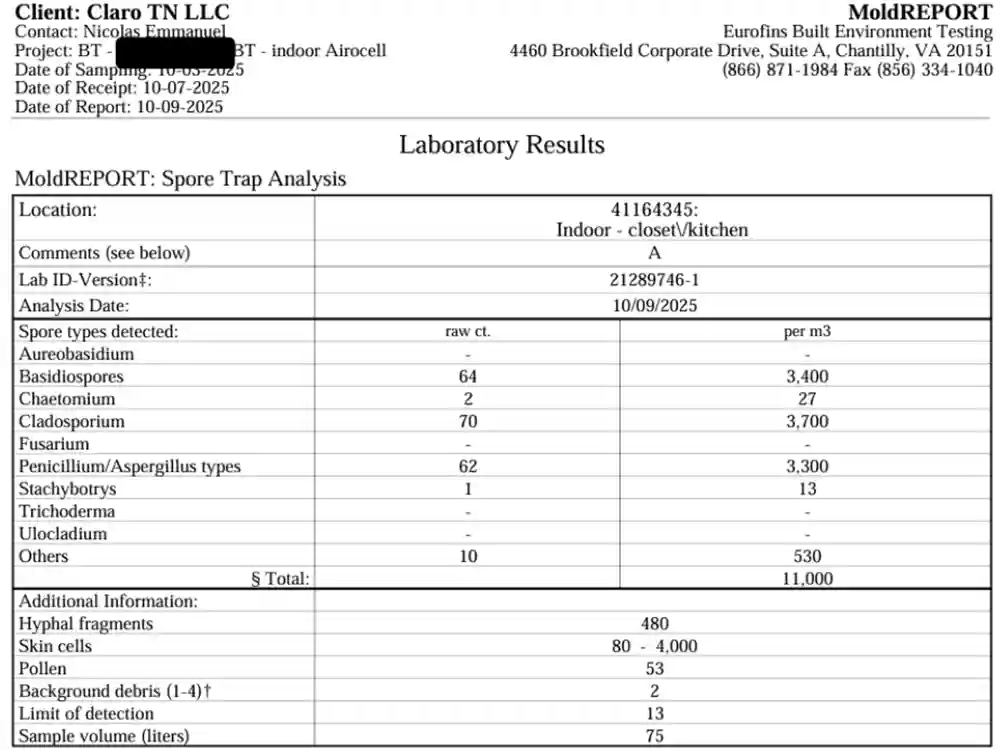
Claro focused testing on the closet/kitchen area where the previous company had flagged concerns. The results confirmed elevated mold levels in that specific location.
The closet showed a total spore count of 11,000 spores per cubic meter—significantly elevated for an indoor environment. Multiple species were detected: Cladosporium (3,700), Basidiospores (3,400), Penicillium/Aspergillus (3,300), and others totaling 530 spores/m³.
The toilet bowl growth wasn't coincidental. Mold thrives in moisture, and when you see it growing persistently in bathrooms, it's often a sign that spores are present throughout the space—waiting for the right conditions to colonize.
Claro performed a targeted treatment of the affected areas, with particular attention to the closet/kitchen zone where contamination was concentrated.
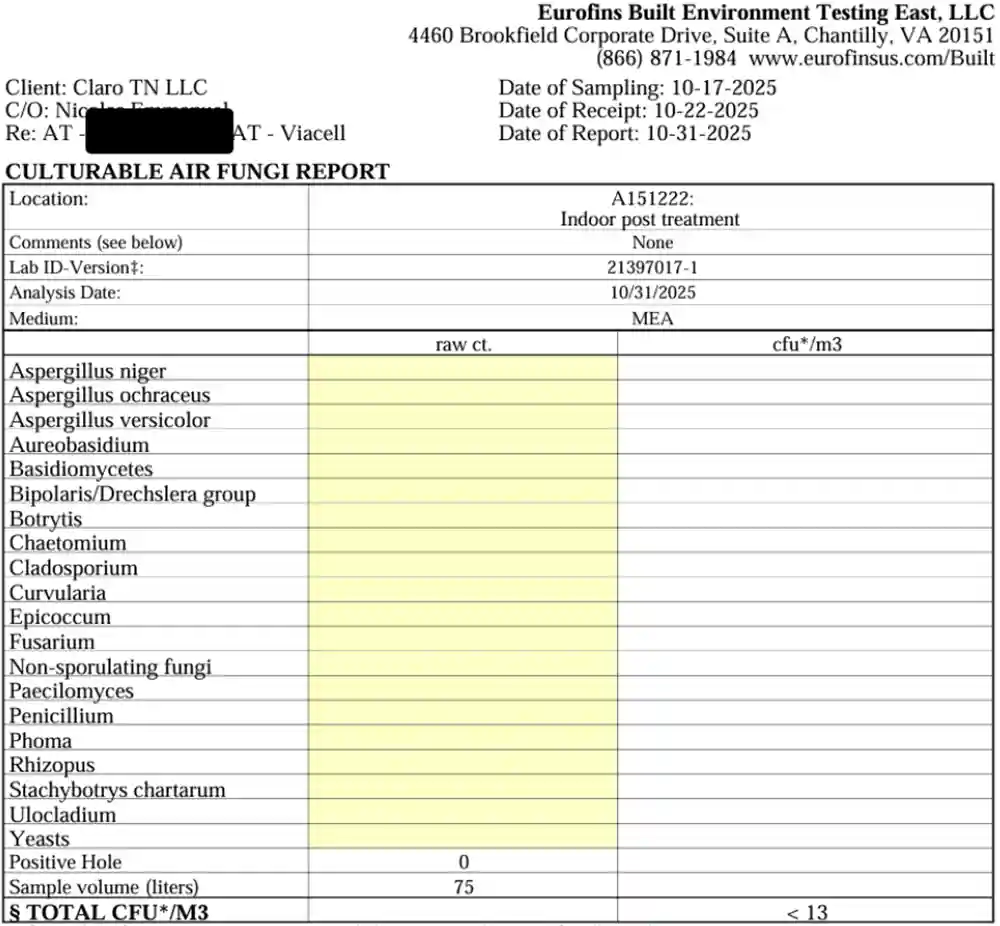
Post-treatment testing showed dramatic improvement: total culturable fungi dropped to less than 13 CFU/m³—essentially undetectable. All mold species that had previously shown elevated levels were now below detection limits.
The apartment's air quality was restored to normal levels, and the persistent toilet mold issue resolved once the source contamination was addressed.
This case highlights the value of focused testing when you already have indicators pointing to specific problem areas. Sometimes you don't need whole-home testing—you just need to confirm what you already suspect, then treat it properly.