
Case Study: Apartment renter with mold illness confirmed by home test
A Spring Hill apartment complex contacted Claro after a renter complained of mold illness. The tenant had done an at-home test that confirmed mold presence, prompting the property management to order professional inspection and testing.
For apartment complexes, tenant mold illness complaints create liability concerns and require professional investigation to protect both the occupant's health and the property owner's interests. The home test had identified the problem—professional testing would reveal the extent.
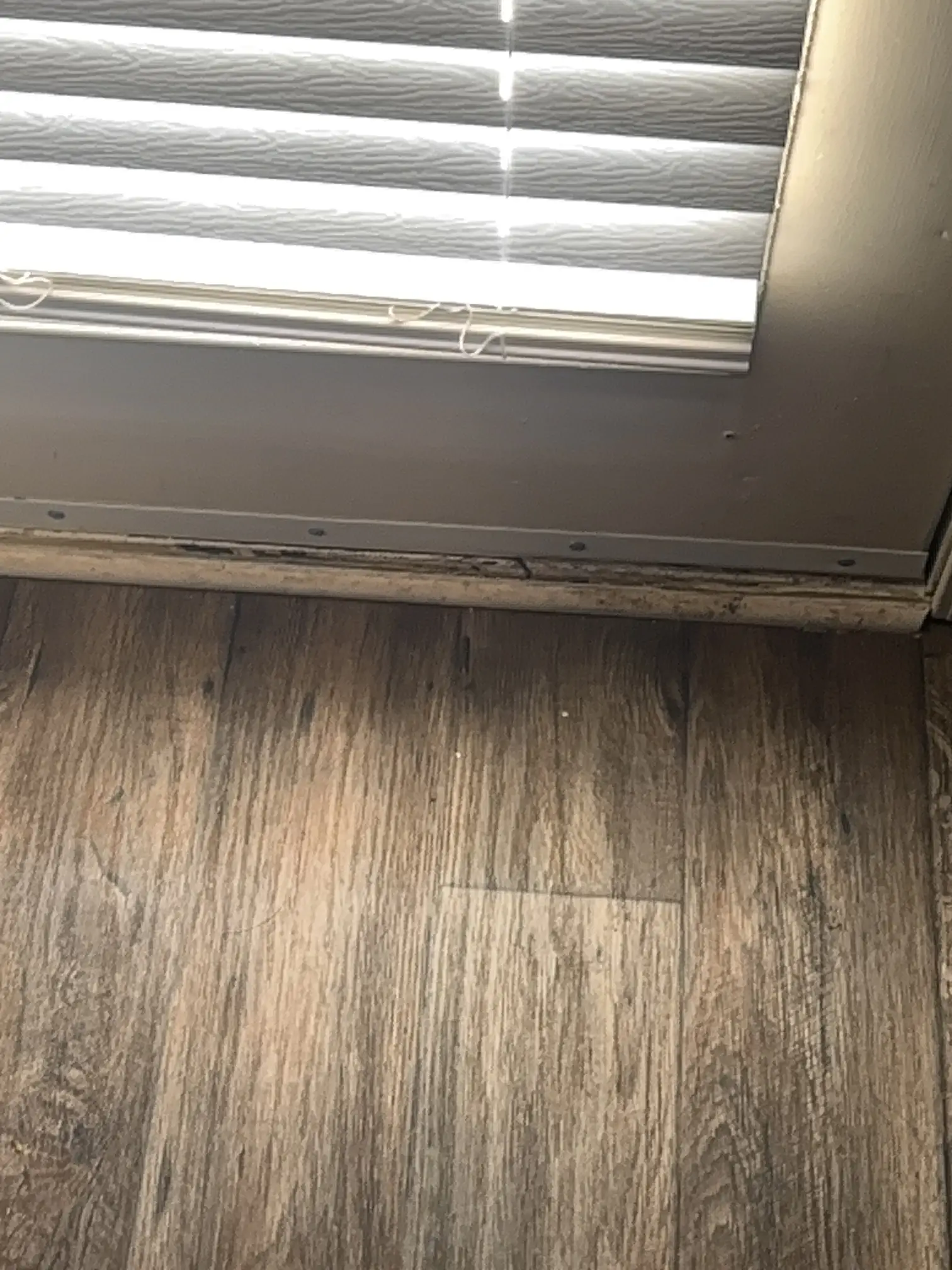
Claro's inspection found multiple moisture problems in the 900 square foot rental unit. Moisture was present under and around the doors. Water was visible behind the toilet. The attic was open, allowing unconditioned air exchange. Standing water was found in the water heater pan—a clear indication of ongoing moisture issues.
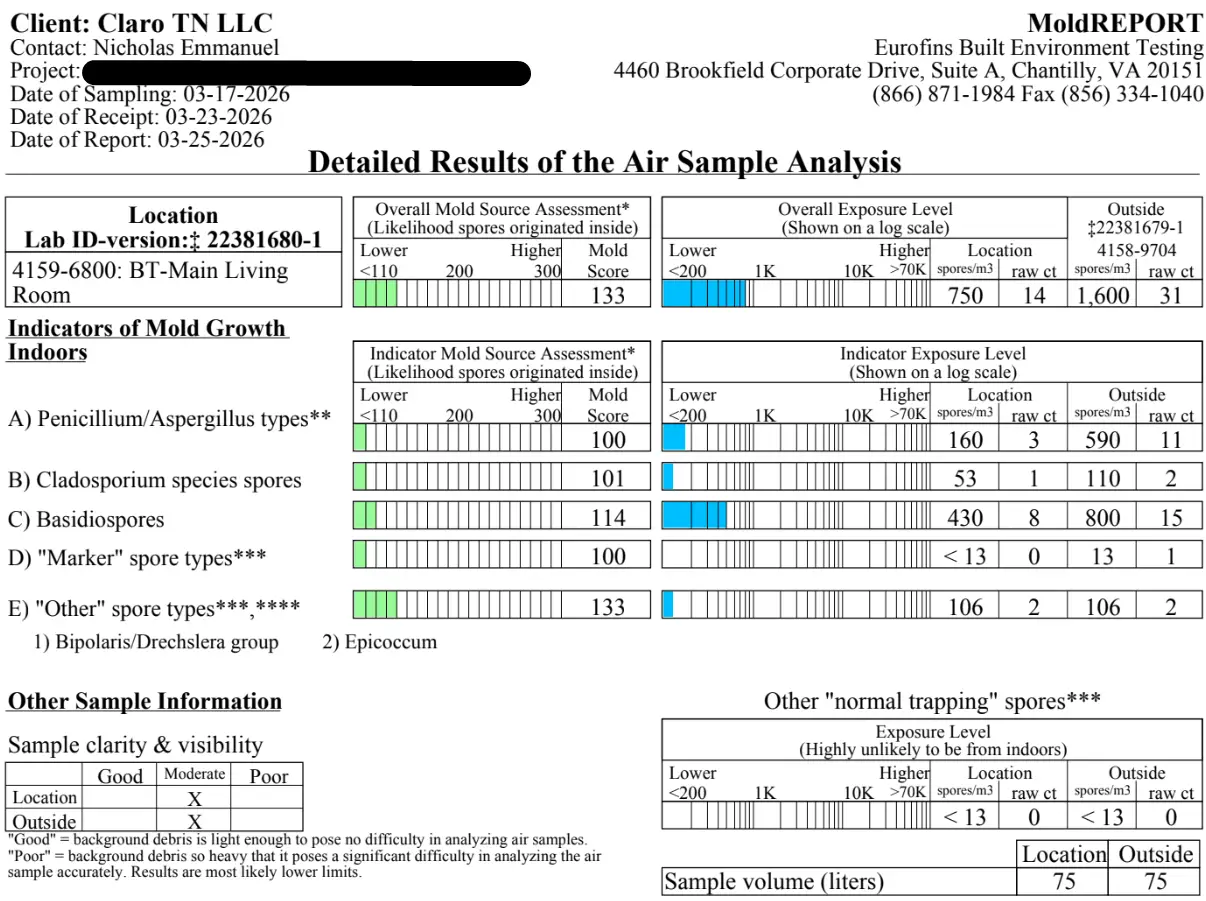
Testing the main living room revealed significant contamination: Overall Mold Source Assessment of 133 with 750 spores per cubic meter indoors compared to 1,600 outside. Penicillium/Aspergillus showed MoldSCORE 100 with 160 spores indoors versus 590 outside. Basidiospores registered MoldSCORE 114 with 430 spores indoors compared to 800 outside. Cladosporium showed MoldSCORE 101 with 53 spores versus 110 outside.
The renter's mold illness complaints and positive home test were validated by professional testing. The moisture under doors, water behind the toilet, open attic, and standing water in the water heater pan had created conditions for contamination throughout the small apartment. The tenant was breathing elevated mold levels in the main living space where they spent most of their time indoors.
After testing confirmed the contamination causing the renter's illness, the tenant moved from the apartment. The property management then contracted Claro to perform comprehensive whole-home treatment with mold removal for the 900 square foot unit before re-renting.
The treatment eliminated the contamination that had made the previous tenant sick. The 750 spores in the living room were removed. The moisture sources—door seals, toilet area, open attic, and water heater—required addressing to prevent recurrence. The unit could be safely re-rented knowing the mold causing health complaints had been professionally remediated.
This case demonstrates why apartment complexes must respond professionally to tenant mold illness complaints. The renter's home test had identified real contamination confirmed by professional testing. The multiple moisture sources—doors, toilet, attic, water heater—had created conditions affecting the tenant's health in a small 900 square foot space. For property management, proper response meant professional testing, allowing the affected tenant to relocate, and comprehensive treatment before re-occupancy. Ignoring tenant complaints creates liability; professional remediation protects both current and future occupants.