
Case Study: Apartment flood from above repaired but mold remained
A Nashville apartment resident experienced a flood from the unit above that came through her ceiling. The damage had been repaired and dried out, but she wanted to verify whether mold had developed despite the repairs.
For apartment dwellers, floods from units above create contamination concerns even after visible repairs are complete. Water that comes through ceilings can create mold in hidden spaces that persist after drying. Professional testing would reveal whether the repair work had addressed all contamination.
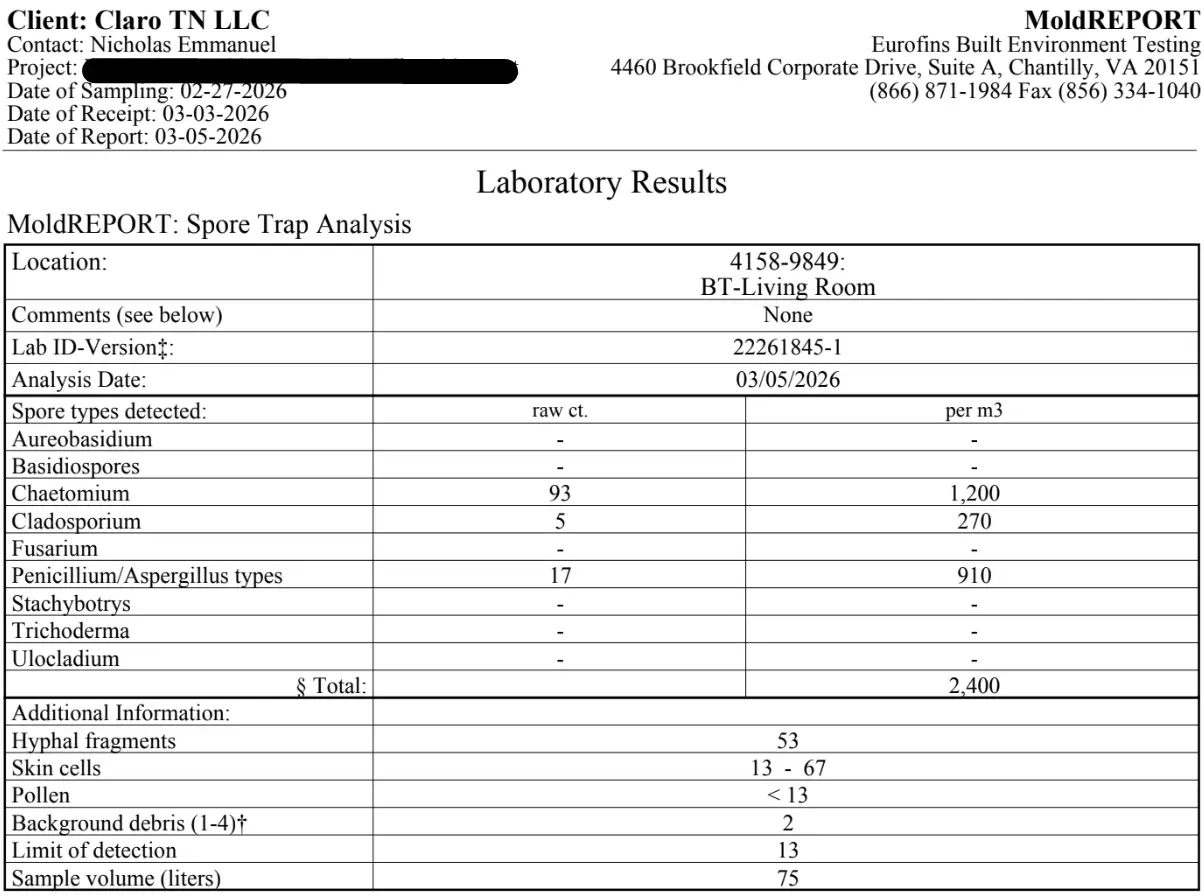
Claro tested the living room to assess whether the ceiling flood and subsequent repairs had left any mold contamination. The spore trap analysis revealed concerning results: 2,400 total spores per cubic meter with specific species indicating water damage.
Chaetomium dominated the sample at 1,200 spores—this is a primary water-damage indicator species that establishes itself after significant moisture intrusion. Penicillium/Aspergillus registered 910 spores. Cladosporium showed 270 spores. The presence of Chaetomium at high levels confirmed that the flood from the apartment above had created contamination that persisted despite the ceiling being repaired and dried.
The resident's concern about mold after the flood was validated. The 1,200 Chaetomium spores indicated water-damage contamination in the living space where she spent most of her time. Simply repairing and drying the visible ceiling damage hadn't addressed the mold that had established itself during the flood event.

Understanding that the ceiling flood had created contamination requiring comprehensive intervention, Claro performed whole-home treatment using Claro's patented two-step process with results guaranteed for one year. Additional work included ceiling repairs and painting, duct cleaning of all ducts and returns, and painting wall areas that had been left unpainted.
The treatment eliminated the Chaetomium water-damage indicator species and the Penicillium/Aspergillus contamination. The ceiling received proper repair and fresh paint. The ductwork was cleaned to remove any contamination that had circulated through the HVAC system during the flood. The walls were painted to complete the restoration.
This case demonstrates why flood damage requires professional testing even after repairs appear complete. The ceiling had been fixed and dried, but 1,200 Chaetomium spores indicated water-damage contamination remained. For apartment residents dealing with floods from units above, visible repairs don't guarantee mold elimination. Professional testing reveals hidden contamination, and comprehensive treatment addresses both the visible damage and the invisible mold that establishes during water events.